
Patrick Stewart, Star Trek's Picard, dies at 86 with one final role still to come
The beloved actor's last screen appearance lands Dec. 18 in 'Avengers: Doomsday' - a posthumous curtain call that will test the pull of a two-franchise icon.
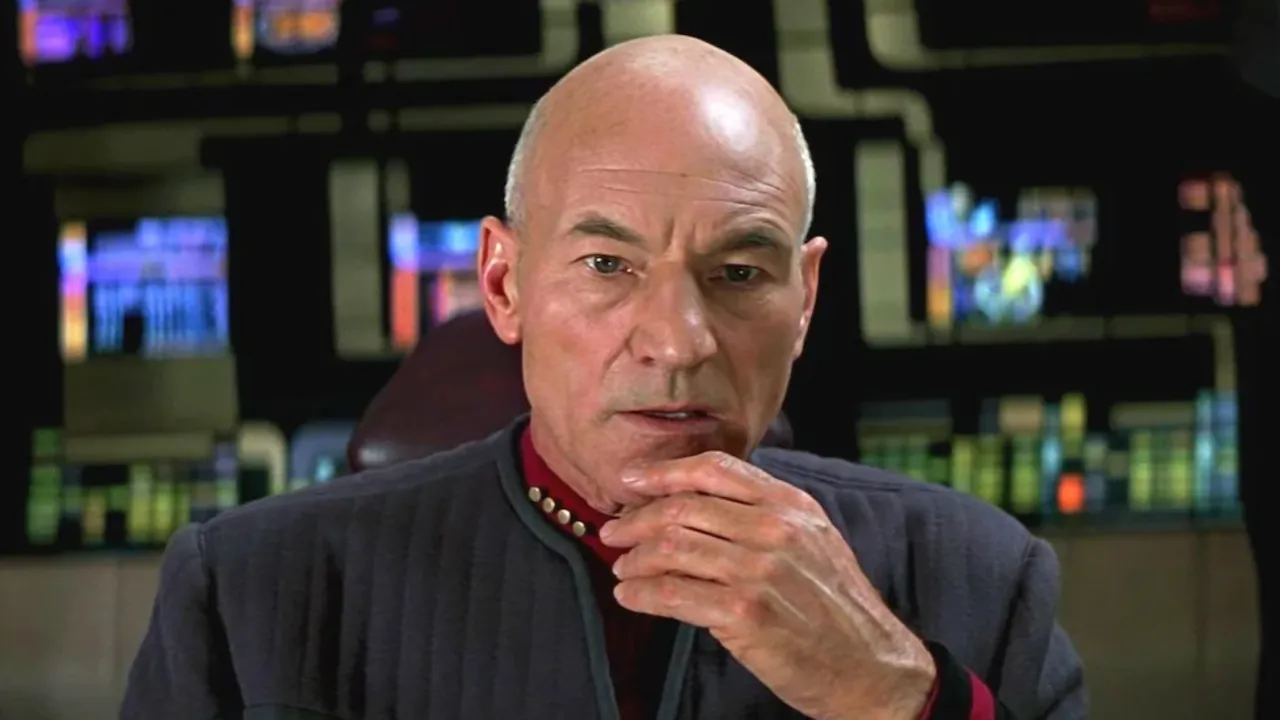
Patrick Stewart, the actor behind Captain Jean-Luc Picard and Professor Charles Xavier, has died at 86, triggering tributes from co-stars and confirming his final screen role in 'Avengers: Doomsday' on Dec. 18. For studios and streaming platforms, his passing underscores the enduring financial and emotional weight of legacy IP - and the marketing power of a farewell performance.
Patrick Stewart, the classically trained Yorkshireman who became the moral center of two blockbuster franchises, has died at 86. The news, marked by a flood of tributes from the 'Star Trek' and 'X-Men' families, also carries a final professional note: his last screen performance is already scheduled for Dec. 18, when he will reprise Professor Charles Xavier in Marvel's 'Avengers: Doomsday.' That posthumous release gives fans a fixed date to gather, a rare and commercially potent capstone to a career that spanned the Royal Shakespeare Company, the bridge of the Enterprise, and the halls of Xavier's School for Gifted Youngsters.
Stewart's death is not just a cultural loss; it is a franchise-defining moment. His Captain Jean-Luc Picard became the philosophical face of 'Star Trek: The Next Generation,' a character that Akiva Goldsman, co-creator of Paramount+'s 'Star Trek: Picard' and 'Star Trek: Strange New Worlds,' said 'permanently expanded the universe of Star Trek without measure.' The actor carried that gravitas into the 'X-Men' films, where his Professor X anchored a mutating ensemble. Now, with 'Avengers: Doomsday' slated for December, Disney and Marvel inherit a built-in wave of emotion - and the challenge of honoring a legend while selling tickets to a blockbuster.
The tributes from Stewart's peers underscore the depth of his impact. Ian McKellen, his 'X-Men' co-star, wrote on Instagram: 'He wore his heart on his sleeve, which made him a man to rely on, to admire and, in my case, love.' William Shatner, his fellow Enterprise captain, posted a heartfelt farewell on Facebook, calling Stewart 'a friend, a colleague, and a magnificent actor' who 'brought intelligence, grace, and a deep sense of humanity to everything he did.' Jonathan Frakes, who directed and acted alongside Stewart for over 35 years, simply said, 'He will be with me forever.' Marina Sirtis, his 'Next Generation' co-star, tearfully called working with Stewart 'the privilege of my life.' These are not hollow celebrity sympathies - they are testimonials from professionals who watched a master elevate every scene and every script.
For executives in media and entertainment, Stewart's passing offers a case study in the value of authentic leadership and long-term talent relationships. The 'Star Trek: The Next Generation' ensemble stayed connected for decades, generating sequels, spinoffs, and the Paramount+ series 'Picard.' That loyalty was no accident; it was cultivated by a man who, as McKellen noted, had 'no truck with half-truths or avoidance of big issues.' Stewart modeled a directness and generosity that kept a franchise alive across generations of viewers - viewers who now constitute a global, nostalgia-rich audience that platforms like Paramount+ depend on.
The business landscape around Stewart's legacy is equally telling. The 'Star Trek' franchise is a core asset for Paramount, which has been expanding its streaming universe with shows like 'Star Trek: Strange New Worlds.' Meanwhile, the 'X-Men' intellectual property, long held by Fox, now sits inside Disney's Marvel Cinematic Universe. Stewart's final performance in 'Avengers: Doomsday' will therefore function as a bridge between two of Hollywood's most valuable IP portfolios. The emotional pull of his death may drive opening-weekend turnout - even as studios navigate the delicate optics of profiting from a beloved actor's farewell.
There is also an unusual historical symmetry here. Stewart played Charles Xavier, a telepath who dies and returns repeatedly in the comics and films; his real-life farewell echoes those narratives. His portrayal gave the character a dignified, statesmanlike quality that redefined what a superhero mentor could be. In the same way, his Picard showed a new kind of captain - more cerebral than action-hero, yet no less commanding. These roles became cultural archetypes, and their staying power is a reminder that character-driven storytelling is a durable economic moat in an industry often chasing spectacle over substance.
For decision-makers, the lessons are practical. First, legacy talent is more than a brand asset - it is a trust engine with fans. Stewart's co-stars consistently cited his kindness and willingness to collaborate, traits that kept a professional family intact for over 35 years. That kind of cohesion does not happen by accident; it is built, and it pays dividends in the form of returning casts, loyal audiences, and spinoff content. Second, the timing of releases around legacy moments matters. 'Avengers: Doomsday' now becomes a farewell event, giving fans a reason to show up that no marketing campaign could manufacture. Studios should take note: when a cultural icon passes, there is a narrow window to honor that legacy authentically - or risk appearing opportunistic.
Stewart's final bow will arrive on Dec. 18, and with it, a flash of bittersweet energy across theaters and streaming charts. His work, as Shatner put it, 'stood for the best of us.' For executives, that is a powerful reminder: the most enduring investments are often the ones made in people - their dignity, their craft, and their honesty. Patrick Stewart was a man who wore his heart on his sleeve; the companies that follow that example may well find themselves with a legacy worth mourning - and worth monetizing.
This story's Key Insights and Take-aways are locked.
Create a free account to unlock Executive Actions for one credit.
Register to UnlockAlways free for Executives Club members. Join the Club
More in Business

Binance scrambles to claw back $6.3B stolen in North Korea-linked hack
The world's largest crypto exchange faces the biggest heist on record, and the recovery effort will test the limits of blockchain forensics.

North Korea's TraderTraitor unit blamed for Binance's record $6.3bn heist
The largest crypto theft on record has rattled markets, slashed billions from token values, and put Binance's security revamp under the spotlight.

Binance freezes $3B of record $6.3B hack, but $3.3B is already gone
The world's largest crypto exchange halted all withdrawals after a suspected North Korean heist, and analysts say most of the stolen funds are already beyond reach.