
Gen Z in South Korea pays 3,500 won for mystery turtle luck on their phones
Ceramic artist Selynn Hwang and K-pop stars turned tiny charms into a coping economy, color-coded for love, health, and money.
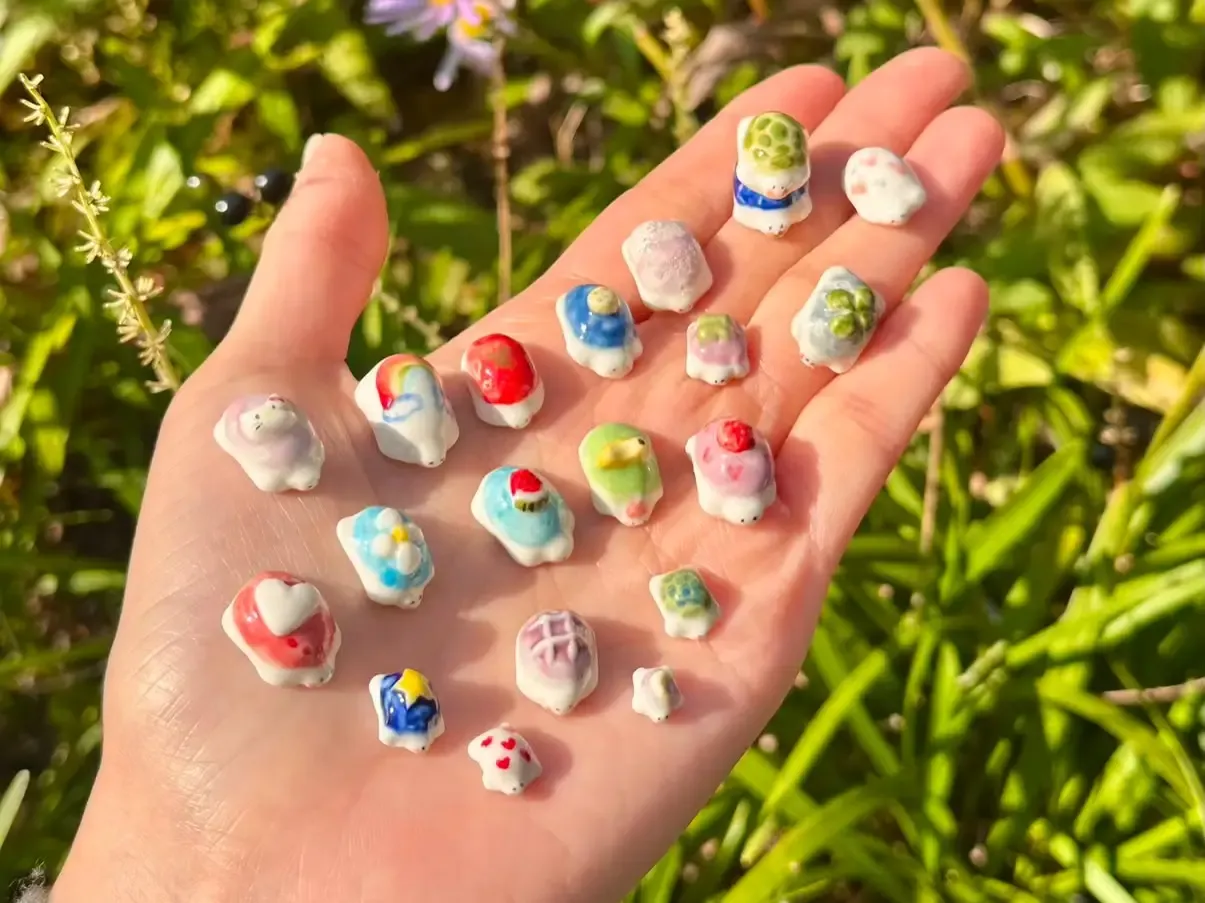
South Korean Gen Z is sticking tiny turtle charms to their phones, with vendors selling colored turtles that symbolize different kinds of luck, including a deal that lets buyers pick between two random turtles for 3,500 won (about $2.40). For decision-makers, the trend is a real-time case study in how stressed young consumers spend on small, meaning-rich collectibles that spread through influencer culture.
A 26-year-old ceramic artist in Seoul is handmaking hundreds of miniature porcelain turtles each week. South Korean Gen Z then attaches those charms to their phones, using them as portable symbols of luck while navigating the everyday stress of work and life. And yes, one popular Instagram seller is even offering a little gamble: buy two random turtles for 3,500 won, or about $2.40, and hope the colors and meanings line up with what you want.
The turtles are not random in meaning, even when they are random in purchase. Pink signals love, green signals health, and yellow signals money. The broader idea, according to the artist behind the trend, is that the charm is less a magical life-changing device and more a reminder that good things can happen, delivered in the cutest possible format. In a market where “small luxuries have become even smaller,” this is coping gear that doubles as self-expression, and it spreads fast because it looks great on camera.
The hype did not stay niche for long. The trend went viral in the usual South Korean way, turbocharged after K-pop stars were spotted wearing the charms. On July 20, Dino, the singer from the megahit boy band Seventeen, showed off a pair of turtles on his phone during a Weverse livestream. The turtles’ colors echoed Seventeen’s rose quartz and serenity band colors and were meant to represent health and wealth. Other music stars also jumped in, including Choi San from Ateez and Nayeon from Twice. Nayeon reportedly had three different-colored turtles on her phone case: blue for success, pink for love, and yellow for wealth.
Then came the ingredient that turns a style into a micro-market: influencer-enabled product validation. Sung Hanbin, the leader of boy band Zerobaseone, spotlighted ceramic artist Selynn Hwang while showcasing her turtle charms during a livestream. In this case, the turtles were more customized. Sung’s three turtles had designs of rice balls, Pokémons, and pink clovers, showing how the core concept can scale from a simple color code into personalized artwork. That kind of customization matters because it lets the same “luck” theme support multiple buyer identities, from pop-culture fans to people wanting career-themed good vibes like a firefighter turtle or a chef turtle.
Hwang is not a giant brand with a factory. She started in 2023, when she created miniature turtles for her university graduation exhibition and began selling them at flea markets around Seoul. She now makes hundreds of tiny porcelain turtles for pop-up stores, handmaking them and glazing them with symbols like hearts, coins, and clovers. She can also paint custom turtles representing different professions, and she has even made a turtle for a customer from the US with the American flag painted on it.
Pricing also reflects how collectibles work when the product is intimate. Hwang’s handmade turtles are priced between 10,000 and 20,000 won, or roughly $7 to $14, with custom turtles priced higher. But the entry point trend is what broadens the audience. One popular seller, “Bora_and,” has 60,000 followers and sells tiny adhesive turtles in different colors that match the luck categories. The “buy two random turtles for 3,500 won” format turns the purchase into a quick, low-risk ritual, similar to other collectible behaviors where the excitement is partly in the unknown.
Under the hood, this is part of a bigger collectibles wave that is not limited to South Korea. The source frames it in the context of “kidults,” a demographic tied to a broader pattern: economic stress can push younger consumers to spend on small-ticket items, and the items are designed to deliver emotional meaning, not just utility. The past two years have included bag charms like Pop Mart’s Labubu and Jellycats, framed photocards of pop artists, and collectibles such as Pokémon trading cards and K-pop photo cards. Blindbox toys like Sonny Angels and Smiskis have also built a massive global cult following. Turtle charms fit that same behavioral pattern, just with a new visual motif and a luck narrative.
For executives, the second-order implication is not that everyone should sell turtle-shaped luck on phones. It’s that the market is rewarding meaning-dense, personalization-friendly products that can ride cultural distribution channels like K-pop livestreams. A small ceramic charm becomes a “beacon of hope” because it is small, customizable, color-coded, and visible in the ecosystems where young audiences already pay attention. In other words, this is a reminder that distribution and emotional framing can matter as much as manufacturing scale. If you are leading a consumer brand, investing in retail, or overseeing product strategy, the question is simple: are you building for a customer’s moment, or just their wallet?
This story's Key Insights and Take-aways are locked.
Create a free account to unlock Executive Actions for one credit.
Register to UnlockAlways free for Executives Club members. Join the Club
More in Business

Anthropic’s Levant Alpöge cracks the Jacobian conjecture after 87 years
A Harvard valedictorian used Claude to hit a 1939 breakthrough, but the missing “why” is the real problem.

Uber buys Delivery Hero for nearly $15B, vaulting to top food delivery outside China
The deal doubles Uber's dual-services footprint and pushes a ride-and-eats bundling play into 50 more markets.

Epic and Google drop settlement bid, forcing rival Android app stores by July 22
Google told the court it is ready to carry third-party app stores starting Wednesday, July 22.