
GM EVs soon charge on more public charger types, Engadget reports
A standards-and-compatibility update that affects charging convenience, partner infrastructure plans, and fleet expectations.
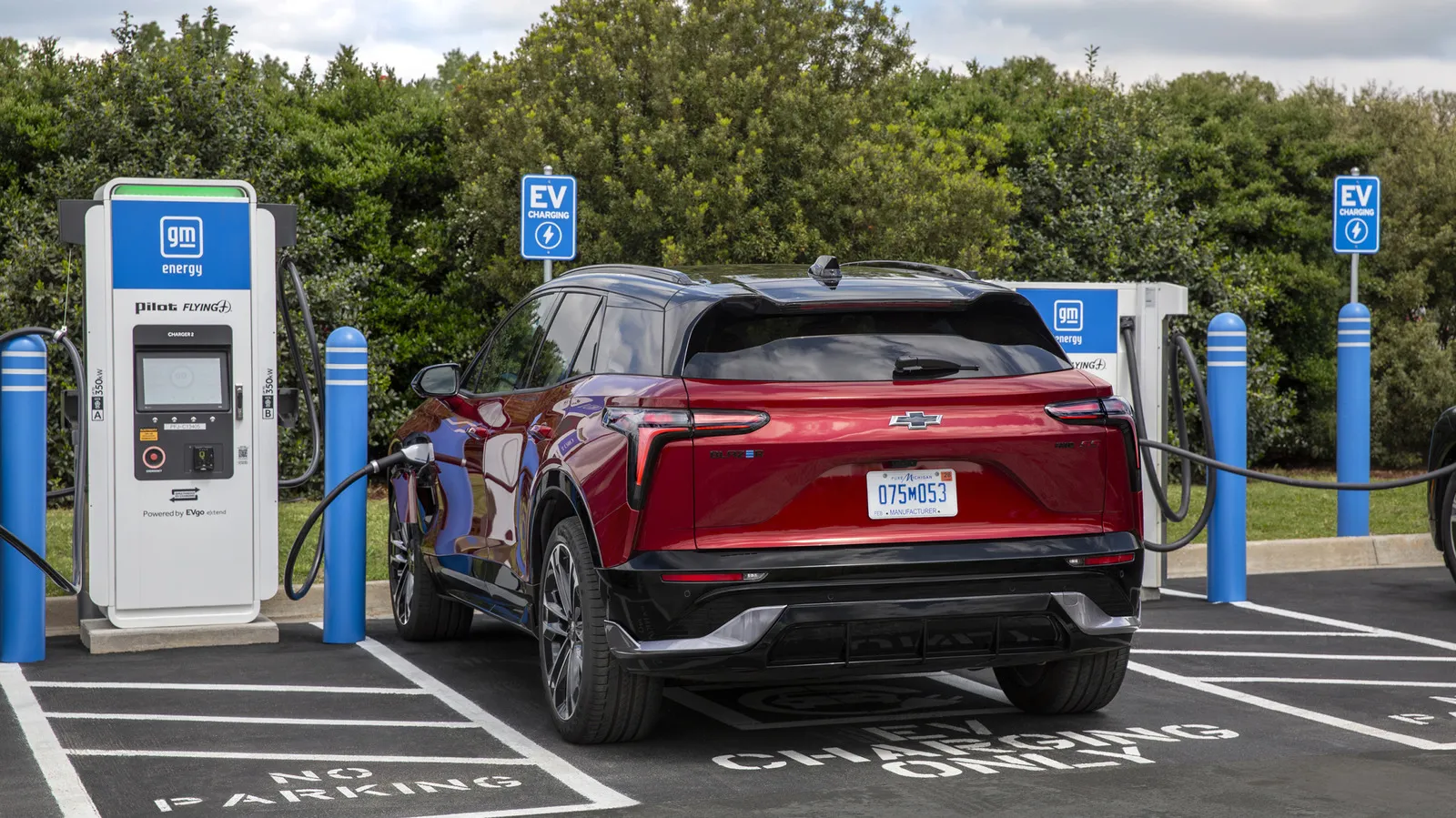
GM EVs are expected to soon support topping up at more kinds of public chargers, per Engadget. The move matters for decision-makers because it reduces friction with charging networks and makes EV operations more predictable.
GM EVs are about to get more flexible at public charging. According to Engadget, GM vehicles will soon be able to “top up” at more kinds of public chargers, which is the kind of practical upgrade that tends to move the real-world EV needle faster than flashy new specs.
The core promise here is simple: more public charger types will work for GM drivers sooner rather than later. In the EV market, “works” is the whole game. Drivers do not decide where to charge based on battery capacity charts or marketing. They decide based on whether the cable starts, the session actually runs, and the vehicle accepts the payment and handshake without drama. Expanding compatibility directly attacks that daily annoyance factor.
To understand why this is meaningful beyond a line in a news brief, you have to zoom out to how public charging infrastructure has evolved. Charger networks and station deployments do not all share identical underlying technologies and communication behaviors. Even when most chargers are “DC fast charging” in casual terms, there can be meaningful differences in standards, implementation details, and network software that determine whether a specific EV model can initiate and complete a session cleanly.
That creates an ongoing coordination problem across the EV ecosystem. Automakers build vehicles. Charger operators deploy hardware. Network providers manage software and authentication. And regulators, in many regions, push for interoperability so drivers are not forced into a single ecosystem. Compatibility upgrades are the patch that turns “in theory” charging availability into “in practice” charging reliability.
For GM, expanding EV support to more charger types is also a competitive positioning move, even if the news itself is understated. EV buyers and fleet managers increasingly treat charging access like public utilities, not like an optional perk. If GM vehicles work across more locations, GM can offer a smoother ownership story without requiring customers to memorize which stations are safe bets. That matters especially for drivers who travel, for anyone living outside dense urban areas, and for fleet operators who optimize routes and uptime.
Second-order, this also impacts how charger networks plan their investments. Charger operators want to be able to serve as many vehicles as possible to maximize utilization. If a meaningful automaker expands compatibility, it can shift demand patterns. Even when stations already have wide coverage, adding another layer of “vehicle acceptance” can reduce abandoned sessions, lower the friction that leads to missed charging opportunities, and improve overall user experience. Better utilization is not just a driver convenience win. It is also a board-level KPI for charging infrastructure companies trying to justify capex and keep payback timelines intact.
There is another angle that matters for decision-makers: the operational reality for charging support teams. When EV support expands, customer service volumes can change. If sessions go smoother across more charger types, you often see fewer failures that require refunds, troubleshooting, and manual intervention. That reduces cost and protects brand trust. In a world where EV adoption still runs into “charging anxiety,” fewer edge-case problems can be more valuable than it sounds.
Ultimately, this is a small sentence with big practical implications. Engadget reports that GM EVs will soon support topping up at more kinds of public chargers, and that translates into one thing drivers and operators care about: fewer dead ends. In a market where every percent of adoption and every minute of uptime counts, compatibility improvements are one of the fastest ways to turn infrastructure from a promise into a habit. For executives at automakers, charging networks, and fleets, the strategic takeaway is clear. The EV experience is increasingly shaped not just by battery performance, but by how well vehicles integrate with the real, messy charging world that exists today.
This story's Key Insights and Take-aways are locked.
Create a free account to unlock Executive Actions for one credit.
Register to UnlockAlways free for Executives Club members. Join the Club
More in Technology

OpenAI says 10,000 agents cracked a 90-year math problem in 88 hours
The company's claim is audacious, but one mathematician is pushing back. Here's what it means for AI-driven discovery.

Meta still serves child sexual abuse ads on Instagram in India - BBC report
A new report following the BBC Eye investigation says the ads are still there - what it signals for every platform with a self-serve ad engine.

White House yanks 'Build the Wall' game after Tetris Company copyright warning
The administration's arcade game vanished in hours - and the takedown playbook every brand can learn from.