
Gwynne Shotwell’s SpaceX stake clears $2B after IPO under ticker SPCX
COO Gwynne Shotwell’s launch-day “Scotland” ritual is now a billionaire balance sheet signal for investors.
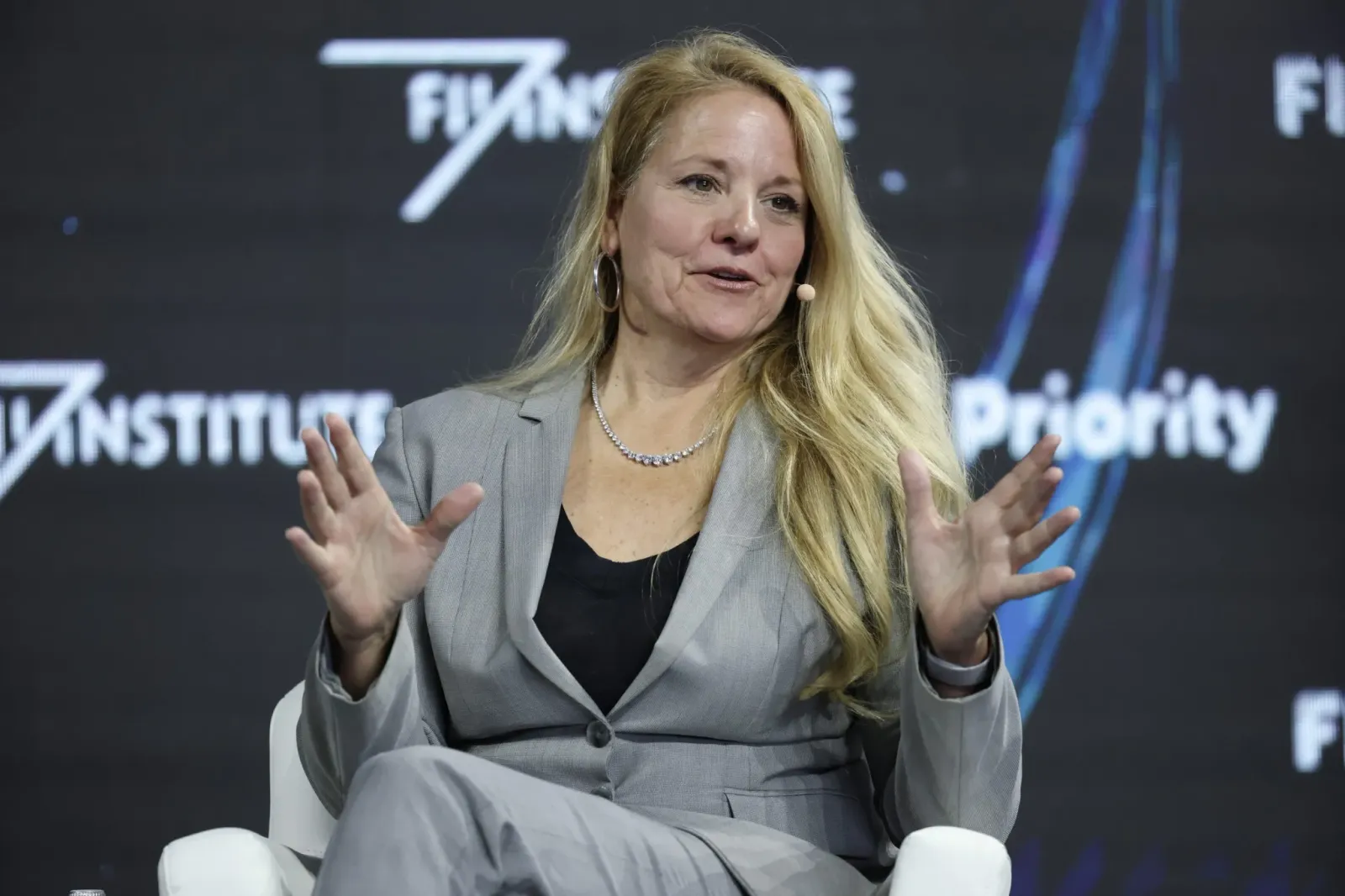
SpaceX’s IPO debut Friday under the ticker SPCX valued the company around $1.77 trillion, and President and COO Gwynne Shotwell’s holdings are worth over $2 billion. For decision-makers, her track record turns the launch hype into a practical question: can SpaceX’s future spending beat the capital markets’ patience?
When SpaceX began trading Friday under the ticker SPCX, at a valuation of roughly $1.77 trillion, President and COO Gwynne Shotwell’s stake cleared a round-number milestone: based on the closing price, her 12.6 million shares are worth more than $2 billion. That is not just a headline number. It’s a market verdict on a specific kind of operator: the engineer-turned-COO who converts Elon Musk’s ambitions into deadlines, and who has spent years living with the reality that rockets do not care about narratives.
Shotwell is also the person who has described her own decision style as needing more data than Elon does, and she has built SpaceX’s culture around what she calls the “right fail to make.” The company can hit targets but struggle on timelines, and she frames that as part of learning, not a moral failure. The IPO prospectus does the opposite of calm: it promises AI data centers in orbit by 2028, a Starship that turns around “like an airplane,” and even a million-person Mars colony. In other words, the market is now putting money behind a future that is both wildly specific and inherently hard to schedule. Shotwell’s $2 billion outcome is the immediate consequence.
The backstory matters because it explains why she looks like an unlikely billionaire on paper, and why investors are watching her as more than a mascot for space entrepreneurship. Born in 1963 and raised in Libertyville, Illinois, Shotwell showed up early for STEM and leadership. She watched Apollo 11 at age five and found it boring, then became a cheerleader and varsity basketball player, finishing at the top of her class. She didn’t set her course until her mother dragged her to a Society of Women Engineers panel at the Illinois Institute of Technology. She said the conference bored her until she saw a “fabulous” woman engineer whose shoes and bag made mechanical engineering feel approachable. That moment nudged her into mechanical engineering.
Her path was also full of the kind of small setbacks that later turn into company-level resilience. At Northwestern, she was one of three women in a class of 36. She interviewed at IBM on the day the space shuttle Challenger exploded; shaken, she didn’t get the offer and instead went into Chrysler’s management training program. She later pursued a master’s in applied math, spent a decade at the Aerospace Corporation in El Segundo, Calif., doing thermal analysis, and then spent four years running the space systems division at Microcosm, a low-cost rocketry shop.
SpaceX recruited her at the moment when a startup needed operators who could do the unglamorous work. In 2002 she had lunch with a former colleague who had jumped to SpaceX. She got a tour afterward, and she only spoke with Elon Musk for three or four minutes. She says she wasn’t looking for a job and didn’t have a résumé. SpaceX later called her to apply to run business development. After a month of hesitation that ended when she was pulled over on an LA freeway, she became employee No. 11. She left a stable job where she held a 3% stake. She also recalls calling Musk “an idiot” over the decision, then was welcomed to the team.
Those roots show up in how she describes SpaceX’s decision-making and learning loop. “I need more data than Elon does to make a decision,” she said at Stanford Business School’s View from the Top podcast. SpaceX, she argues, is built to accept failures as data, because each launch teaches something even when outcomes are imperfect. “If a launch goes perfectly, all you’ve learned is that that launch vehicle on that day worked,” she told investors. “When you have failure, you actually get this treasure trove of data.” That logic is especially relevant now because the company is no longer just doing hardware. It is doing capital-heavy platform bets.
The capital position is the part that will keep executives up at night. Since SpaceX absorbed xAI, it has taken on $29 billion in debt, and Shotwell has characterized it as deeply unprofitable. She connected the evolution from the early “penurious Falcon 9 Dragon days” to the more expensive, capital-intensive Starship, and then to AI as the “next-level expensive” phase. She has also defended not focusing on earnings right now, telling retail investors to cut the company slack because “What we're doing is very futuristic.” That may work short-term, especially for a company that has spent much of its history proving it can learn through failure. But after a public debut, “futuristic” becomes a timing problem, and timing is where public markets get strict.
Shotwell’s credibility also extends beyond engineering, into the governance and risk management problem every high-profile CEO creates. She has been described as embodying the hedge against key-man risk, including during Musk’s June 2025 feud with President Donald Trump, when Musk threatened to decommission the Dragon capsule. She also sent a companywide letter after harassment allegations surfaced in 2022, writing: “I don't believe he could have done what he was accused of. But he is imperfect. I'm imperfect.” She argued Musk is “probably the best CEO in history, in my opinion, humble opinion,” and defended supermajority-voting control as correct. Pressed on succession, she allowed that the company would not collapse without Elon, but it “would by no means be the same.”
All of that is why her $2 billion stake is not just personal wealth. It is a proxy for investor belief that SpaceX can reconcile three competing forces: extreme technological ambition, real-world timeline slippage, and an increasingly expensive operating model that includes AI. SpaceX is now being measured against other companies making public debut promises. For boards and executives across tech, finance, and aerospace-adjacent industries, the question is painfully familiar: when the future arrives, can the operator behind the platform hold the schedule long enough to convert valuation story into durable cash reality?
This story's Key Insights and Take-aways are locked.
Create a free account to unlock Executive Actions for one credit.
Register to UnlockAlways free for Executives Club members. Join the Club
More in Business
Fox agrees to buy Roku for $22B, paying $160.00 per share
What looks like a simple streaming bet is actually a $22 billion corporate reshuffle with board and regulatory gravity.
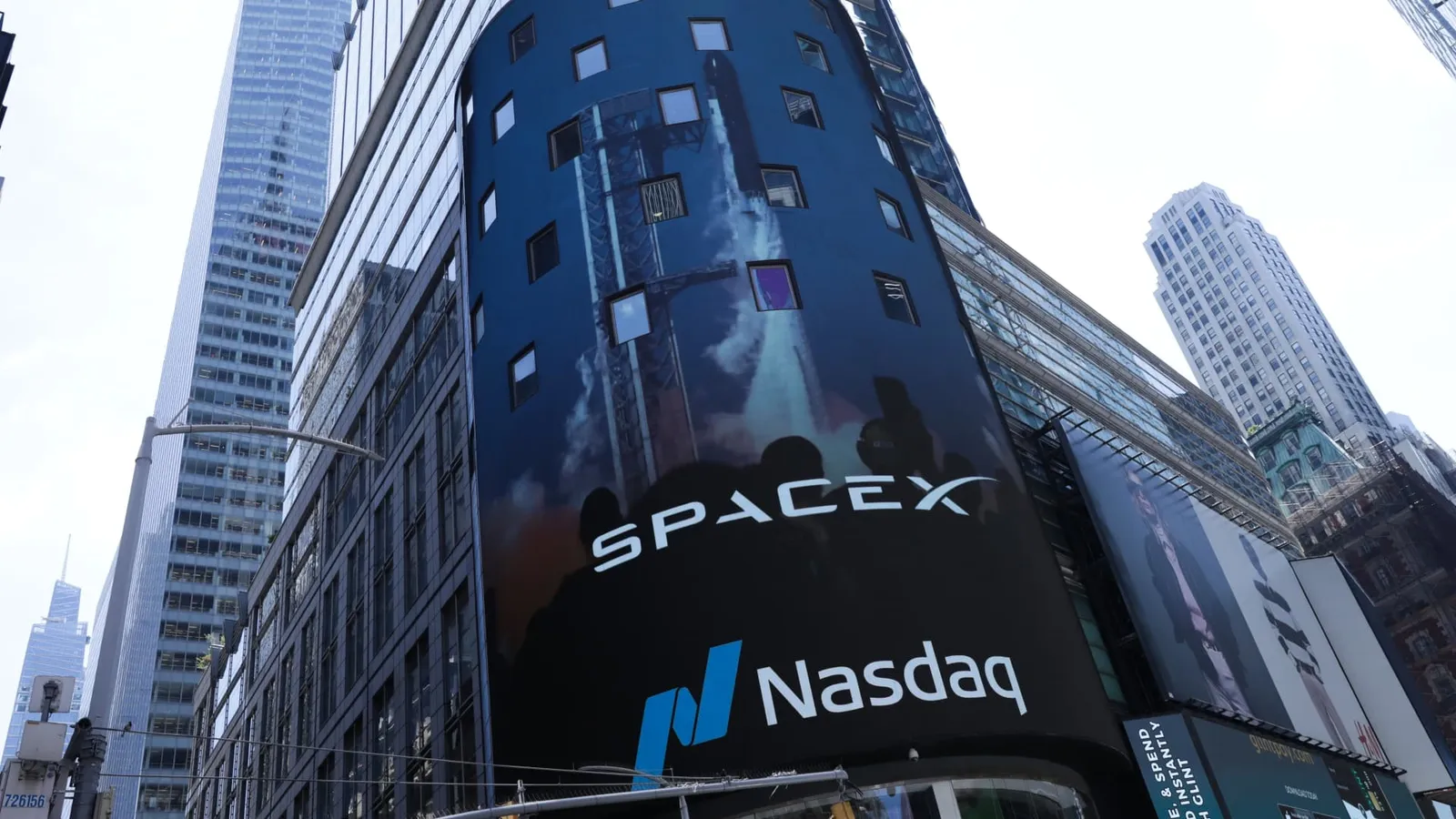
SpaceX jumps 6% in premarket, valuing the company at $2 trillion+ after its debut
The stock’s first-day surge pushes SpaceX past $2 trillion, reshaping how investors and regulators think about private space risk.

Elon Musk says SpaceX could earn $1tn yearly by 2030 after record IPO
A two-day post-IPO comment on X frames a trillion-dollar pace by 2030, with implications for investors and regulators.