

Hasbro records a $56M write-down as it cancels 2028+ games, still leaning on Baldur's Gate 3
Chris Cocks outlines a narrowed digital bet on Magic, D&D, and RPG platforms, with spend down 25% per year by 2028.
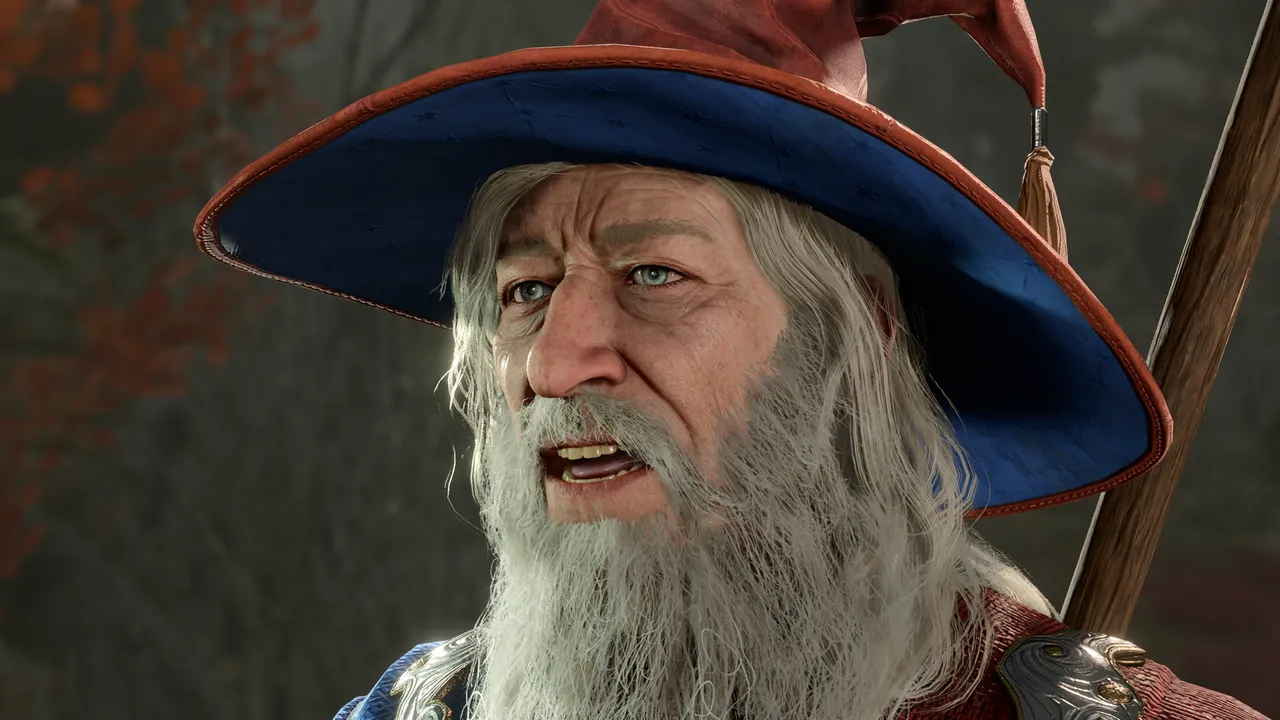
Hasbro CEO Chris Cocks said the company recorded a $56M non-cash impairment in its second quarter tied to cancelling several games scheduled for release in 2028 and beyond. He framed the move as a portfolio reset that keeps Baldur's Gate 3, and other RPG and trading card franchises, central to Hasbro's digital future.
Hasbro just booked a $56 million non-cash impairment after cancelling multiple games that were expected to ship “in 2028 and beyond.” In the same breath, it also doubled down on a very specific kind of bet: RPGs and trading card games, anchored by Baldur's Gate 3. And if you are an operator, investor, or board member, the real story is not the accounting label. It is what this write-down signals about how Hasbro is pruning risk, and what it is preserving as its “right to win” in digital.
Let’s get the headline number right. In its second-quarter financial report, Hasbro recorded “$56 million non-cash impairment” for capitalized costs related to those cancelled projects. “Non-cash” matters because it is not cash leaving the building. PC Gamer notes it is an impairment that reflects an unexpected decrease in the value of an asset versus its book value, separate from standard depreciation. Still, it is not a rounding error. When a public company pulls the plug on long-dated releases and then takes an impairment, it is telling the market that assumptions changed, timelines slipped, or returns stopped looking durable.
This comes only a couple of years after Hasbro leaned heavily into videogames. In 2022, Dan Ayoub, head of digital product development at Hasbro-owned Wizards of the Coast, said the company had “over $1 billion in games right now being developed” and called videogames “an integral part of Hasbro's strategy going into the next 100 years.” Two years later, the tone is less “next 100 years” and more portfolio triage. On an investors call, CEO Chris Cocks explained that the work included cancelling “several games scheduled for release in 2028 and beyond” and recording the $56M non-cash write down “for related capitalized costs.” He also linked the reset to focusing digital investment behind the areas where Hasbro sees the clearest upside and “where Hasbro has the strongest right to win.”
What specifically got cancelled is partly a mystery. Hasbro did not specify which game cancellations created the $56 million impairment. Exodus, described as a Mass Effect-like game, is still ticking over. Until recently, it was headed by BioWare veteran James Ohlen, but the broader point is that not every project is being cut. The more fragile-looking thread involves a big GI Joe game announced in 2021. Hasbro told Wccftech in February that the GI Joe game “had not been cancelled,” despite reports to the contrary, but it said the dev team was “taking time to evaluate the path forward for the game.” That kind of “not cancelled, but paused and re-evaluated” is often where budgets tighten, scope changes, and long production cycles become liabilities. Hanging in the background is also a D&D project that was cancelled earlier this year, from Stig Asmussen's Giant Skull studio.
If you are trying to understand why this matters beyond Hasbro’s P&L, look at the contrast. Hasbro’s digital momentum has been disproportionately tied to the success of Baldur's Gate 3. PC Gamer points out that despite the game’s 1.0 release three years ago, with tens of thousands of people still playing, Hasbro has not announced any follow-up. That absence is being treated as emblematic of deeper-seated problems at the company, at least by PC Gamer’s Harvey Randall. Whether you interpret that as execution risk, organizational friction, or just portfolio rebalancing, the market signal is clear: Hasbro wants to avoid funding “maybe” franchises when it can fund what it believes are durable ones.
Cocks laid out what the new strategy is supposed to look like. Trading card games and RPGs are the center of gravity, with “strong proof points” including Magic: The Gathering and Baldur's Gate 3. He emphasized that Baldur's Gate 3 is “one of the biggest and most awarded role-playing games of the last decade.” Then he attached a calendar to ambition: 2026 should be the company’s “peak year for digital investment,” driven by Exodus and Warlock. The plan is also explicitly cost-focused. Hasbro aims to reduce its “total digital spend” by at least 25% per year by 2028.
How do you cut digital spend while still launching games? Cocks said the company will accomplish it by moving development to lower-cost regions and using “more mature tools, teams, and production processes.” That is corporate-speak, but it is still actionable: fewer high-conviction, higher-cost bets, more standardized pipelines, and cheaper production geography. The source also notes AI was not specifically mentioned in this outline, but it highlights that Cocks has previously expressed real enthusiasm for generative AI. At the same time, Hasbro recently caught heat for reportedly trying to get child actors from Peppa Pig to agree to have their voices used for AI development. Even without new details in this piece, that regulatory and reputational backdrop is a reminder that “digital strategy” is not just about units and margins. It is also about consent, rights, and the legal and cultural risk that comes with training voice and content systems on human performance.
For peers, the second-order implication is about capital allocation discipline. Hasbro is basically saying it will fund fewer things, more directly, and with a sharper bias toward franchises it already owns or can partner around. It mirrors, in spirit, the direction recently adopted by Xbox: Xbox put thousands of people out of work and dumped four studios to shift focus to its biggest-name franchises. Hasbro is not describing identical tactics, but Cocks’s line about concentrating investment behind a “concentrated number of high-conviction owned titles” echoes that same logic. If you sit on a board, run a studio portfolio, or invest in games and adjacent IP, the question is the same: are you building a wide catalog, or a focused engine that can survive changing budgets and shifting audience attention?
This story's Key Insights and Take-aways are locked.
Create a free account to unlock Executive Actions for one credit.
Register to UnlockAlways free for Executives Club members. Join the Club
More in Business

Anthropic’s Levant Alpöge cracks the Jacobian conjecture after 87 years
A Harvard valedictorian used Claude to hit a 1939 breakthrough, but the missing “why” is the real problem.

Uber buys Delivery Hero for nearly $15B, vaulting to top food delivery outside China
The deal doubles Uber's dual-services footprint and pushes a ride-and-eats bundling play into 50 more markets.

Epic and Google drop settlement bid, forcing rival Android app stores by July 22
Google told the court it is ready to carry third-party app stores starting Wednesday, July 22.