

Helium-3’s moon mining rush: expensive gas meets forecasted demand surge
A costly isotope could become a strategic resource, and the lunar plans are forcing new questions about supply, regulation, and risk.
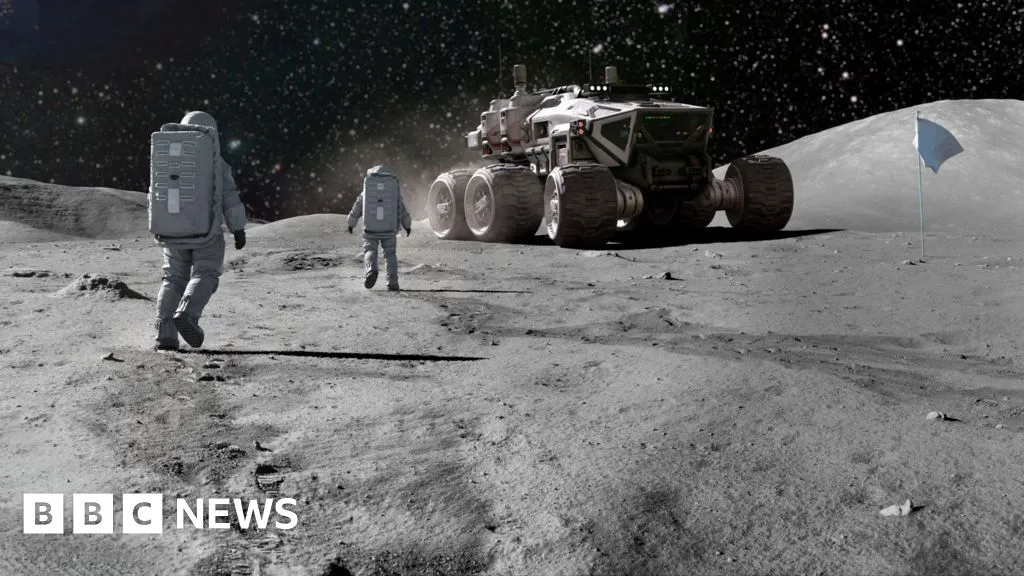
Helium-3 is expensive and some planners are considering mining it on the moon as demand is forecast to soar. For decision-makers, that links an emerging space resource to near-term commercialization and long-tail regulatory uncertainty.
Helium-3 is expensive, and demand is forecast to soar. That combination is exactly why some planners are looking at the moon as a supply source instead of waiting for terrestrial production to scale. The pitch is simple: if the market price is high and the growth curve is steep, the incentive to chase new extraction locations gets serious fast.
What makes the story feel less like sci-fi and more like strategy is the implied mismatch. If helium-3 stays scarce on Earth while demand climbs, prices and competition for any workable supply route tend to accelerate. In that environment, teams do not just ask “can we make it?” They ask “where can we access it, and how quickly?” The moon enters the conversation because some planners believe it could provide a pathway to mining helium-3 rather than relying on a limited set of Earth-based alternatives.
To understand why executives are even talking about helium-3 at all, you have to think in terms of how markets respond to bottlenecks. When a commodity is expensive, it is usually expensive for one of two reasons: supply is hard to grow, or demand is poised to shift upward faster than supply. This story explicitly claims both. Helium-3 is expensive, and demand is forecast to soar. Put those together and you get the conditions that drive aggressive moves: partnerships, capital allocation debates, and rapid scoping of feasibility.
That is where the moon plans become consequential. Space projects are not like swapping out a supplier. They require capital commitments, long lead times, complex mission design, and the patience to survive delays. They also introduce governance questions that normal industrial supply chains often never face. Even before you get to extraction, you have to clear the regulatory and legal framing that determines who can do what, where, and under which rules. When the resource is tied to national interests, security concerns can creep in. When the extraction happens in a non-traditional environment, oversight becomes a bigger deal because there is less precedent to lean on.
Boards and CFOs should also notice the risk pattern that comes with “future demand.” Forecasts can be right, wrong, or right but late. That means organizations planning lunar helium-3 mining have to manage two different horizons at once. On one horizon, they have to execute technical steps and mission milestones. On the other, they have to keep an eye on whether the forecasted demand actually materializes in a way that justifies the investment. In other words, they need to avoid funding a plan that assumes the market will behave like a straight line.
There is also a competitive dynamic hidden inside “some are planning.” Even if the broader field is unclear, any credible path that reduces scarcity tends to attract attention. That can create a scramble: first-mover advantage is possible, but so is first-mover regret if the regulatory environment or technical reality turns out harder than expected. For executives, that translates into board-level questions about how to structure commitments, how to stage investments, and how to ensure options remain open until feasibility is proven.
Finally, the second-order implication is about what this could signal for other space resources. Helium-3 is expensive today, and the forecasted demand surge is a magnet for bold proposals. If moon mining for helium-3 becomes a serious commercial track, it may normalize the idea that certain high-value commodities are not just “future space economies” but something companies will try to operationalize. That can change how capital markets evaluate space-adjacent ventures, how governments negotiate roles, and how enterprises think about supply security beyond Earth.
For peers making decisions in adjacent domains, the stakes are straightforward: if demand for helium-3 is truly forecast to soar while it remains expensive, then the planning decisions being made now can determine who has access to supply later. The moon is simply the most aggressive version of “solve the bottleneck.” Whether it works will depend on execution and governance. But the incentive to attempt it is already visible in the core facts: helium-3 is expensive, and demand is expected to climb.
This story's Key Insights and Take-aways are locked.
Create a free account to unlock Executive Actions for one credit.
Register to UnlockAlways free for Executives Club members. Join the Club
More in Technology

Nvidia's $89B data center quarter: the 9 companies cashing in
The AI buildout is minting fortunes beyond GPUs, and memory, cloud, and cooling suppliers are riding the same wave.

A YouTuber dissected the iPhone Duo and thinks he found crackgate's cause
CuriousHagi's teardown of Apple's foldable reveals a gear-like hinge that may explain why screens crack in the same spot within hours.

Google quietly links your phone number to every Android account on your SIM
Adding a SIM now ties your phone number to all Google accounts - and future accounts inherit it. Here's the security and privacy stakes.