
Idols of Ash turns 2 hours of eerie descent into grappling-hook hell
A $3 Steam hit uses a grappling hook to plunge you into a pit, then throws in a centipede panic test.
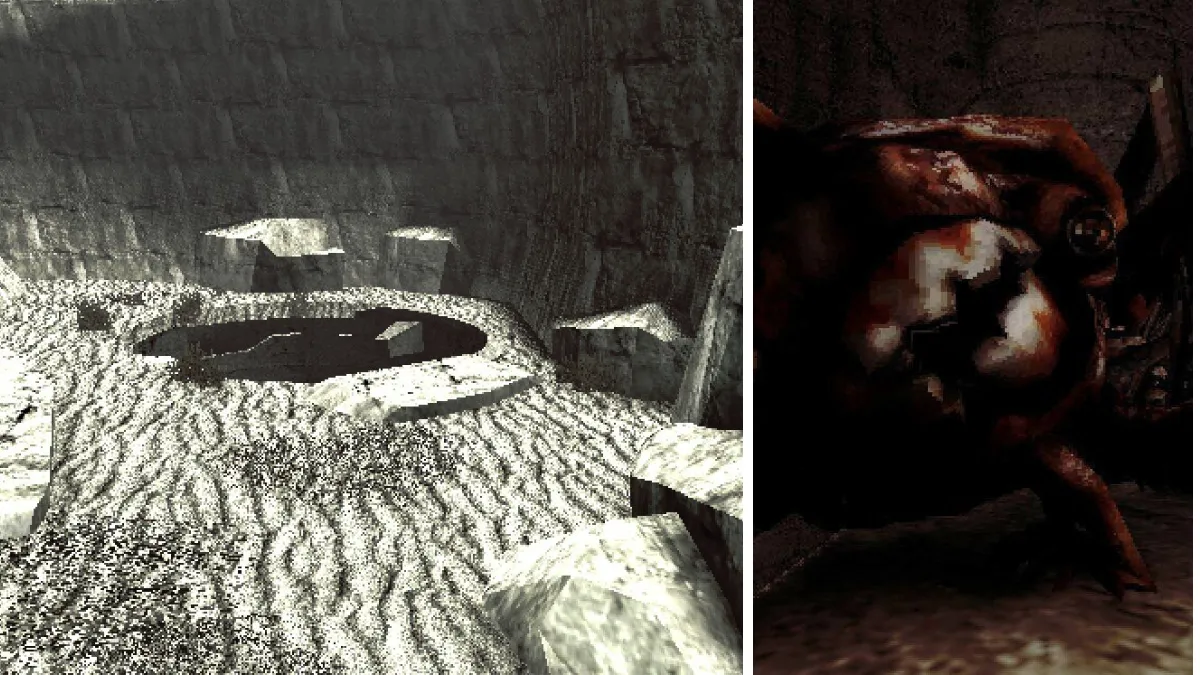
Idols of Ash, a $3 first-person horror/platformer on Steam, leans on a grappling hook to deliver a tense two-hour descent, then detonates it with a giant centipede. For decision-makers tracking game design and audience retention, it is a clear case of mechanics-driven engagement with post-completion modes that reshape how people value challenge.
Idols of Ash costs $3 on Steam, has over 2,000 Overwhelmingly Positive reviews, and it takes about two hours to complete if you play it straight. The twist is that this timeline is built around one specific mechanic: a grappling hook that is supposed to make descending a pit feel controlled, safe, even methodical. Then the game flips the script.
You start at the mouth of a mysterious, fathomless pit with a simple objective: reach the bottom. At first, descending looks like familiar first-person movement, stepping or dropping from one platform to the next, like down a well or into the interior of a giant tree. The atmosphere stays in melancholy murk, widening and contorting as you go in a way that nods to the feeling of abyss-hopping you see in Dark Souls-style level design. But Crucially, the grappling hook changes everything about how you interpret risk. Hook into where you are standing, descend safely to the full extent of your rope. Or take bigger, more daring moves by dropping without an anchor and hooking onto a surface mid-fall. You can also swing, build momentum, and chain leaps toward distant platforms.
And for a while, you get what you came for: slow, deliberate learning. The movement system becomes more flexible and expressive the more you interact with it, and the review describes the early pace as a slowburn exploration game for “nyctophiles.” The key word there is control. Then the control gets audited in the least subtle way possible. A giant centipede appears from the gloom above, snapping the player in half with trunk-sized mandibles, ending the run instantly. That tonal whiplash is what makes the moment feel like a reckoning rather than a scare. The review even frames it as a rage quit moment, followed by a return driven by the grappling hook promise and the eerie, cylindrical subterranea.
Once the centipede enters the picture, the game’s pacing becomes an operating system. The reviewer learns to go faster, and the deeper you descend, the less you can rely on purely hooking and descending. You are pushed into jump-and-catch timing, swing-and-leap execution, and surface-specific knowledge, including what the grappling hook can grapple to and how much slack you need for quick scurrying leaps. Sometimes the answer is simply to hope for the best, which is not comforting. It is the point: descending Idols of Ash stops being about watching the environment and starts being about surviving your own movement decisions.
From a design lens, that reads like a manifesto. The review explicitly says Leafy Games does not want you to descend methodically, pausing to take in depressing sights now and then. It wants the experience to feel like an arena shooter without a gun, where your success is about reflex, dexterity, and staying inside the rules of motion. That is a second-order shift for players too: at normal difficulty, the centipede is not described as moving much faster than the player, meaning the challenge is not raw speed alone. It forces instinct and dexterity, which makes skill the lever rather than brute attrition.
Runtime and replay structure also do real work here. The reviewer estimates completion around two hours, while some Steam forum users reportedly finish in about 20 minutes. Once you complete it, you unlock Nightmare mode, which removes checkpoints and speeds up the centipede. The review notes many people seem to think this is the right way to play, but the reviewer draws a line and declines it. There is also sandbox mode, unlocked after completion, which lets you explore without the centipede and tweak modifiers such as shorter or lengthier ropes and heightened or reduced fall damage. For executives watching engagement loops, that mix matters: Nightmare mode sells intensity, while sandbox mode sells experimentation and comfort with the same core traversal fantasy.
Then there is story. The review describes a cryptic story threaded through the game, with a climax that lands as oddly impactful despite vague exposition earlier. The reviewer believes it hits because the player genuinely feels like they escaped a horrible, high-stress scenario. That is not just narrative. It is an emotional payoff engineered by the traversal and threat system. In other words, the story does not “explain” itself so much as cashes in the player’s stress investment.
Finally, the meta takeaway for decision-makers is this: Idols of Ash is an extraordinarily fun first-person platformer disguised as a feverish nightmare, and it sells the product experience through mechanics clarity and threat escalation, not through padding. It is on Steam and Itch, priced at $3, and it already shows strong early traction with over 2,000 Overwhelmingly Positive reviews. If you run studios, fund teams, or build platforms, the lesson is straightforward: a single powerful mechanic can create trust, and then difficulty can earn attention by changing how players think and move. If you get that balance wrong, the centipede moment becomes rage bait instead of retention. Get it right, and you have a two-hour descent people talk about, plus modes that extend replay without diluting the core fantasy.
This story's Key Insights and Take-aways are locked.
Create a free account to unlock Executive Actions for one credit.
Register to UnlockAlways free for Executives Club members. Join the Club
More in Entertainment

Marjane Satrapi dies at 56, and Saudi culture pushes formal arts development
The death of Persepolis creator Marjane Satrapi at 56 coincides with a Saudi Ministry-Royal College of Art push to grow talent.

Valve sent a free Steam Deck case after a newborn’s vomit ruined his original
The case wasn’t a product demo. It was customer service that treats retention like a core feature.

Taylor Sheridan's Paramount+ reign ends early as South Park tops rankings
Sheridan’s Yellowstone-era dominance on Paramount+ gets undercut by South Park, even before his NBCUniversal shift starts in 2029.