
SpaceX vaults past Amazon in 3 days, briefly topples Microsoft, and enrages some bulls
Market cap, Musk wealth, and retail mechanics collide with acquisition-driven AI spend and looming investor scrutiny.

SpaceX, newly public and only three days into trading, surpassed Amazon’s market capitalization and briefly overtook Microsoft, with Elon Musk’s wealth soaring to $1.27 trillion. The move is powered in part by SpaceX’s Cursor acquisition, but the quarter-by-quarter reality check is already approaching for investors.
SpaceX just did something that sounds unreal until you check the tape: in its first three days of public trading, it surpassed 31-year-old Amazon in market cap, and it briefly overtook Microsoft on Tuesday morning. That sprint matters because SpaceX is still a fresh IPO, and the market is treating it like an already-proven mega platform, not a company with only a few days of price discovery. The euphoria is visible in the headline numbers, too. Musk is now worth $1.27 trillion, more than triple Larry Page’s $314 billion, and on Tuesday he made about $165 billion, which is more than Warren Buffett has made in his entire career.
The stock surge is even more striking when you compare fundamentals. SpaceX earned less than a quarter of what Amazon raked in. Last year, SpaceX took in $18.7 billion in revenue and lost $4.9 billion, while Amazon took in $717 billion and earned $77.7 billion in profit than SpaceX has made in sales. The disconnect is the point. The market is not rewarding current profitability, it is underwriting a future where SpaceX becomes the platform behind reusable rockets, Starlink, an AI lab, and even a “vibe-coding” tool. So the key question becomes not “did it go up,” but “is this valuation a bet on a fourth industrial revolution, or does it overshoot like other retail-fueled blowups?”
Part of the Tuesday jump traces to SpaceX’s acquisition of Cursor, an AI coding tool associated with “vibe-coding” fame. The acquisition reportedly cost more than SpaceX has spent on rockets in the company’s lifetime, according to Eric Berger, a senior space editor at Ars Technica and a leading expert on SpaceX. Cursor is described in the source as generating $3 billion in revenue, which helps explain why investors are willing to look past red ink today and focus on revenue composition tomorrow. In the source’s framing, this is more than a random software purchase. It’s a strategy bolt-on that combines SpaceX’s existing ecosystem with AI development tools.
To understand why the market is reacting so fast, you also have to understand who is buying and how constrained the supply is. Retail investors, per Vanda Research, poured $225 million into SpaceX on a net basis in its first two days. That is about 75% of all the net single-stock buying in the entire market over that stretch, which is a wild concentration for a new public listing. But it gets more mechanical than “fans love rockets.” SpaceX shares available for trading are limited. The source says about 4% of SpaceX shares are available, with the rest locked up for about another week. That scarcity sets the stage for momentum.
Under early index-inclusion rules, passive funds are expected to buy approximately $22 billion to $27 billion of SpaceX to hit its new weight, except there’s almost nothing to sell them. Then options add fuel. Options started trading on Tuesday, and about 600,000 contracts moved in the first hour. Traders spent millions on $250 calls betting that a stock already up 62% in three days climbs another 20%. In practice, those bets can create additional buying pressure because dealers, in order to hedge the calls they sold, keep buying as the stock rises, with the order book “almost empty.” The source compares the mechanism to the 2021 GameStop rises, including the familiar pattern where the system keeps feeding itself until it suddenly doesn’t.
That analogy also brings reputational and governance risk into the story. Jim Cramer called it a “memestock” and said it made him uncomfortable watching it. He also previously played the skeptic in 2021, warning retail traders they would be the ones holding the bag, and the subsequent collapse proved him right, according to the source. For executives and boards, the lesson is not “ignore the hype.” It’s that market microstructure, sentiment, and retail concentration can accelerate price moves beyond what fundamentals can justify in the short run. When a company is valued on forward bets, volatility becomes a corporate governance issue, because it increases pressure for messaging, guidance discipline, and near-term performance.
SpaceX, like GameStop in the source’s comparison, is “more than its nominal purpose” as a rocket company. The source notes that Musk merged xAI into SpaceX in February, after folding X into xAI the year before. Tuesday’s Cursor deal adds an AI coding tool, giving one entity reusable rockets, Starlink, a frontier AI lab, a social network, and a vibecoding startup. Musk says it “might be able to reach approximately” $1 trillion in revenue by 2030. But investors are not on a vibes-only timeline. SpaceX did $18.7 billion in 2025, lost $4.9 billion, and lost another $4.28 billion in the first quarter alone, according to the source.
The bulls might argue that profitability timing is less important than positioning for “this fourth industrial revolution,” citing Wedbush’s Dan Ives speaking to CNBC. But the bears are watching the calendar. CFRA opened with a sell and a $115 target, a 29% haircut from where the stock closed day one. And Steve Westly, a former Tesla board member, told CNBC that SpaceX’s own investors “will get pretty grumpy after three or four quarters” if Musk misses the S-1 projections. In other words, the market can crown SpaceX as a mega-cap now, but the next few quarters will determine whether today’s valuation is a rational discount to future growth or an apogee before gravity returns.
This story's Key Insights and Take-aways are locked.
Create a free account to unlock Executive Actions for one credit.
Register to UnlockAlways free for Executives Club members. Join the Club
More in Business
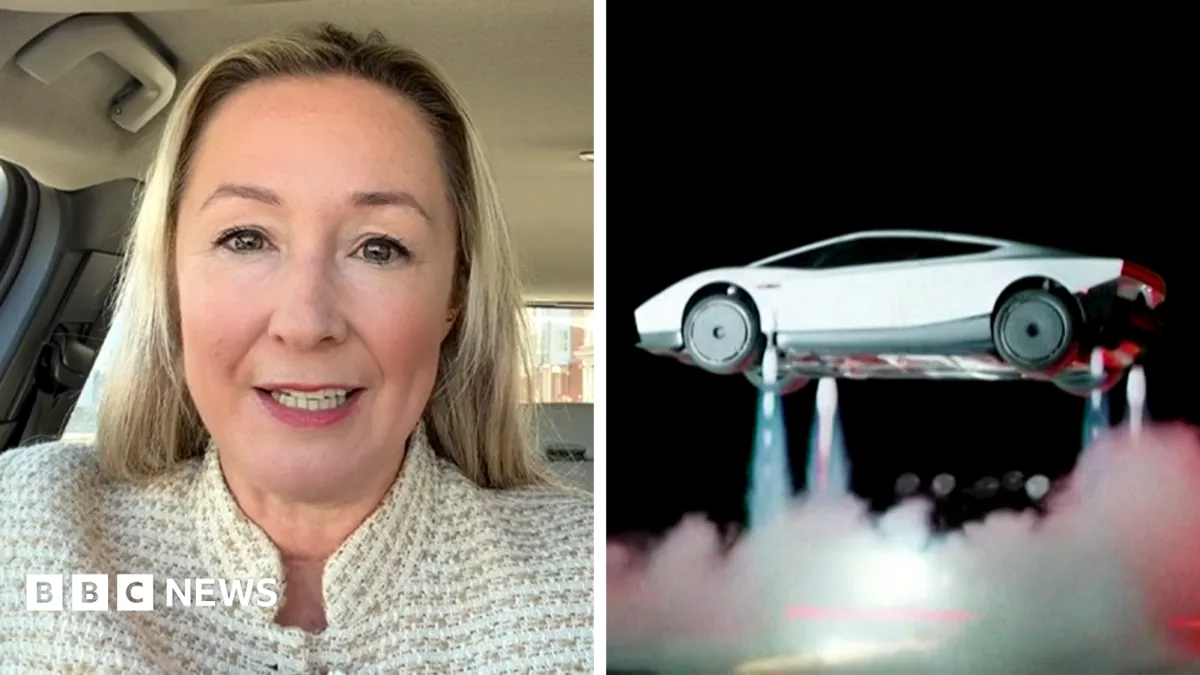
Elon Musk unveils a flying car, and SpaceX helped build it
The Tesla CEO's showcase at a SpaceX facility signals a future where road and rocket engineering converge.

Apple's $2,000 iPhone Duo opens preorders, taking on Samsung and Google
Apple's first foldable hits the market at a premium price, reshaping a category Samsung and Google have led.

Pope Leo XIV, first American pope, diagnosed with lung cancer
The 71-year-old Chicago-born pontiff underwent successful surgery on his right lung, and his diagnosis raises new questions about his AI-focused papacy and the Vatican's future.