
J. Michael Prince built a $2.7 billion U.S. Polo Assn. empire from accounting, not pedigree
The CEO’s climb from southeastern Oklahoma to luxury polo, powered by “the boring job” millennials left behind.
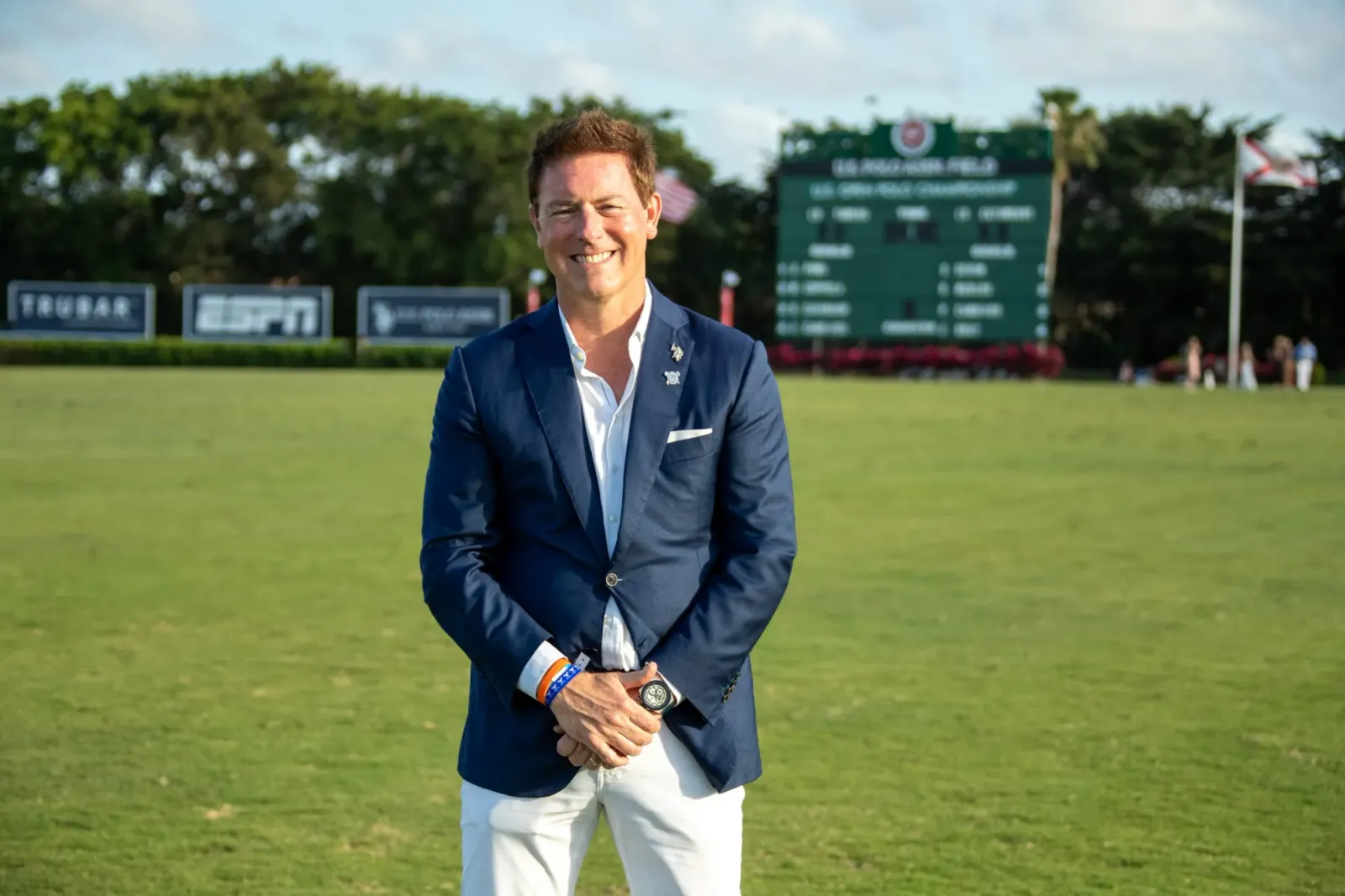
J. Michael Prince, CEO of U.S. Polo Assn., says his path to running a $2.7 billion global brand started with public accounting and a Duke MBA, not old money or Ivy League connections. For decision-makers, it is a reminder that talent pipelines, leadership signals, and brand credibility can be built through unsexy roles that others skip.
J. Michael Prince, CEO of U.S. Polo Assn., oversees a $2.7 billion brand that spans 190 countries, runs 1,200 retail stores, and reaches 15 million social media followers. And he’s telling Fortune the same thing that sounds almost too ordinary to be true: his route to luxury fashion started with accounting, the “boring” job millennials and boomers abandoned.
Prince grew up in southeastern Oklahoma, which he describes as “actually one of the poor parts of the country,” explaining that there are “four or five really poor parts of the United States, and that's up there with them.” In a region where nearly one in four residents in some counties live below the poverty line, the improbably glamorous end of the story now includes Palm Beach boardrooms and, for the last decade or so, high-profile polo events that put him in the orbit of royalty. Today, he also brushes shoulders with Prince William, co-hosting a charity polo event at Windsor Castle alongside the Prince of Wales, an event U.S. Polo Assn. has sponsored for years, making it the second-longest-running sponsor on the roster.
If you are trying to find the “plot twist” that makes this story matter beyond polo, it is the job market subtext. Prince’s background is not framed as a brand-smoothing fairy tale. It is framed as a practical bet on a skill set that others were turning away from when, as he tells it, millennials and boomers were abandoning accounting. In his view, the only real business opportunity he could access, coming from a small university, came through public accounting. That perspective is blunt: it was not his passion. It was the channel. And channels create compounding.
Prince studied accounting after East Central University, later earning a Duke MBA. He describes his early career move as an “entry ticket” to the C-suite of luxury fashion, beginning with CFO of Nike Affiliates, where he oversaw a $4 billion portfolio that included Converse, Cole Haan, Hurley, and Umbro. From there, he moved into COO roles, first at Guess and then as COO of U.S. Polo Assn. in 2017. Eight months later, he was promoted to run the company. That timeline is important because it suggests leadership boards were not merely rewarding brand affinity or resume polish. They were rewarding proven operational and financial leadership across portfolios, then placing a bet on scale.
There is also a leadership-performance message embedded in how Prince explains promotion and longevity. Ask what made him stand out, and he highlights work ethic and being “respectful and considerate of others.” Where he grew up, he says, he learned to find common ground, to get along, and to bring “a positive energy” rather than negative challenging. He frames success as simple: work hard, stay positive, and “pounce when opportunity knocks.” He adds a practical caution that opportunities may disappear within six months, which matters because executives often plan on multi-quarter timelines while life moves on shorter cycles.
This is where the story stops being just inspirational and starts being executive-relevant. Prince’s “attitude” thesis is echoed elsewhere in the source, including Amazon CEO Andy Jassy, who has said an “embarrassing amount” of how well people do, particularly in their twenties, depends on it. The reasoning is straightforward: people want to be around positive people. Fortune also notes that leaders at Pret and Kurt Geiger have said being nice to their boss and coworkers was a big determining factor in their success. Chanel’s chief has also told Fortune that the fashion house hires for personality before credentials. And Glean’s CEO, a $7.2 billion AI startup leader featured by Fortune, told the outlet he receives thousands of applications a day but still cannot hire enough candidates with strong work ethic.
U.S. Polo Assn.’s current brand theater reinforces why this matters. Prince William engagement is not just celebrity cover. Prince says what he loves about William is that he is sincere and thoughtful, engaging “with my son, my wife, our business partners,” while carrying the weight of the world as someone who is going to be King. Prince adds that William connects with people so it feels like you are the only person he is focused on. Prince also says he has taken note of that professionalism and the ability to connect. In other words: the brand is heritage, but the operating system is interpersonal signal. And in luxury, that signal gets marketed whether the board writes it into strategy or not.
From a governance and capital-position lens, the story’s numbers are doing work. A $2.7 billion brand spanning 190 countries is not a craft project. It is a distribution and demand machine, running 1,200 retail stores and supporting a social footprint measured in tens of millions of impressions. To maintain that kind of reach, leadership must translate values into repeatable execution, including merchandising, retail operations, partnerships, and global brand consistency. The second-order implication for executives is that recruitment and succession planning should not assume “credential-heavy” is the same thing as “capacity to scale.” Prince’s path argues that the skill gap can be smaller than the behavioral gap, and the behavioral gap can be the differentiator when promotions happen fast, as they did with him within eight months.
If you run a company, sit on a board, or invest in growth, the headline lesson is not “be positive” as a motivational poster. It is that unsexy roles like accounting can become the foundation for power when a leader compounds them into cross-functional scope, then pairs operational discipline with interpersonal credibility. In a world where markets reward both performance and perception, Prince’s story suggests boards should look for the combination: measurable competence, cultural reliability, and the ability to seize the limited number of opportunities that actually appear.
This story's Key Insights and Take-aways are locked.
Create a free account to unlock Executive Actions for one credit.
Register to UnlockAlways free for Executives Club members. Join the Club
More in Business

Anthropic’s Levant Alpöge cracks the Jacobian conjecture after 87 years
A Harvard valedictorian used Claude to hit a 1939 breakthrough, but the missing “why” is the real problem.

Uber buys Delivery Hero for nearly $15B, vaulting to top food delivery outside China
The deal doubles Uber's dual-services footprint and pushes a ride-and-eats bundling play into 50 more markets.

Epic and Google drop settlement bid, forcing rival Android app stores by July 22
Google told the court it is ready to carry third-party app stores starting Wednesday, July 22.