
Jamie Dimon rolls out the red carpet for Musk's $75 billion SpaceX IPO
JPMorgan's client event shows how hard Wall Street is leaning into SpaceX's record sale, while the offering's retail-heavy structure and fixed price raise the stakes for investors and rivals.
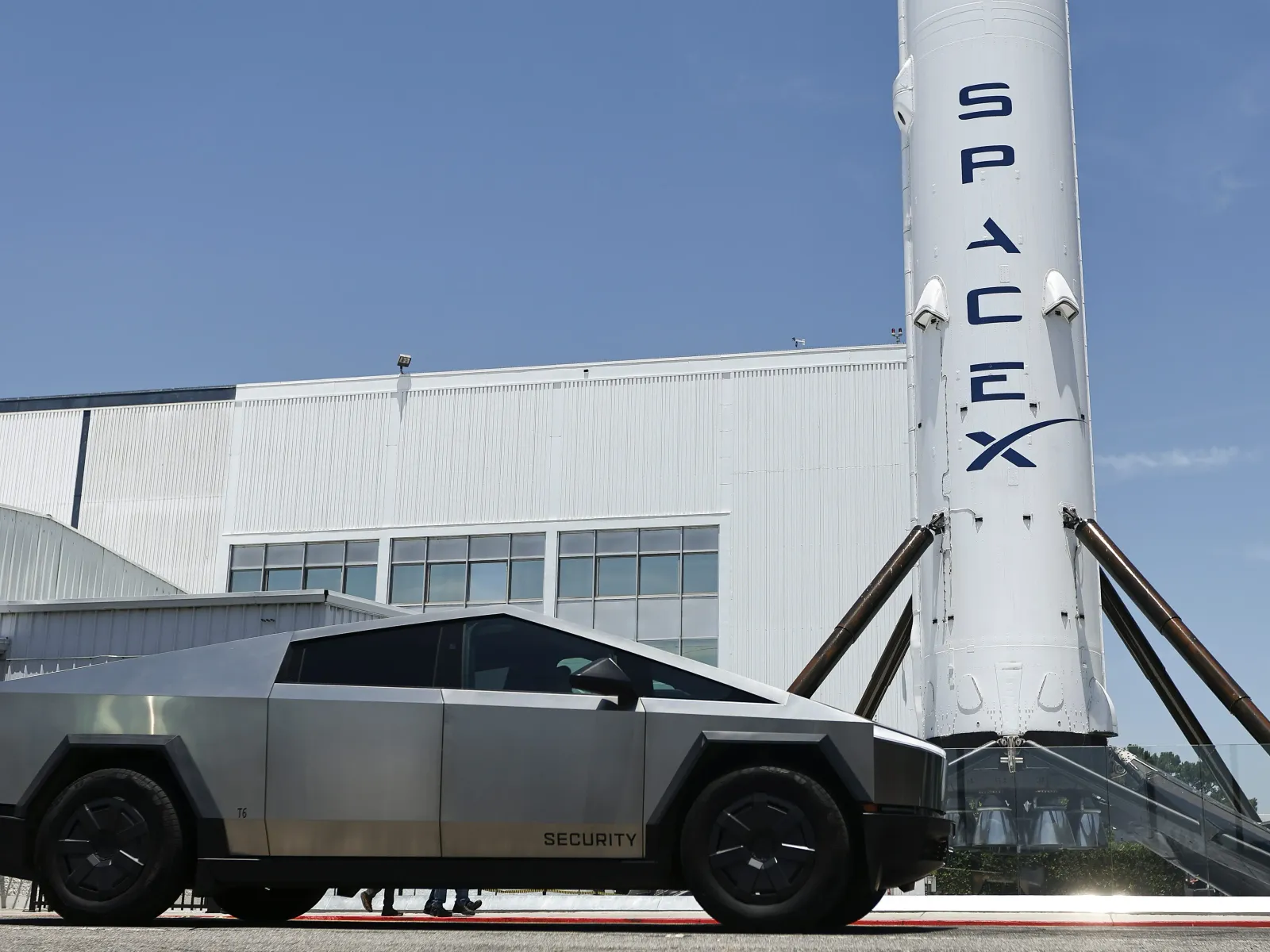
Jamie Dimon, JPMorgan's CEO, hosted Elon Musk at a glitzy New York event as SpaceX began pitching its planned IPO, which aims to raise $75 billion next week. The spectacle shows how Wall Street is packaging the deal for clients, while the fixed-price, retail-friendly structure and $1.75 trillion target valuation will shape how investors judge risk, scarcity, and hype.
Jamie Dimon, JPMorgan's CEO, put on a full-court press for Elon Musk and SpaceX on Thursday, hosting a major investor event at JPMorgan's New York headquarters as the rocket company kicked off its road show. Dimon interviewed Musk in front of 3,500 of the bank's top clients, while Musk joined remotely and his mother, Maye Musk, made a special appearance. The message to Wall Street was hard to miss: this is not being pitched like a normal IPO. It is being sold like a cultural event with a price tag to match.
And the price tag is enormous. SpaceX is aiming to raise $75 billion next week in what would be the largest public offering in history, at a roughly $1.75 trillion valuation. Musk told investors the money is needed to help the company harness the power of the sun and, eventually, colonize other planets. He also floated the kind of line that only Musk could make sound like part of a capital-markets pitch: SpaceX could one day branch into interplanetary hospitality, including "moon hotels." He said, "I think it would be pretty cool if you could vacation on the moon," and added that if Mars were warmed up, it could one day be made like Earth, with liquid oceans and life, where people could walk outside without a space suit. "Mars is a fixer-upper of a planet, but it's got a lot of potential," Musk told investors.
That combination of spectacle and scale is exactly why Wall Street is leaning so hard into this deal. JPMorgan is one of several top banks running the books for the offering, and it is not alone in decorating itself for the moment. Goldman Sachs has decorated the lobby of its Manhattan headquarters with rocket ships, while Bank of America lit up its building in the shape of a SpaceX rocket on Thursday night. In other words, the banks are not just underwriting SpaceX's IPO, they are helping build the mood around it. For a company with Musk's brand power, that mood matters. For banks competing for wealthy clients and future mandates, getting seen beside the hottest name in the market matters too.
There is also a very specific reason this IPO is drawing so much attention: the process itself is unusual. SpaceX has allocated up to 30% of the total offering for retail investors, far more than most public offerings. Fidelity said on Thursday that investors would need just $2,000 in their brokerage account to access SpaceX shares, down from $500,000 for previous IPOs. E-Trade also said Tesla shareholders who had held shares in Elon Musk's EV maker for at least 10 years would be eligible for an extra allocation of SpaceX shares. That is not how marquee IPOs usually work. Typically, the biggest and most sought-after deals are dominated by institutions first and retail investors later, if at all. SpaceX is flipping that script, which could broaden demand while also making the stock feel more like a fan club membership than a standard public equity purchase.
The company has also chosen a different route on pricing. On Wednesday, SpaceX said it planned to go to market at a fixed price of $135 per share, rather than using the more common price-range approach that lets bankers test demand before settling on an offer price. That matters because fixed pricing leaves less visible wiggle room for the market to negotiate the terms in public. It can make the offering feel cleaner, and perhaps more decisive, but it also leaves investors with a single, all-in number to evaluate. With a target valuation of $1.75 trillion, the debate is no longer whether people want in. It is whether they think the company can justify that price.
Some analysts are already skeptical. SpaceX disclosed a $4.9 billion loss in 2025 on revenues of $18.7 billion in a filing last month, and some analysts have said the $1.75 trillion target valuation overvalues the company. That is the classic tension in a high-profile growth story: a business can be strategically important, culturally magnetic, and still leave investors arguing over whether the math works. For executives watching from other corners of tech and finance, the lesson is not just about SpaceX. It is about how far brand, scarcity, and narrative can stretch a public market opening before valuation discipline pushes back. In a week where the biggest IPO in history is being sold with rocket ship decor, celebrity proximity, and a moon-hotel pitch, every CFO and board member has a fresh reminder that markets still love a story, but eventually they demand the numbers to land.
This story's Key Insights and Take-aways are locked.
Create a free account to unlock Executive Actions for one credit.
Register to UnlockAlways free for Executives Club members. Join the Club
More in Business

Anthropic’s Levant Alpöge cracks the Jacobian conjecture after 87 years
A Harvard valedictorian used Claude to hit a 1939 breakthrough, but the missing “why” is the real problem.

Uber buys Delivery Hero for nearly $15B, vaulting to top food delivery outside China
The deal doubles Uber's dual-services footprint and pushes a ride-and-eats bundling play into 50 more markets.

Epic and Google drop settlement bid, forcing rival Android app stores by July 22
Google told the court it is ready to carry third-party app stores starting Wednesday, July 22.