

Japan’s AI-run bioscience lab targets 24-hour research, starting a 2025 sprint
Japan plans a national AI-driven bioscience lab to compress research timelines, forcing competitors to rethink speed, data, and oversight.
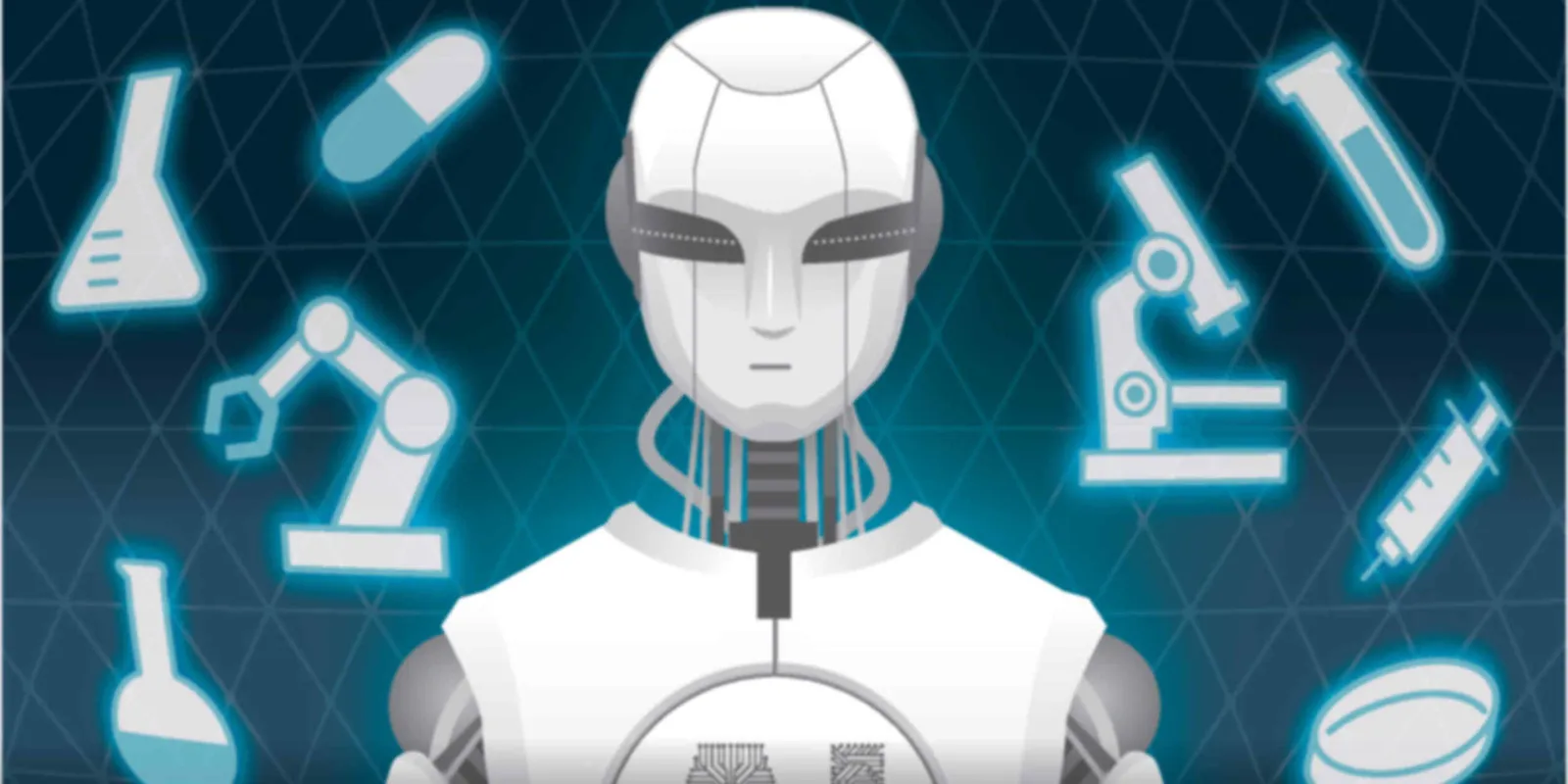
Japan will launch an AI-run bioscience laboratory designed to run 24-hour research, according to Nikkei Asia. For decision-makers, the move raises the bar on experimental throughput and the operational readiness required to participate.
Japan is preparing to do something that sounds simple and is actually pretty radical for science: run bioscience research on an around-the-clock schedule, powered by AI. Nikkei Asia reports Japan will launch an AI-run bioscience lab focused on 24-hour research. The big implication is not just that experiments might finish faster. It is that the whole workflow of biology research, from planning to execution to iteration, gets pressured to behave more like software delivery: continuous, data-rich, and relentlessly optimized.
The “24-hour” part matters because biology has traditionally been constrained by human schedules, lab staffing, and the time it takes to cycle through hypotheses and results. A lab built to operate continuously changes what is “normal” in research timelines. Instead of waiting for the next day, researchers can iterate across shifts, which can compress the distance between an idea and a test. In other words, the AI-run model is aimed at turning research cadence into a competitive advantage, and the reporting suggests Japan is now treating that cadence as a national capability.
To understand why this is getting attention, you have to look at how research institutions and companies typically compete. Funding and prestige often follow publications and breakthroughs, but the bottleneck is frequently not the ambition. It is execution speed, and the messy reality that experiments generate messy data. An AI-driven approach typically means better task planning, automated or semi-automated operations, and faster feedback loops from measurement to next steps. The lab described by Nikkei Asia is essentially betting that AI can make those loops tighter, so the lab spends less time idle and more time learning.
There is also the question of regulatory and governance. Bioscience labs do not exist in a vacuum. Even when the scientific goal is to move quickly, regulators and oversight frameworks still shape what can be done, how materials are handled, and how safety and compliance are documented. A 24-hour operating model increases the operational complexity because more work is happening across more time windows, and the handoffs between teams become critical. For Japanese institutions, the policy challenge is how to enable continuous operation while maintaining the controls that safety and compliance demand. For companies watching from outside Japan, it signals that “time to experiment” will increasingly be constrained by process governance, not just by scientific uncertainty.
From an industry perspective, the second-order effects can be significant. If a country’s research infrastructure starts producing cycles faster, it can pull forward downstream activities like drug discovery research, diagnostics development, or materials testing. That can reshape competitive dynamics even for organizations not directly partnered with the lab. Boards and investors tend to like clear execution metrics, and 24-hour research naturally suggests measurable throughput: how quickly teams can generate usable results and how effectively they can convert data into decisions. It also increases the value of data pipelines, because AI-run labs live or die by data quality, labeling, and traceability.
It is also a reminder that “AI in biotech” is no longer just about analysis or prediction. The direction of travel, as implied by an AI-run lab concept, is toward AI being embedded in the operational layer: scheduling experiments, managing lab workflows, and supporting continuous iteration. That changes how universities, research institutes, and private labs organize their teams. It elevates the importance of operational engineering, informatics, and governance expertise alongside wet-lab capability.
For executives in neighboring roles, the strategic stakes are straightforward. If Japan successfully launches an AI-run bioscience lab designed for 24-hour research, it can raise the baseline for research speed and output. Competitors may need to respond not just with more experiments, but with systems that can support faster cycles safely and consistently. In practical terms, that means investing in lab automation readiness, data infrastructure, and the compliance muscle required for continuous operations. The advantage may start as timeline speed. But over time, it can translate into leadership in which problems get solved first, and which teams can scale learning without losing control.
This story's Key Insights and Take-aways are locked.
Create a free account to unlock Executive Actions for one credit.
Register to UnlockAlways free for Executives Club members. Join the Club
More in Business

Anthropic’s Levant Alpöge cracks the Jacobian conjecture after 87 years
A Harvard valedictorian used Claude to hit a 1939 breakthrough, but the missing “why” is the real problem.

Uber buys Delivery Hero for nearly $15B, vaulting to top food delivery outside China
The deal doubles Uber's dual-services footprint and pushes a ride-and-eats bundling play into 50 more markets.

Epic and Google drop settlement bid, forcing rival Android app stores by July 22
Google told the court it is ready to carry third-party app stores starting Wednesday, July 22.