
Jay Feely wins Arizona GOP primary, setting up a tight open-seat fight in November
The Trump-backed former Cardinals kicker takes Arizona’s 1st District, where Democrats see a top pickup opportunity.
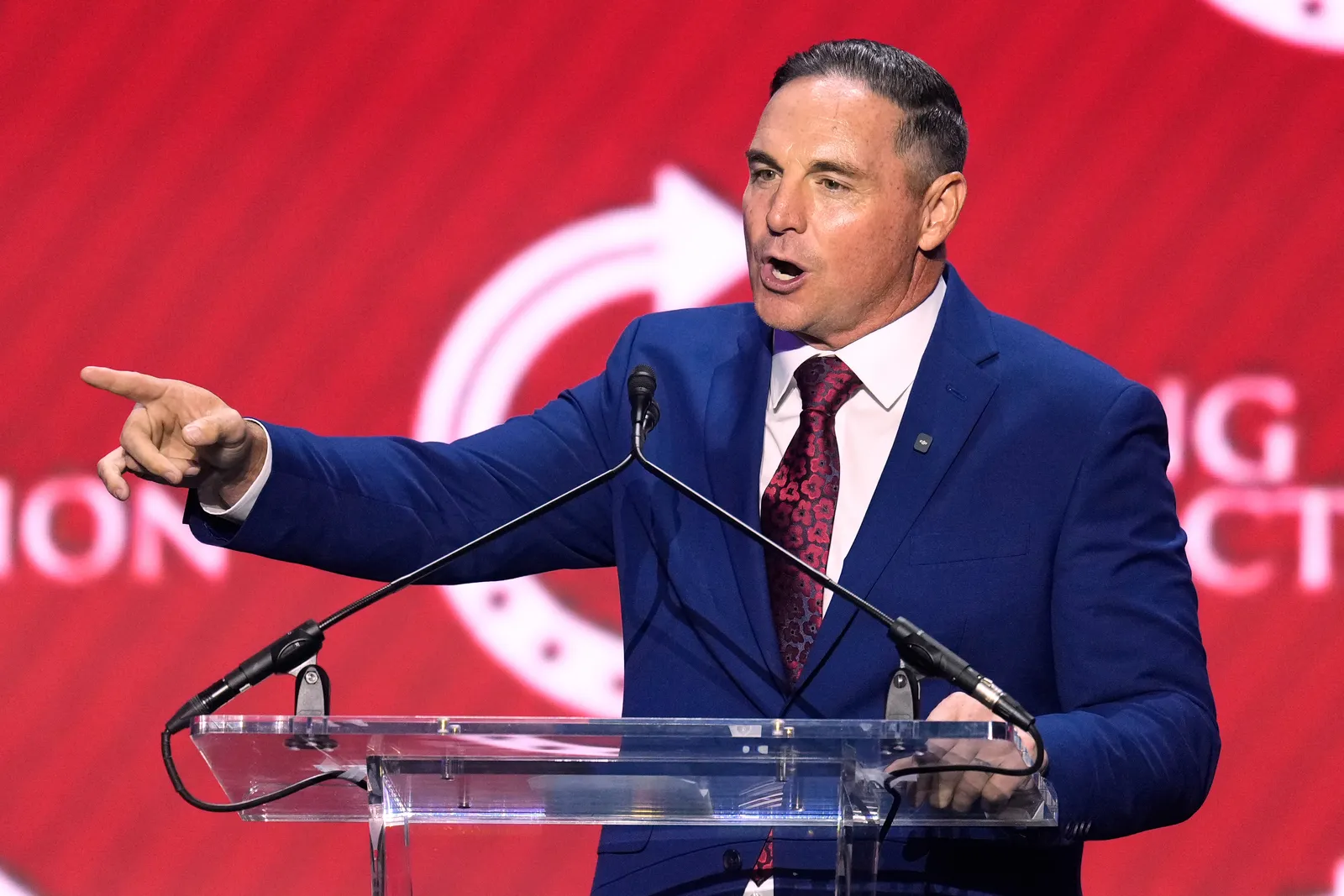
Jay Feely, a close ally of President Donald Trump and former Arizona Cardinals kicker, won the GOP primary in Arizona’s 1st District on Tuesday. His victory locks in a November matchup where House Democrats are bullish about flipping an open seat after Trump won the district by just three points in 2024.
Jay Feely cleared Arizona’s GOP primary in the battleground 1st District on Tuesday, powered by a familiar lever in modern politics: Donald Trump’s endorsement. Feely, the former Arizona Cardinals kicker and occasional golf partner of Trump, toppled former state Rep. Joseph Chaplik to become the Republican nominee for a November election in one of the House map’s most closely watched places.
The stake is immediate and measurable. The 1st District, which runs across the affluent suburbs north of Phoenix, is one of House Democrats’ top targets. And the reason Democrats can dream big is also the reason Republicans cannot get comfortable: Trump won the district by just three points in 2024. In other words, the math that keeps this seat competitive just got sharper, because Feely is now the face of the GOP in a midterm year where party headwinds are already in play.
Feely’s path to the general election also shows how endorsements are reshaping candidate strategy, especially when the candidate base overlaps with national donor programs. The Politico report describes Feely as a “close ally” of Trump, and in the primary he leaned hard on that proximity. During a debate, Feely framed his advantage as access and responsiveness, saying, “Who can call [Trump] and who can get him to answer? That’s me,” and then, “He will take my call and he will listen. I have the ability to have the ear of the president.” That is not just campaign theater. In a district like this, where candidates are evaluated for both ideology and electability, the endorsement acts like a shortcut for voters and donors who want reassurance the nominee can carry national momentum into local persuasion.
Chaplik, the defeated candidate and a member of the Arizona Freedom Caucus, tried to force the conversation back to ideology and values. The report says Chaplik attacked Feely for being insufficiently conservative on gun rights and for his humanitarian work in Haiti. That kind of intra-party contrast is common in GOP primaries, but it becomes riskier when the general election environment is already tilted by past margins. A party can win the primary by settling internal debates, then lose the seat by sounding too narrow to the center. Feely’s nomination suggests the party decided the juice was worth the squeeze: Trump-aligned brand plus candidate visibility, even if the opponent pressed harder on gun policy and outside-the-party profile.
Feely is not a newcomer to high-stakes politics, either. He previously announced a run for GOP Rep. Andy Biggs’ seat in the 5th District. But the report notes a crucial pivot: after Trump backed former Pinal County sheriff Mark Lamb in that race, Feely switched to the 1st District. That move underscores a second-order reality for political operators, and frankly for any organization competing for scarce attention: when the “principal backer” changes their focus, you reposition your assets. In Feely’s case, it paid off quickly, because in the 1st District he earned Trump’s dual endorsement alongside former state GOP chair Gina Swoboda.
Trump’s endorsement matters because it also carries narrative weight across party infrastructure. In January on Truth Social, Trump said, “Both fierce advocates of Make America Great Again, Jay and Gina have been with us from the very beginning, and either one would be an incredible Representative.” Then in February, Swoboda dropped her candidacy for the 1st District and ran for secretary of state instead, which left the runway clear for Feely. That sequencing is a reminder that nominations in competitive states often emerge from a chain reaction, not a straight line: one endorsement, then another candidacy change, then the consolidation of resources behind the candidate who remains.
Beyond the optics and endorsements, the Politico report also points to the money mechanics that typically swing House races. Feely is described as a member of the National Republican Congressional Committee’s MAGA Majority fundraising program, which makes him likely to be a top recipient of outside Republican spending in the months leading to November. For decision-makers watching like a CFO watches burn rate, outside spending can be a forcing function. It can raise campaign visibility quickly, saturate the information environment, and reshape who gets to define the district's storyline. That also explains why Democrats would be bullish: they are targeting a seat where national money will likely pour in for the GOP nominee, meaning Democrats must be ready not just to defend, but to actively contest the narrative and persuasion pipeline.
So what does Feely’s win mean for everyone else in the orbit, from party strategists to board-level political consultants and even corporate leaders who follow policy risk? It signals that Trump-aligned candidates who can credibly market access to the president have a structural advantage when the electorate and donor base are both energized. It also signals that GOP incumbency advantages are not guaranteed in districts decided by narrow margins. With a three-point Trump win in 2024 as the baseline, and with Democrats casting the 1st District as a top target, Feely’s general election is likely to be a stress test for whether endorsement-driven momentum can overcome broader midterm headwinds. And if he wins in November, the message for other candidates and funding strategies in competitive House races will be blunt: endorsements and fundraising alignment are not accessories. They are operating systems.
This story's Key Insights and Take-aways are locked.
Create a free account to unlock Executive Actions for one credit.
Register to UnlockAlways free for Executives Club members. Join the Club
More in Politics

Saudi oil tankers reverse in Red Sea after Houthi maritime embargo threat
A Reuters report says two shipments bound for China and India turned toward the Suez Canal, reshaping trade risk in real time.

China’s domestic consumption slump is wrecking the economy, and policymakers feel it now
When households stop spending, China’s growth engine stalls, tightening pressure on regulators and markets.

Ben Folds testifies to Congress over Trump’s Kennedy Center takeover, warning of damage
After stepping down from the National Symphony Orchestra, Folds tells lawmakers the overhaul has undermined the Kennedy Center.