

Jensen Huang calls US sanctions on “stolen” Chinese AI “backwards” after Bessent warning
Treasury warns of IP theft in Chinese open-source AI; Nvidia CEO Jensen Huang says the logic is flipped.
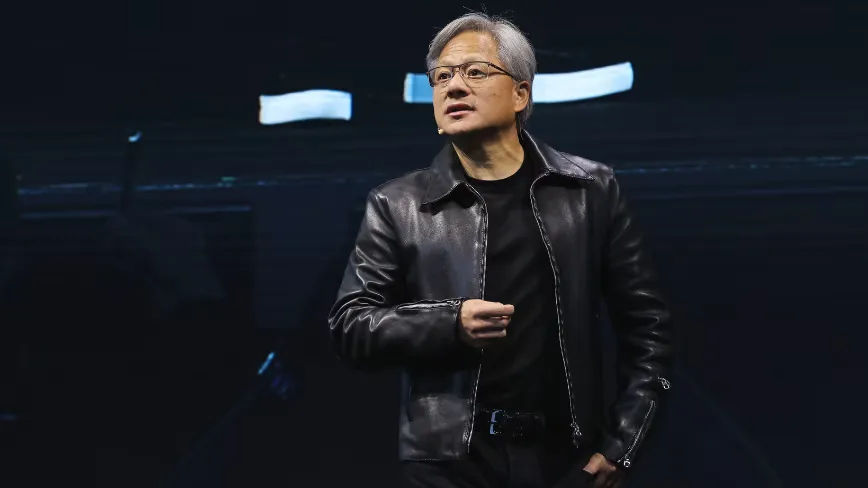
Treasury Secretary Scott Bessent warned on television that the US will scrutinize Chinese open-source AI models for stolen intellectual property. Nvidia CEO Jensen Huang responded by arguing that approach is “backwards,” turning a regulatory threat into a tech-industry dispute.
On Tuesday, Treasury Secretary Scott Bessent went on television with a warning for China. On the same day, Jensen Huang, CEO of Nvidia, made his feelings known about the direction the US is taking. Bloomberg first reported that Bessent’s message includes a threat to scrutinize Chinese open-source AI models for stolen intellectual property. Huang’s take, as described by The Next Web, goes the other way: he says the framing is “backwards.”
So the immediate stake for executives is not abstract geopolitics. It is the compliance and product risk around the models people are actually building with today. If the US Treasury’s posture treats a wide class of open-source Chinese AI as likely IP theft, then the downstream questions for boards and CFOs get blunt: what gets audited, what gets blocked, what contracts and customer deals suddenly need legal re-papering, and how quickly open-source supply chains get rerouted.
Why this matters is because “open-source models” have become the on-ramp for the AI boom. Open weights, open code, and openly distributed checkpoints allow teams to prototype quickly, train variants, and then differentiate on top. In normal market cycles, that accelerates product timelines and lowers costs. But in a sanctions-and-export-control world, speed and openness can turn into a compliance trap. The same openness that helps innovation can also make it easier for regulators to point to distribution patterns and argue about ownership, provenance, and misuse.
Bessent’s warning, as described in the report, is specifically about scrutiny for stolen intellectual property in Chinese open-source models. Even without the full details in The Next Web excerpt, the direction is clear: Treasury is signaling that this is not only an academic question. It is a potential enforcement trigger. For decision-makers, that shifts how you think about AI model adoption. It changes the risk lens from “does this work?” to “can we defend where it came from, how it was accessed, and what it might contain?”
Now add Huang’s counterpoint. When the CEO of Nvidia, the company that powers much of the AI compute layer, pushes back on the rationale, it is a signal to the ecosystem that the industry sees regulatory logic that could cause collateral damage. The Next Web frames it as Huang saying the sanctions idea is “backwards.” Even if you are not taking a side politically, a board should notice the mismatch: government warns, the core industry player disputes the premise. That kind of public disagreement often precedes operational fallout, because it tells you the story is going to move from policy language into real implementation.
Second-order effects are likely to show up in procurement and partner ecosystems. Large enterprises rarely deploy raw open-source models directly at production scale without a lot of vetting. If enforcement attention rises, legal teams may demand more documentation, vendors may revise indemnities, and platform providers may start filtering what they host or integrate. That can create a “friction tax” on model experimentation, which in turn benefits incumbents with compliance infrastructure and hurts smaller teams that rely on fast iteration.
There is also an incentive shift under the hood. When regulators frame open-source AI through an IP theft lens, companies may respond by tightening licensing terms or by pushing toward closed or more tightly managed model ecosystems. Even if regulators end up focusing on specific cases, the compliance behavior often becomes broad: companies overcorrect to avoid becoming the next headline. For executives, that can affect strategic roadmaps, especially if your differentiation depends on building quickly on top of existing models.
The last thing to consider is the market signaling. Nvidia sits at the center of the AI value chain, so Huang’s public response is not only a company statement. It is a reminder that the AI boom is not just software. It is semiconductors, data centers, integration partners, and supply chains. If a regulatory stance changes how models flow, it can eventually change how compute demand concentrates. That means finance leaders and operators should treat this as a leading indicator, not a distant policy story.
In short: Bessent’s television warning and the reported threat to scrutinize Chinese open-source models for stolen intellectual property is the headline risk. Huang calling the approach “backwards” is the industry counterweight. Together, they suggest a widening gap between enforcement narratives and how AI is built and deployed in practice. The winners and losers will be the teams that can navigate the compliance reality without choking innovation.
This story's Key Insights and Take-aways are locked.
Create a free account to unlock Executive Actions for one credit.
Register to UnlockAlways free for Executives Club members. Join the Club
More in Business

Anthropic’s Levant Alpöge cracks the Jacobian conjecture after 87 years
A Harvard valedictorian used Claude to hit a 1939 breakthrough, but the missing “why” is the real problem.

Uber buys Delivery Hero for nearly $15B, vaulting to top food delivery outside China
The deal doubles Uber's dual-services footprint and pushes a ride-and-eats bundling play into 50 more markets.

Epic and Google drop settlement bid, forcing rival Android app stores by July 22
Google told the court it is ready to carry third-party app stores starting Wednesday, July 22.