

Jensen Huang denies AI chip bust, says “this time is different” in Axios interview
Nvidia’s CEO argues the AI-driven chip boom is industrial, not demand or seasonal, and calls for 5-10x industry growth.
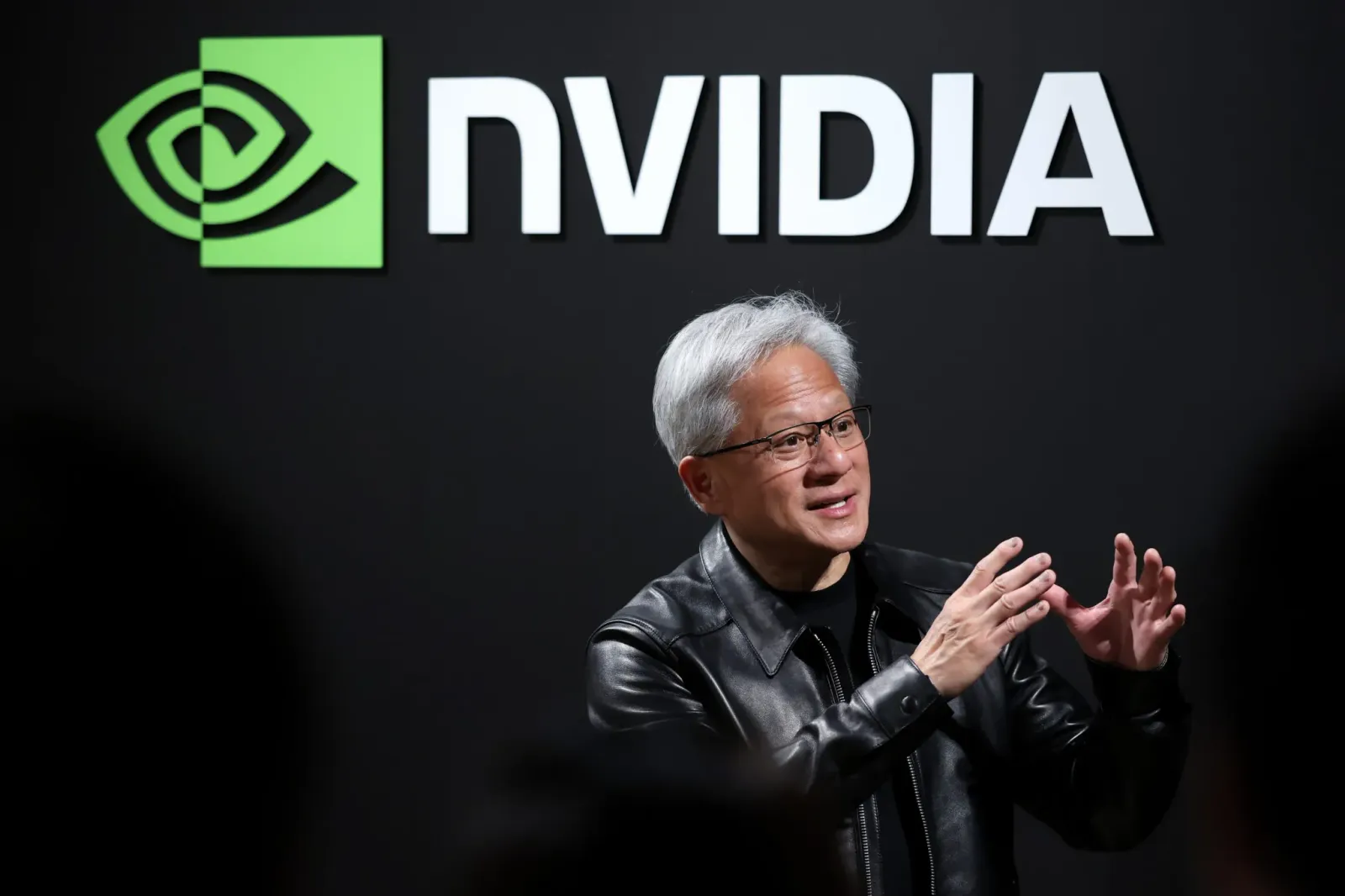
Nvidia CEO Jensen Huang told Axios cofounder Mike Allen that AI chip spending will not trigger a downturn “for a while,” arguing, “This time is different.” For decision-makers, his case challenges the usual boom-and-bust playbook just as hyperscalers ramp AI capital expenditures.
Semiconductor markets have a long habit of swinging between breathless booms and brutal busts. Nvidia CEO Jensen Huang knows that history well, and he still says the industry is not headed for a near-term crash. In an Axios interview with cofounder Mike Allen, Huang was asked whether chips are due for a bust, and he answered, “no, not for a while.”
The reason Huang gave is where this gets interesting fast. When Allen followed up with “so this time is different?” Huang didn’t just wave his hands. He laid out the argument in plain language: “This time is different because this is not demand driven,” and “This time is different because it's not seasonal. It's not demand driven means seasonal-demand driven. This is industrially driven, meaning the fundamental technology of computers is changing.” That framing matters because it tries to remove the usual triggers behind past cycles, which often depended on demand patterns, seasonality, or short-lived product waves.
To understand why executives should care, zoom out to what has been happening in the market. After chip stocks soared on the AI frenzy, they have sold off hard in recent weeks amid renewed fears about the sustainability of massive capital expenditures. That selloff is happening even as top chipmakers have posted strong earnings and guidance, and even as shortages persist due to sustained demand. In other words: the industry has the fundamentals and supply tightness that normally support forward momentum, but investors are still worried that the money being spent on AI infrastructure is running ahead of what it can ultimately monetize.
Huang is basically answering that anxiety with a thesis about what AI represents. He argues the world needs a whole new layer of infrastructure, namely AI, which requires chips. He estimates the industry must become five to 10 times larger over the next decade. That’s not a throwaway line. It is a direct bet that the compute stack is undergoing a structural upgrade, not just an incremental upgrade that eventually settles into a steady growth curve.
This also explains why “this time is different” is such a loaded phrase. Huang’s endorsement is notable precisely because the same wording has been used historically to justify optimism that later collided with reality. The phrase is infamous for a reason, Fortune notes, including parallels to the dot-com bubble. In markets, that does something subtle: it turns a CEO’s confidence into a red-flag keyword when valuations are stretched, because investors hear “different” and immediately wonder whether fundamentals are catching up. For boards and CFOs, the risk is not just getting the call wrong on fundamentals, it is getting the call wrong on timing, because capital expenditures and capacity decisions can lock in outcomes long before the market finishes its verdict.
Layer in the capital situation and the stakes get sharper. Hyperscalers have been committing hundreds of billions of dollars a year on capital expenditures to build out AI infrastructure quickly. While they previously drew on enormous cash-generating operations for capex, they are now finding that is not enough anymore. Even Alphabet has recorded negative cash flow, and the consequence, as Fortune reports, is that tech giants are issuing more debt. This is where Huang’s messaging hits the nerve of a CFO question: if customers are stretching their balance sheets to buy chips, does that increase the risk that demand will wobble when financing conditions tighten?
Huang was pressed on whether Nvidia’s customers are tapping the bond market to buy chips. He answered that he is not worried, pointing to a shift in computing. “So this future is a whole new way of doing computing that's fundamentally different than the past, and we need a lot more computers,” he explained. He also referenced profitability and product evolution, noting that AI has been profitable for companies like Anthropic, especially as customers discover how useful agents can be. His larger point is about an inflection point: AI is generating profits and boosting productivity, and more of the technology must be built to sustain that cycle.
Even then, Huang didn’t pretend cycles never end. He acknowledged that the bubble will burst someday, but not anytime soon, arguing that the AI buildout is still in the early stages. He also made a supply-constrained argument that is counterintuitive to some investors: limited supplies of chips, land, power, and construction workers are holding back even faster growth, and that constraint is beneficial because it pushes out the timeline when supply eventually exceeds demand. “We basically are constrained in every single direction, in every single way,” Huang said. “That constraint is good. That constraint is what holds the system back. So that gives us plenty of time to go build out these infrastructure.”
For executives at chip companies, equipment suppliers, and the cloud giants funding AI infrastructure, the strategic stakes are simple: if Huang is right, the industry gets a longer runway to monetize capex and expand capacity without a sudden demand cliff. If Huang is wrong, the same capex that builds the future also creates the conditions for a painful reset. Either way, his interview is a clear signal of how Nvidia’s top leadership is thinking about the shape of demand, the nature of technological change, and the pace at which markets should expect the next downturn. And in a world where debt, cash flow, and capacity planning are already in play, the difference between “for a while” and “soon” can be measured in billions of dollars and years of strategy.
This story's Key Insights and Take-aways are locked.
Create a free account to unlock Executive Actions for one credit.
Register to UnlockAlways free for Executives Club members. Join the Club
More in Business

Anthropic’s Levant Alpöge cracks the Jacobian conjecture after 87 years
A Harvard valedictorian used Claude to hit a 1939 breakthrough, but the missing “why” is the real problem.

Uber buys Delivery Hero for nearly $15B, vaulting to top food delivery outside China
The deal doubles Uber's dual-services footprint and pushes a ride-and-eats bundling play into 50 more markets.

Epic and Google drop settlement bid, forcing rival Android app stores by July 22
Google told the court it is ready to carry third-party app stores starting Wednesday, July 22.