
Jersey Mike's IPO filing: 50% same-store sales growth and 3,300-plus locations
The hoagie chain says it is filing for an IPO while reporting 50% same-store sales growth in recent years.
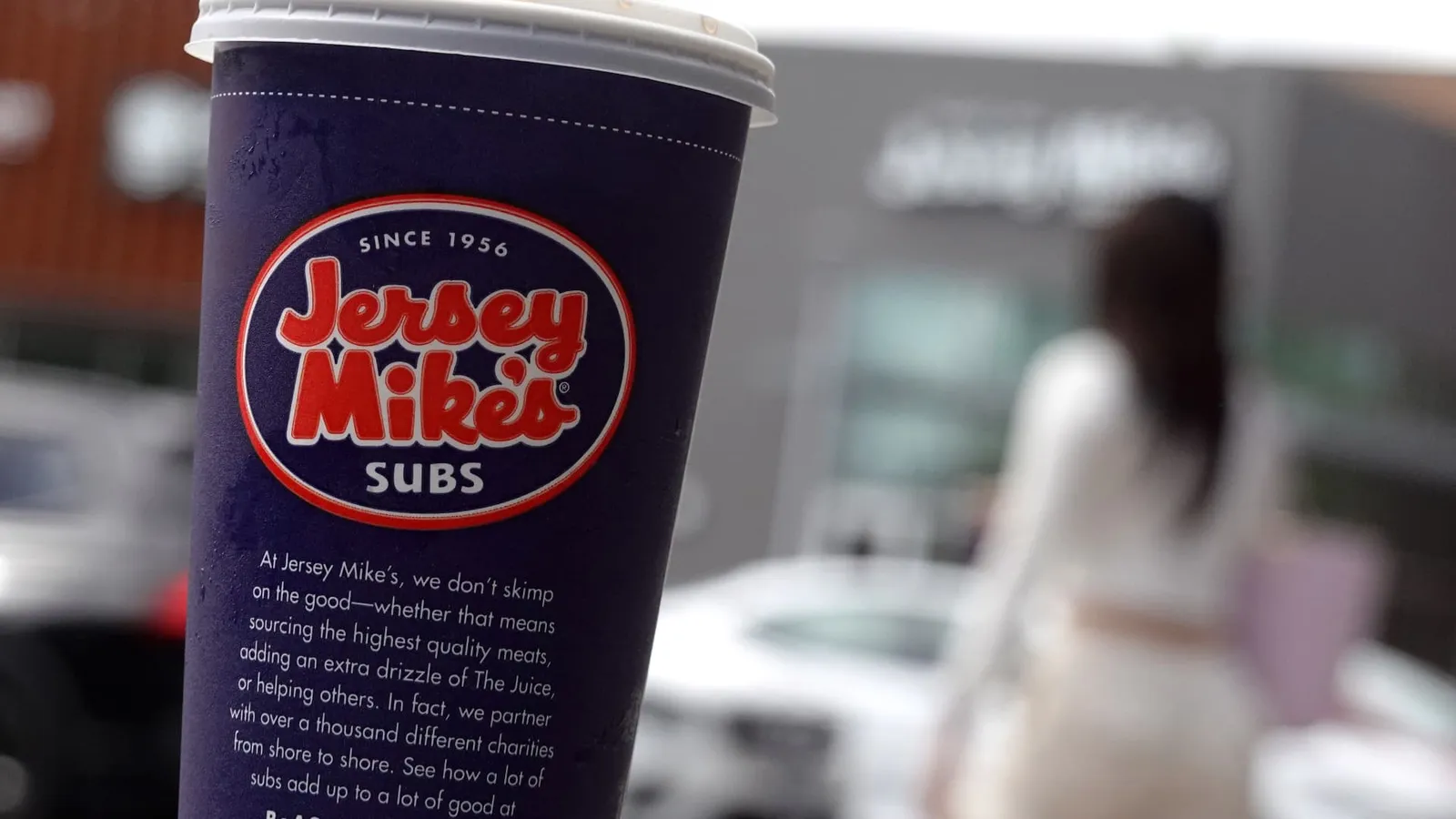
Jersey Mike's has filed for an IPO, reporting 50% same-store sales growth in recent years and nearly 3,300 locations. For decision-makers, the filing signals a potential fast-growth path for a scaled restaurant operator and raises the bar for comparable brands.
Jersey Mike's is moving toward the public markets. In an IPO filing, the hoagie sandwich chain reported 50% same-store sales growth in recent years, and it also disclosed it has nearly 3,300 locations. For investors and operators, that combination matters because it answers two questions at once: is demand still expanding without relying purely on new store openings, and can a large footprint keep comp sales healthy?
It helps that Jersey Mike's sits in a clear competitive lane. It is the second-largest hoagie sandwich chain in the U.S. behind Subway, according to the filing context cited in the report. Nearly 3,300 locations is not a hobby brand footprint. It means same-store sales growth is happening at scale, not just in a small test market. When a chain that size claims 50% same-store sales growth in recent years, boards should treat it as a headline data point, because it can translate into improved unit economics and higher investor confidence around durability.
To understand why this matters, zoom out to how most restaurant IPO stories play out. Public market investors generally want two things: growth that shows up in existing stores, and a model that can keep delivering as it matures. Same-store sales, often called comps in investor conversations, are the easiest proxy for demand quality. New locations can lift revenue even if older stores stall, but same-store growth suggests customers keep coming back and spending patterns are improving. A filing that pairs same-store strength with a large base of stores is basically telling the market, “We do not need constant expansion to look good.”
Jersey Mike's is also competing in a category where branding, speed, and menu familiarity tend to matter as much as raw food cost. The hoagie segment has fewer “new formats” than, say, restaurant concepts tied to a viral item or a trend cycle, which means chains often win by doing the basics extremely well, consistently. That is exactly the type of environment where executives pay attention to operational repetition: training, ingredient sourcing, and execution at the store level. If the claim of 50% same-store sales growth in recent years is credible and sustained, it implies that the company has managed to keep service and product execution aligned even while scaling.
From a capital markets standpoint, the IPO filing also creates a timing signal. When a scaled chain files, it is not just about raising money. It is about establishing a valuation benchmark for the sector. Restaurant investors compare new offerings against a mix of current public comps, private market expectations, and the perceived risk of consumer spending weakening. Even without digging into any specific financial line items beyond the same-store growth figure and location count cited here, the act of filing can change how other operators think about fundraising options, partnership strategies, and how quickly they can credibly tell their growth story.
There is also a second-order governance effect. Public investors tend to be tougher than private backers on what they want to see next. After an IPO, the company becomes accountable to quarterly reporting, analyst expectations, and a broader set of stakeholders that may ask more direct questions about unit-level performance. For boards, that means the underlying operating engine has to be both resilient and explainable. A filing that highlights same-store sales strength suggests management believes it has an engine worth defending in public, not just in glossy decks.
Finally, consider the competitive pressure this creates. Jersey Mike's is the second-largest hoagie chain behind Subway, and its footprint puts it in the same arena as the category leader. If investors reward a story of 50% same-store sales growth while the chain still operates nearly 3,300 locations, it can raise the bar for competitors and peers trying to attract capital. Boards and CFOs at other quick-service and sandwich brands should notice the subtext: scale does not automatically kill growth. It can, but it does not have to, if the company can keep stores performing.
At the end of the day, the strategic stake for decision-makers is pretty simple. An IPO filing with a large store base plus a high same-store sales growth figure is a test of credibility. If the public markets accept that story, it can pull forward funding cycles for similar chains. If they challenge it, it becomes a reminder that comps must hold up, not just rise. Either way, Jersey Mike's has put its performance claims in the spotlight.
This story's Key Insights and Take-aways are locked.
Create a free account to unlock Executive Actions for one credit.
Register to UnlockAlways free for Executives Club members. Join the Club
More in Business

Anthropic’s Levant Alpöge cracks the Jacobian conjecture after 87 years
A Harvard valedictorian used Claude to hit a 1939 breakthrough, but the missing “why” is the real problem.

Uber buys Delivery Hero for nearly $15B, vaulting to top food delivery outside China
The deal doubles Uber's dual-services footprint and pushes a ride-and-eats bundling play into 50 more markets.

Epic and Google drop settlement bid, forcing rival Android app stores by July 22
Google told the court it is ready to carry third-party app stores starting Wednesday, July 22.