

John Romero to headline Gamescom Asia x Thailand Game Show keynote in Bangkok Oct 29
The Doom co-creator’s keynote returns to building games, while Xbox layoffs and studio cuts reshape the talent narrative.
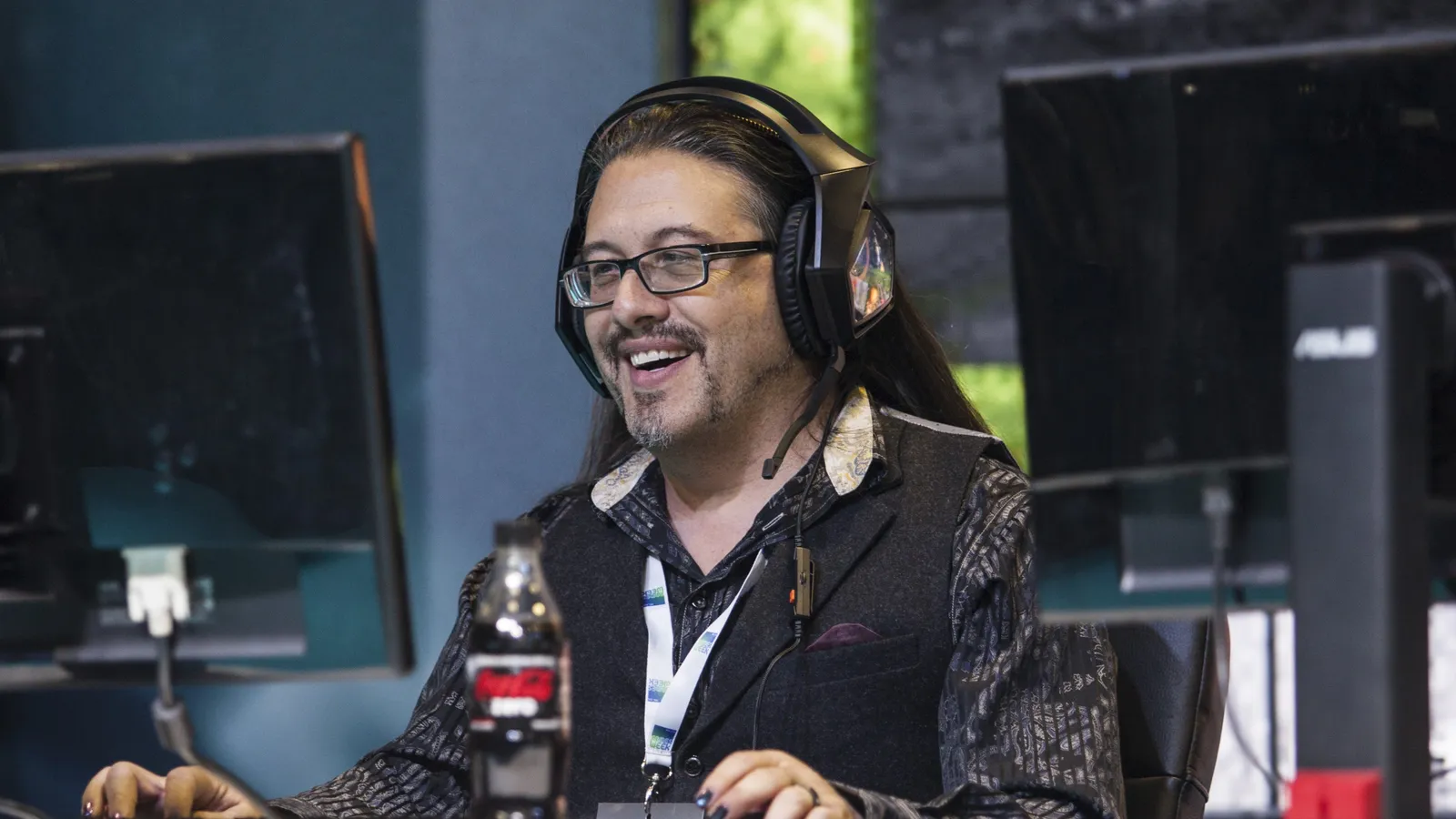
John Romero, co-founder of id Software and co-creator of Doom, Quake, and Wolfenstein 3D, will headline the Gamescom Asia x Thailand Game Show in Bangkok. His keynote, titled "Why We Still Make Games," lands as id Software staff face Xbox-linked layoffs and Romero Games navigates its own cancellations.
John Romero is set to headline the Gamescom Asia x Thailand Game Show in Bangkok on October 29 to November 1, 2026. The Doom co-creator will deliver the headline keynote as part of this year’s event, with the keynote titled "Why We Still Make Games," a plan that promises to “reflect on a lifetime of building games, overcoming setbacks, and navigating decades of industry change.” For executives and decision-makers, the timing matters because the games talent story right now is not theoretical. It is being rewritten in real time by layoffs, studio cancellations, and shifting corporate priorities.
Romero’s appearance is tied to a broader moment inside Xbox’s ecosystem. He recently used social media to express support for all id Software staff affected by layoffs earlier this month, which came after Xbox’s significant restructuring process. In his tweet, Romero said, “I’m so sorry for everyone at id Software affected by these layoffs,” and he added, “I know what it feels like to leave id while id goes on. It’s a strange and painful thing to step away from a place that holds so much of your work, friendships and history.” That is the human core of the keynote theme. “Why We Still Make Games” reads like a philosophical title until you connect it to who is leaving, who is staying, and what kinds of risk companies are willing to absorb.
That connection is not just about sentiment. Romero is also dealing with hard follow-through on the business side, not only the creative one. His current studio, Romero Games, has suffered its own setbacks as part of Xbox’s ongoing cuts. The studio’s unannounced shooter was cancelled in 2025, reportedly because Microsoft pulled its funding. If you are a studio leader or board member, this is a reminder that creative roadmaps are only as stable as the funding decisions behind them. Even for an executive with a storied track record, the capital pipeline can disappear quickly when a parent company restructures.
So what does this event actually signal for the industry? Gamescom Asia x Thailand Game Show is positioning itself as a major hub for regional and global players, with public area expanding to four halls and total event space reaching 35,000 square metres, according to the source. Major publishers including Nintendo, Bandai Namco, Capcom, and Sega will be present on the show floor. That is not a small “community conference” posture. It is an execution-grade gathering aimed at deals, partnerships, market visibility, and talent discovery across Southeast Asia.
The speaker lineup gives a second clue about where attention is being directed. Romero joins co-founders Nick Herman and Dennis Lenart from AdHoc Studio, the team behind 2025’s critically acclaimed hit Dispatch. The event also includes Zhen Fang, VP and Head of International at Roblox, and Yoan Fanise, creative director and founder of indie developer DigixArt. More speakers are expected to be confirmed in the lead up to the show. In other words, the program is building a narrative that blends legacy game creation, contemporary indie success, and platform-scale international strategy.
For decision-makers, the practical question is: when layoffs hit and budgets tighten, what gets protected and what gets cut? The source points to Xbox restructuring as the trigger for id Software layoffs, and to Microsoft funding pullbacks as the reported reason behind the cancellation of Romero Games’ shooter. That same environment tends to amplify two second-order outcomes. First, talent concentrates around studios and platforms that can offer stability, distribution reach, or both. Second, public-facing industry events start functioning as signal markets, where companies demonstrate their continued commitment to certain genres, regions, and business models even while internal teams are shrinking.
There is also a regulatory angle, even if the source does not get into policy details. Restructuring and funding decisions are corporate governance realities, and they often intersect with labor and compliance obligations, especially when layoffs occur after organizational change. While the source does not cite specific statutes or regulators, it does frame “significant restructuring” as the immediate driver of layoffs and cuts. Executives who sit on boards or run finance teams will recognize the pattern: when parent-company strategy shifts, subsidiary budgets can change faster than hiring plans or development schedules. That is why a keynote topic like “Why We Still Make Games” can land as more than inspiration. It becomes a statement about resilience under governance-driven constraints.
Finally, the show itself is leaning into momentum and relevance. Last year featured keynotes from Ubisoft and Naughty Dog developers, plus a memorable address from Dead Space co-creator Glen Schofield, who declared that the games industry was “broken, beaten, and battered.” Schofield officially retired from games development less than 12 months later. That recent sequence underscores the industry volatility that Romero’s keynote theme is meant to process. This year, the event is aiming to be the place where that volatility is converted into action: who builds next, where investment flows, and how international audiences get targeted.
Gamescom Asia x Thailand Game Show 2026 will take place at the Queen Sirikit National Convention Center in Bangkok. For founders, investors, and operators, the stakes are straightforward: in a market where layoffs and cancellations can derail pipelines, the industry needs both new games and credible signals of who will keep investing. Romero’s headline keynote is a high-visibility moment that ties the legacy of id Software to the present realities of restructuring, cuts, and survival in the developer economy.
This story's Key Insights and Take-aways are locked.
Create a free account to unlock Executive Actions for one credit.
Register to UnlockAlways free for Executives Club members. Join the Club
More in Business

Anthropic’s Levant Alpöge cracks the Jacobian conjecture after 87 years
A Harvard valedictorian used Claude to hit a 1939 breakthrough, but the missing “why” is the real problem.

Uber buys Delivery Hero for nearly $15B, vaulting to top food delivery outside China
The deal doubles Uber's dual-services footprint and pushes a ride-and-eats bundling play into 50 more markets.

Epic and Google drop settlement bid, forcing rival Android app stores by July 22
Google told the court it is ready to carry third-party app stores starting Wednesday, July 22.