

Judge halts Paramount-Warner merger with 14-day TRO after $110B challenge
California Judge Araceli Martínez-Olguín pauses the deal, schedules Aug. 3 hearing, and signals likely antitrust trouble.
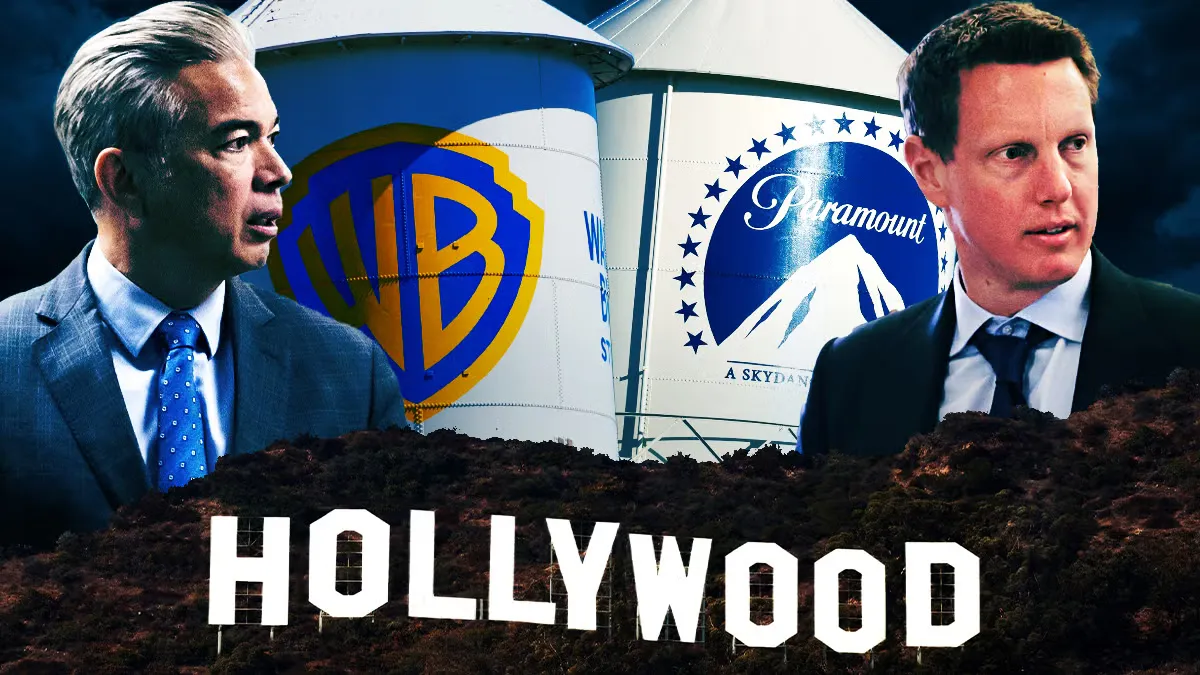
California Judge Araceli Martínez-Olguín granted a temporary restraining order sought by 12 state attorneys general against the pending $110 billion Paramount-Warner Bros. Discovery merger. For executives and investors, the pause adds timeline risk right as multiple lawsuits and regulators weigh market-power claims.
California Judge Araceli Martínez-Olguín just granted a temporary restraining order that pauses the pending $110 billion Paramount-Warner Bros. Discovery merger, at least for 14 days. Her ruling did not rest on a vague “wait and see” concern. It hinged on market-share claims, finding the states presented “compelling evidence” the combined firm would have substantial share in the wide-release theatrical distribution market and that the proposed merger is likely to violate antitrust laws based on that market share alone.
The TRO matters because it buys time for a preliminary injunction hearing set for Aug. 3, giving the court a deeper look while the two companies keep operating as separate, viable competitors. In her order, Olguin said the states made a strong showing that the transaction would “substantially lessen competition” in the wide-release theatrical distribution market, and therefore irreparable harm would result if a TRO did not issue. She also emphasized why a reversal later could be messy: the court pointed to the anticipated consolidation of operations, sharing of business-sensitive information, and potential termination or reassignment of employees. In other words, if the deal goes forward, unwinding it later could be difficult, if not impossible.
If you are on the deal team, this is the moment where timelines stop being “schedule management” and start becoming “risk management.” A TRO is not a final ruling, but it is a real brake. Olguin’s order keeps the TRO in effect for 14 days, with the possibility of an additional 14-day extension. Paramount will have until July 27 to file its opposition brief, with plaintiffs' reply due July 30. The court then scheduled the preliminary injunction hearing for 3 p.m. on Aug. 3. That sequencing tells you the judge wanted the parties focused, not drifting.
For context, the lawsuit is not a single-issue complaint. The 12 state attorneys general sued last week to block the merger, arguing it would create an entertainment giant with 27% of the wide-release theatrical distribution market, 30% of the submarket comprising “anticipated blockbuster films,” and 27% of the basic cable bundle. The states warned that approval could increase leverage over movie theaters and cable distributors, raise consumer prices, and reduce content output. Those are classic antitrust themes: market power, negotiation leverage, and the impact on consumers and supply.
Paramount’s defense leaned hard on competition and incentives. In arguments heard Friday, Paramount argued the states’ case is “one of the weakest” in modern history, including the idea that intense competition from both established and emerging studios undermines the states’ claims. It also argued the cable networks are largely complementary rather than direct substitutes, making competition reduction less likely. Paramount further pointed to the “continuing decline of pay TV” as weakening every programmer’s negotiating position, framing the bargaining environment as already under pressure.
Then there is the pressure that comes from money and momentum. Paramount’s attorney Jeffrey Kessler said a preliminary injunction hearing before Sept. 30 is needed to prevent “very severe harm” from a 25 cent per share ticking fee for every quarter until closing, which he said translates to around $7 million per day and $650 million per quarter. Olguin’s ruling addressed that argument directly in a way that can sting: she wrote that Paramount will suffer “no apparent harm in the near term,” even if it argued it would face economic harm from delaying the merger. The judge then said the equities did not weigh in Paramount’s favor when contrasted with potential public harms, including loss of competition.
It is also worth noting the structure of the broader regulatory battlefield. The TRO comes after Olguin heard arguments from both sides. Paramount has said the Warner Bros. deal remains on track to close by the end of the third quarter. It has already received approval from the U.S. Department of Justice and Warner Bros. shareholders, and multiple other countries have either cleared it or had relevant waiting periods expire, including Australia, Austria, Canada, China, Kuwait, Saudi Arabia, Serbia, South Africa, Ukraine, Montenegro, New Zealand, and North Macedonia. Foreign direct investment authorities in Spain, Germany, Slovenia, Belgium, Czechia, Italy, France, and Romania have also signed off. In Europe, the European Commission’s review period on foreign investment expired last week, with a decision on whether to clear or refer for a Phase 2 investigation set for Wednesday.
But UK oversight could add another twist. The UK Secretary of Culture, Media and Sport Lisa Nandy informed Paramount and WBD she feels “minded to intervene,” with a decision on whether to clear or move to a Phase 2 investigation expected by Aug. 7. Meanwhile, beyond the state AG lawsuit, the Writers Guild of America, a Paramount shareholder, and a group of consumers all filed separate lawsuits to block the merger. The latter request for a preliminary injunction was denied because the judge ruled they failed to show irreparable harm or that their case had a likelihood of success.
Even if this merger ultimately closes, the immediate strategic stakes are clear: pause now, adjudicate later, and preserve competition in core distribution markets while the court assesses likely antitrust violations. California Attorney General Rob Bonta called the ruling a “critical first win,” arguing the case ensures the megamerger never sees the light of day. He framed the issue as more than a boardroom math problem, pointing to “fewer opportunities,” “worse products and services,” and the stakes of market power over “markets that are central to Americans' lives.”
For executives at other media, distribution, and bundling businesses, this is the kind of precedent ripple you watch carefully. Multi-jurisdiction approvals and foreign clearance do not immunize a deal from U.S. state-level antitrust intervention, and market-share allegations tied to distribution channels and bundling can still trigger a TRO. The merger is also under a financial backstop: if the deal does not close at all due to regulatory matters, Paramount will pay Warner Bros. Discovery a $7 billion termination fee. That is big enough to matter, but in antitrust litigation, big numbers do not stop judges from ordering pauses when the court thinks competition harm is the more urgent risk.
Bottom line: the court has put the combined-company plan on hold, and it did so by focusing on likely antitrust issues in wide-release theatrical distribution and the irreversibility risks of moving forward. Whether you are a CEO weighing acquisition timing, a board member assessing diligence, or an investor modeling deal probability, Aug. 3 now becomes a date that can change the merger math overnight.
This story's Key Insights and Take-aways are locked.
Create a free account to unlock Executive Actions for one credit.
Register to UnlockAlways free for Executives Club members. Join the Club
More in Business

Anthropic’s Levant Alpöge cracks the Jacobian conjecture after 87 years
A Harvard valedictorian used Claude to hit a 1939 breakthrough, but the missing “why” is the real problem.

Uber buys Delivery Hero for nearly $15B, vaulting to top food delivery outside China
The deal doubles Uber's dual-services footprint and pushes a ride-and-eats bundling play into 50 more markets.

Epic and Google drop settlement bid, forcing rival Android app stores by July 22
Google told the court it is ready to carry third-party app stores starting Wednesday, July 22.