
July 3 launch aims to rescue NASA’s Swift as its two-decade mission nears end
A lifesaving boost is the plan, but decision-makers need to understand what happens if the recovery fails.

NASA’s Swift space telescope is nearing the end of its two-decade run in orbit, and a satellite launched on 3 July is intended to extend its life. For decision-makers, the key consequence is how quickly mission continuity can be restored, or how costly it becomes if it cannot.
NASA’s Swift space telescope is reaching the end of its two-decade run in orbit, unless a satellite launched on 3 July can give it a lifesaving boost. That is the whole tension in one sentence: a long-running observatory has hit the point where “keep watching” turns into “keep it alive, somehow.”
The rescue effort starts on 3 July with the launch of a new satellite designed to extend Swift’s time in space. If it works as intended, the mission avoids a quiet expiration and buys more time for Swift’s science. If it does not, then the reality is stark: Swift’s clock does not rewind, it only runs down.
To understand why this matters beyond space fans, zoom out to how orbital assets behave like time-limited infrastructure. Telescopes in orbit are expensive, slow to build, and hard to replace. Swift is not just a gadget you swap when it starts aging. Missions like this are built around planning cycles that include hardware development, launch schedules, operations, and long-term data collection. When the article says Swift is near the end of its “two-decade run,” it is pointing at a transition moment. That is when budgets, program decisions, and scientific commitments start to clash with physics.
This is also a regulatory and programmatic story, even if the source does not name regulators explicitly. Launch approvals, mission safety constraints, and orbital coordination requirements are part of the governance layer that determines what can launch, when it can launch, and how it can operate once in orbit. Even when a mission is “audacious,” it still has to pass through the rules that keep launches and satellites from becoming a traffic jam in the sky. The fact that a rescue satellite is launching on a specific date, 3 July, underscores that the schedule is not just engineering. It is administrative reality too.
There is an incentive mismatch that often shows up in these moments, and it is the same one behind many “life extension” plays. The team that owns the spacecraft wants continuity, but the program that funds it wants predictability and outcomes. For Swift, continuity is now conditional. The satellite launched on 3 July is supposed to deliver that “lifesaving boost,” but the source frames the rescue as an exception path. In other words, the default outcome is Swift ending. The satellite is the deliberate deviation from that default.
Boards and executives thinking about this kind of mission continuity should note how second-order effects tend to show up when hardware depends on timing. If the new satellite can extend Swift’s life, the returns are not just “more data.” They include preserving a mission’s operational momentum, protecting ongoing observing programs, and avoiding a sudden gap that could ripple into downstream science planning. If the boost fails, that disruption becomes a strategic liability. It shifts priorities from extension to replacement, and replacement in space is rarely cheap, fast, or guaranteed.
Finally, this moment is a reminder of how space industry planning increasingly treats “end-of-life” as a business risk, not a footnote. Swift is a concrete example: two decades in orbit is a long tenure, but it is not infinite. The rescue plan launched on 3 July is the industry practicing resilience under hard constraints. The strategic stake for peers in similar roles, whether they run space programs, fund them, or oversee mission portfolios, is simple. You do not just plan for what a satellite can do at peak performance. You plan for the day when the mission needs help, and the help arrives only if the launch and the rescue concept both succeed.
This story's Key Insights and Take-aways are locked.
Create a free account to unlock Executive Actions for one credit.
Register to UnlockAlways free for Executives Club members. Join the Club
More in Science
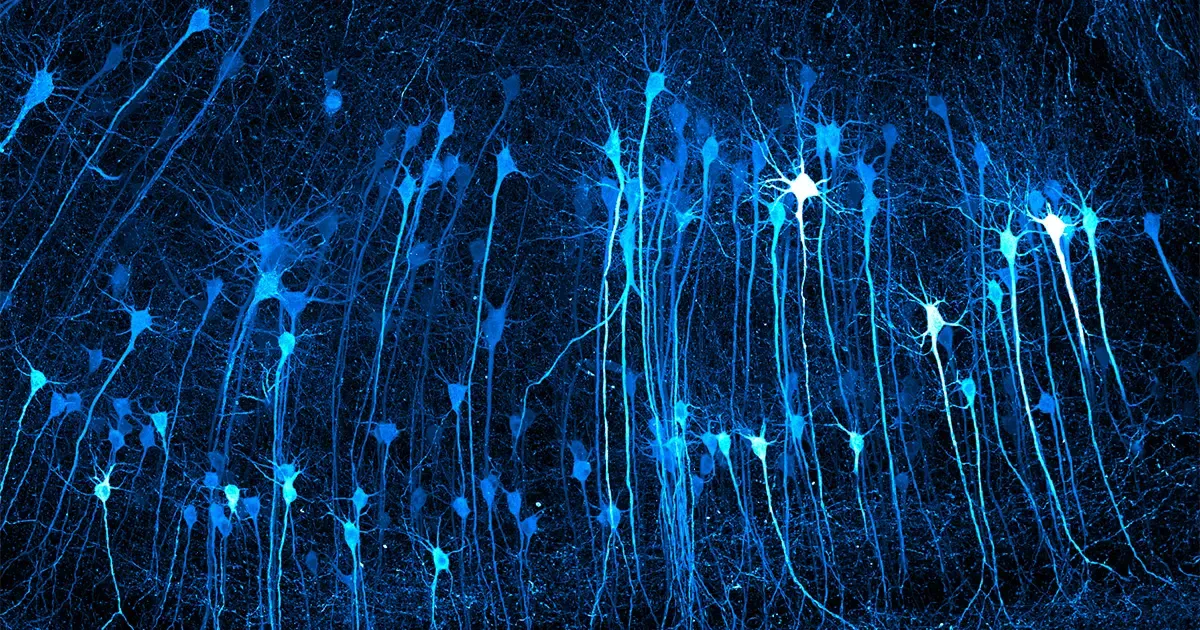
2026 Nikon Small World Winners Reveal the Hidden Machinery of Everyday Life
A mycologist's frozen Edinburgh garden became the backdrop for vivid views inside cells, a reminder of what advanced imaging now makes visible to researchers and the industries built on biology.

Study: 1 in 4 depression cases may be a body-clock problem, not a chemical one
A 10,000-person study finds standard antidepressants often fail these patients, but melatonin and morning sunlight may hit the real root cause.

Start-Up Says A.I. Designed a Virus to Attack One Patient's Superbug
If the claim holds up, personalized phage therapy could become a new frontline weapon against antibiotic resistance - but proof is far from final.