

Lesley Stahl and friends threaten “60 Minutes” exit unless CBS News earns independence back
A memo lets Nick Bilton hear the ultimatum: keep independent, fearless journalism or they leave.
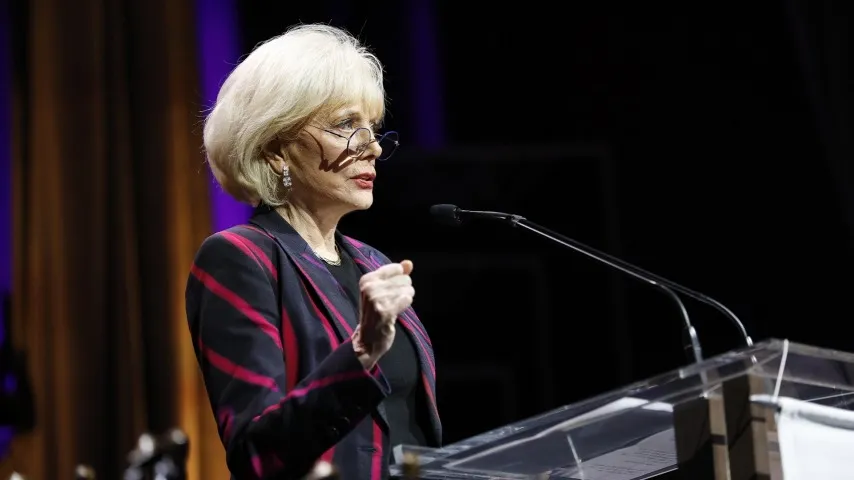
Lesley Stahl, Bill Whitaker, and Jon Wertheim sent a staff memo on CBS News' 60 Minutes, after Scott Pelley was fired and multiple colleagues were expelled. They say they will stay, but only if the show can keep doing the independent, fearless journalism that defines it.
CBS News just tried to reboot 60 Minutes with a new power structure. The problem: the show’s most storied veterans are publicly roasting the leadership while quietly setting an ultimatum. In a memo to the show’s staff, Lesley Stahl, Bill Whitaker, and Jon Wertheim said they had “a hard time” deciding whether to leave en masse after their colleague Scott Pelley was fired this week, and they paired that internal struggle with an unusually direct message: “Newsrooms are not supposed to run like dictatorships.”
Their answer is not a resignation. It’s a conditional stay. The three explicitly said they are sticking with 60 Minutes out of a desire “not to see it die,” but they also made the terms unavoidable. “If we can continue doing the work that made this show what it is-committing acts of independent, fearless journalism and storytelling-we’re here for it. If not, we leave.” That is the core decision-point for any executive in media right now: how you manage newsroom independence when the organization is in turmoil, and what happens when the people who built your trust tell you they do not buy your authority.
The memo also comes with names. The trio opened by memorializing recently axed colleagues, and the list reads like an organization chart of trust broken in real time: Producers Tanya Simon, Guy Campanile, and Draggan Mihailovich, fellow host Pelley, correspondents Sharyn Alfonsi and Cecilia Vega, and more. Stahl, Whitaker, and Wertheim wrote, “We want to express how sorry we are that these principled, fair, and honest journalists were treated so shabbily, with such indecency.” They continued by saying, “As far as we can tell-because no explanation has ever been offered-they were expelled because they fought for our 60 Minutes values and stood up to protect our independence and integrity.”
For decision-makers, the detail that matters is not just the shade, it is the governance logic. They are arguing that these departures were not isolated HR events. They frame them as a pattern, with a missing piece: “because no explanation has ever been offered.” In newsroom terms, that is how independence collapses. In corporate terms, it is how morale becomes policy, and policy becomes public. When leadership changes at a high-visibility franchise, you can manage content. You cannot easily manage the perception that the newsroom’s “values” are being traded for control.
The memo also shows how leadership incentives collide with public commitments. Earlier this week, new boss Nick Bilton made statements about maintaining 60 Minutes’ independence, a major target in Pelley's blow-up with the new executive producer on Monday, which led to his firing on Tuesday. Stahl, Whitaker, and Wertheim acknowledged Bilton’s assurances. But they still attached an ultimatum to their own decision: stay if independence holds, leave if it does not. That structure is telling. It implies that trust is now being treated like a deliverable, not a principle.
There is also a boardroom-style subtext running underneath all of this. When a respected institution is undergoing “ongoing institutional chaos,” executives and executives-in-training tend to default to control mechanisms. Sometimes those are necessary. But the memo makes clear the veterans interpret them as dictatorship-like behaviors, hence the phrase about how “Newsrooms are not supposed to run like dictatorships.” In regulated industries, independence is usually formalized. In journalism, independence is often cultural. When that culture is questioned publicly by the people who embody it, the risk shifts from internal dysfunction to external legitimacy.
And that is where the second-order stakes get real. 60 Minutes is not just a TV show, it is a trust brand. When veteran journalists publicly threaten exit while praising no one, it pressures everyone upstream. It pressures CBS News leadership to turn independence into measurable operating practice, not a talking point. It pressures production staff to anticipate more turmoil. And it pressures other newsrooms watching the sequence to ask a blunt question: if the most respected franchise in the business can unravel under leadership changes, what does that mean for their own independence and their own job security?
Staying to “keep the show alive” is not passive. It is leverage with a production calendar attached. Stahl, Whitaker, and Wertheim’s memo does not merely criticize. It defines what “independence” means in their operational terms: “committing acts of independent, fearless journalism and storytelling.” If Nick Bilton and the rest of CBS News can translate those values into how reporting choices are protected and how departures are explained, the veterans have offered a path to stabilize 60 Minutes. If not, they have already said what will happen next: “If not, we leave.”
This story's Key Insights and Take-aways are locked.
Create a free account to unlock Executive Actions for one credit.
Register to UnlockAlways free for Executives Club members. Join the Club
More in Business

Anthropic’s Levant Alpöge cracks the Jacobian conjecture after 87 years
A Harvard valedictorian used Claude to hit a 1939 breakthrough, but the missing “why” is the real problem.

Uber buys Delivery Hero for nearly $15B, vaulting to top food delivery outside China
The deal doubles Uber's dual-services footprint and pushes a ride-and-eats bundling play into 50 more markets.

Epic and Google drop settlement bid, forcing rival Android app stores by July 22
Google told the court it is ready to carry third-party app stores starting Wednesday, July 22.