
Li Shufu orders Geely to purge excess capacity after BYD battle at Chongqing Auto Show
Geely’s chairman says the company will assess oversupply and decide which capacity to close, suspend, merge, or sell.
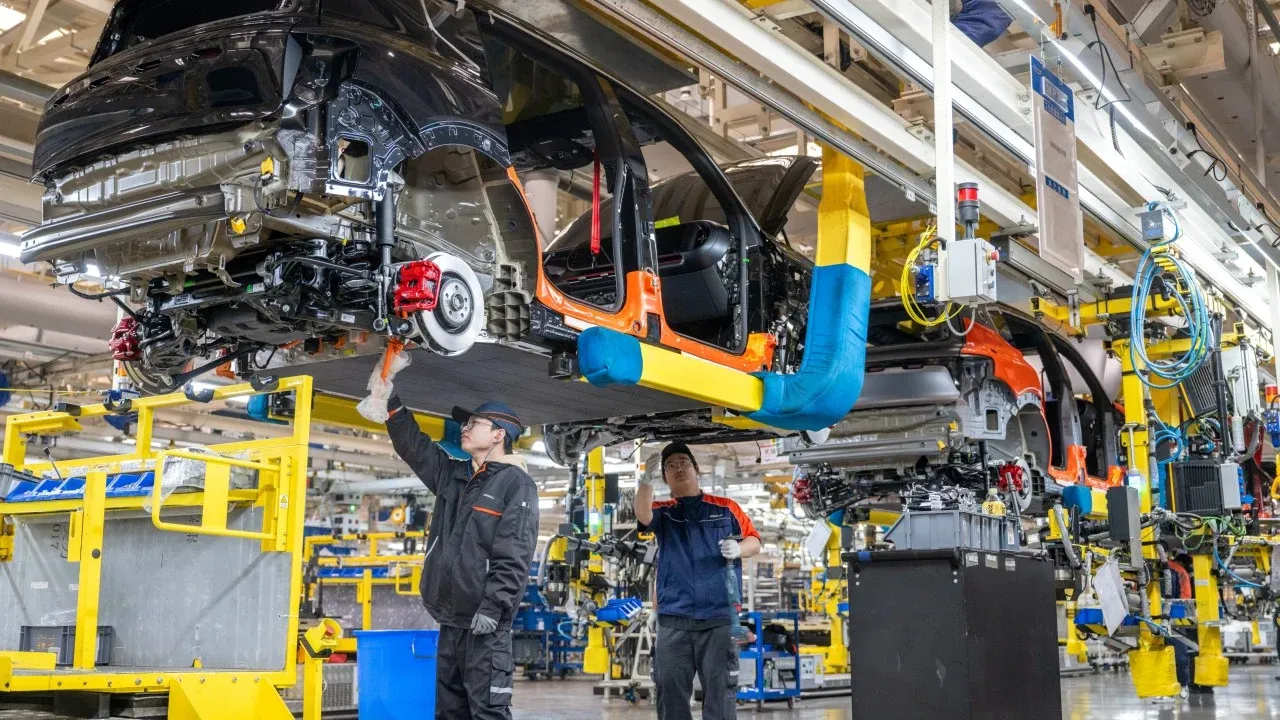
Geely Auto, led by chairman Li Shufu, pledged to purge excess capacity through an asset restructuring while accelerating its go-global push. The decision, outlined at the Chongqing Auto Show, could reshape how Geely and peers handle China’s crowded, oversupplied auto market.
Geely Auto chairman Li Shufu used the Chongqing Auto Show on Friday to put a number on a problem that has been quietly growing in China’s auto market: excess capacity. His pledge is straightforward, and potentially painful for anyone assuming carmakers can just “scale through” this cycle. Geely said it would assess oversupply of production capacity across all units, then decide whether to close, suspend, merge, or sell redundant production assets.
That matters because the target is not a marketing tweak or a single underperforming model line. Geely is talking about capacity itself, and doing it through an asset restructuring. In plain terms, the company is preparing to cut fat by changing the physical and corporate structure behind manufacturing, not just tweaking output volumes. This is also happening while Geely is locked in a fierce battle for dominance against BYD in a crowded domestic market, which means the company has both a competitive urgency and a cost-pressure urgency. If you are a board member or finance leader at a peer, this is the signal: the “oversupply” problem is now serious enough to trigger production and asset-level decisions.
To understand why this is such a big lever, you have to zoom out to how China’s auto landscape works right now. It is crowded, fast-moving, and aggressively competitive, especially between major players and smart EV challengers. When demand growth does not keep pace with new production, you do not just get lower margins. You get stranded investments, duplicated plants, and complicated decisions about which lines to keep running and which to unwind. Asset restructuring is a response that acknowledges the reality that capacity is not easily reversible once plants, tooling, and production networks are built.
The story also signals a shift in how Geely intends to compete globally. Alongside the purge pledge, Geely is ramping up its go-global drive with an eye on greater international competitiveness. That phrase matters because it is not an either/or between “fix China” and “expand abroad.” The company is effectively trying to do both: clean up the cost base at home while preparing to sell in markets where it will need efficiency and credibility. For decision-makers, the finance question becomes: does reducing redundant production assets free up capital, improve balance-sheet resilience, and make international expansion more sustainable?
Li’s approach, as described in the reporting, is not limited to an abstract audit. Geely said it would assess oversupply across all units, then choose among closure, suspension, merger, or sale of redundant production. Those are very different tools, and each has different second-order effects. Closing and suspending capacity can quickly stop the bleeding, but they can also create operational complexity, labor impacts, and supplier renegotiations. Merging units may consolidate know-how but can slow decision-making. Selling redundant production assets can raise cash, yet it also depends on whether there is a buyer and at what valuation. The key is that Geely is framing these decisions as a menu, not a single pre-committed action.
For executives watching China’s competitive chessboard, the timing is notable. Geely is in a direct rivalry with BYD, and the market is crowded enough that oversupply can spread quickly, from model-level competition to plant utilization and pricing pressure. In that environment, a company that waits too long may end up forced into emergency moves later, when options are worse and valuations are lower. By contrast, acting through restructuring now can be a way to control outcomes: pick the assets to keep, the ones to merge, the ones to sell, and the ones to exit entirely.
Finally, the global angle adds an extra layer of pressure. Go-global plans do not just require vehicles and distribution. They require capital discipline and operational reliability in new regions, where regulators and buyers can be less forgiving than a company’s home market. A capacity purge can be a quiet prerequisite for competitiveness abroad, because it tightens cost structures and forces clarity on what the company can produce at scale efficiently. In the end, this is a board-level story: Geely is telling stakeholders that the path to winning in China against BYD and building international momentum may run through hard capacity decisions, not only product announcements.
This story's Key Insights and Take-aways are locked.
Create a free account to unlock Executive Actions for one credit.
Register to UnlockAlways free for Executives Club members. Join the Club
More in Business

SpaceX Nasdaq debut makes it the 6th most-valuable U.S. company at record scale
The IPO flips the usual tech script, putting a revenue-light rocket maker among megacap peers on day one.

Mena construction CPMI slips 12% in April 2026, but execution momentum rebounds to 1.01
GlobalData’s April CPMI shows resilience masking pre-execution caution, with conflict risk surfacing unevenly by country and sector.

Nasdaq lets SpaceX in after 15 days, and 401(k)s may follow
Nasdaq’s Nasdaq 100 rule change accelerates index entry, meaning index-tracking funds could buy SpaceX sooner.