

LIV Golf's bankruptcy leaves top players owed millions, after PIF funding stops
The Saudi-backed breakaway league collapsed five years after launch, and the athletes who built it are now last in the creditor line.
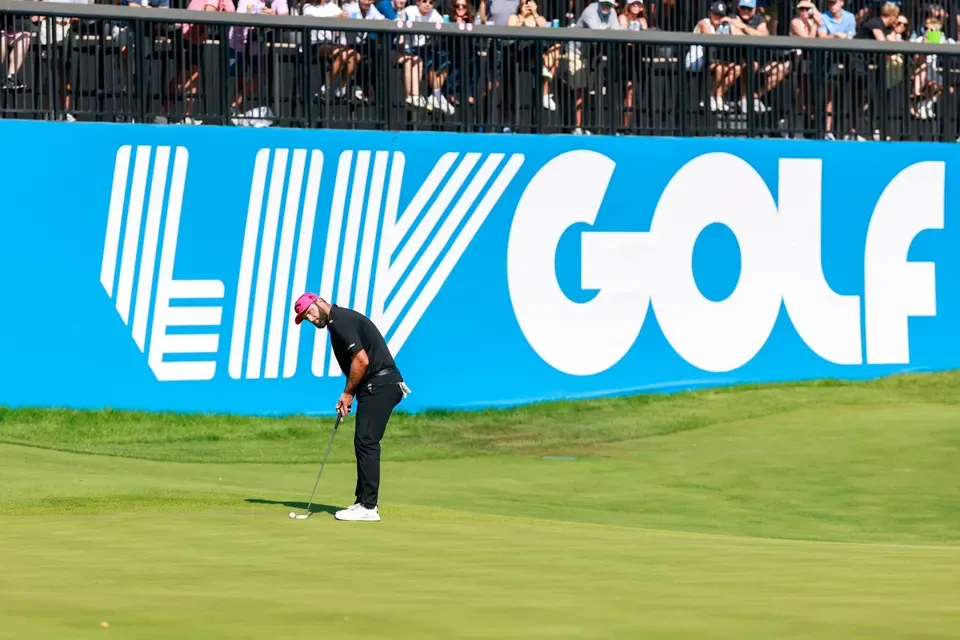
LIV Golf, the breakaway league funded by Saudi Arabia's Public Investment Fund, has declared bankruptcy after losing PIF funding earlier this year, with top players still owed millions. For decision-makers, the collapse is a warning that any business built on a single investor's checkbook can become worthless overnight.
LIV Golf has declared bankruptcy, and the top players who left the PGA Tour to join the breakaway circuit are now owed millions with no clear path to collect. The league lost its funding from Saudi Arabia's Public Investment Fund (PIF) earlier this year, less than five years after it launched, according to Forbes. The filing turns a spectacle of signing bonuses and guaranteed contracts into a court-supervised scramble for whatever assets remain, and the athletes who served as the league's most visible billboards now sit in a long line waiting for what comes next.
For those players, the word "owed" is now a legal category, not a promise. In bankruptcy, claims are ranked: secured lenders take the first cut of any remaining assets, and the unsecured obligations, which is what player contracts typically become, stand far behind. The millions owed to LIV's marquee names will be resolved by the court, but they may be reduced to whatever is left after lawyers, vendors, and other creditors are paid. The players who thought they secured generational financial safety are learning a harsh rule: a contract, no matter how large, is only as strong as the balance sheet behind it.
For context, LIV Golf launched in 2022 as a direct challenge to the established golf order, using PIF money to land major tournament winners and legends with contracts reported in the hundreds of millions. It was a radical sharp-spending play, designed to reshape the sport essentially by force of check size. The league signed top talent from around the world and built teams, fees, and a streaming-backed business model around them. But the entire operation been the project of one patron, and that patron effectively decided, earlier this year, that it was no longer worth the year-on-year bill.
The reversal is not cleanly visible either. In 2023, the PGA Tour, DP World Tour, and PIF announced a framework agreement to merge their commercial businesses after two years of vicious onecoming winning fight. That deal was social, subject to review from regulators and scrutiny from lawmakers. But before it could finalize, PIF pulled its support for LIV Golf, leaving a parallel operation without a budget and a workforce without a project. The framework agreement may eventually move forward, but the LIV chapter specifically now ends in bankruptcy, a messy, court-branded finale to the whole competition the league designed to provoke.
There is a deeper lesson for executives well beyond the sport of golf. Each year, from B2B and to cement superseding, passionate, the same pattern appears: an investor or patron fills a talent lineup, teams multiply, operations get bigger, and then a single decision changes everything. LIV's collapse is an uncomfortable case study because the league did what it said and did it well. It lured high-profile athletes, attracted media attention, and helped fuel competition in the broader golf market. But none of that mattered once the source of funds went away, because the whole business model was a one-stop income stream.
For companies watching from other industries, there is a specific warning here: building a long-term platform on a single check is not a growth strategy, it is a managed decline until the check disappears. The players owed by LIV include some of the sports marquee names, and their future market value is still strong. For the rest of the talent ecosystem, the lesson is about operating atmosphere: name, procurement, and a full support structure can be cumbersome, expensive, and ultimately fragile if the balance sheet is built entirely on a patron's willingness to keep paying.
What happens now is a test of the recovery system. Court proceedings will determine the available assets, what the league owns, and how any remaining rents are distributed. For the athletes, the path forward runs through negotiation and the certainty that these bankruptcies rarely pay unsecured creditors full value. Meanwhile, competitors and public markets will watch closely, because the LIV failure will likely rewrite how sports leagues, media companies, and talent-driven businesses think about guarantees, overdrafts, and the reality that capital that floats in can also float out.
The executive view is straightforward: define the funder concentration as well as revenue concentration. If any single investor, board voice, or country fund can close the doors by making one phone call, then the entire financial model needs a stress test. LIV Golf was not ultimately felled by poor content or bad gambling choices. It was brought down by not having a second source of where the growth could go. That is the real story for every enterprise, C-suite, and board watching from the fairway.
This story's Key Insights and Take-aways are locked.
Create a free account to unlock Executive Actions for one credit.
Register to UnlockAlways free for Executives Club members. Join the Club
More in Business

Amazon Prime Air 767 overshoots Miami runway, killing at least 5
The Boeing 767 freighter from San Juan struck vehicles and erupted in flames, prompting a ground stop and a fresh NTSB investigation into Amazon's air cargo network.

Death sentence for TV presenter Sarah Khalifa: Egypt's drug case hits media
The sentencing of Sarah Khalifa and 11 others underscores the severity of Egypt's anti-drug laws and the exposure of public figures to capital punishment.

Tim Cook steps down as Apple CEO, stays on as chair with $45M equity
The 'Trump whisperer' keeps his White House and Beijing access as Apple navigates tariffs and a $4.6 trillion market cap.