

Lou Koller dies at 59, Sick of It All calls off any 40th-anniversary celebration plans
The hardcore frontman’s esophageal cancer battle ended days before the band’s milestone anniversary would have begun.
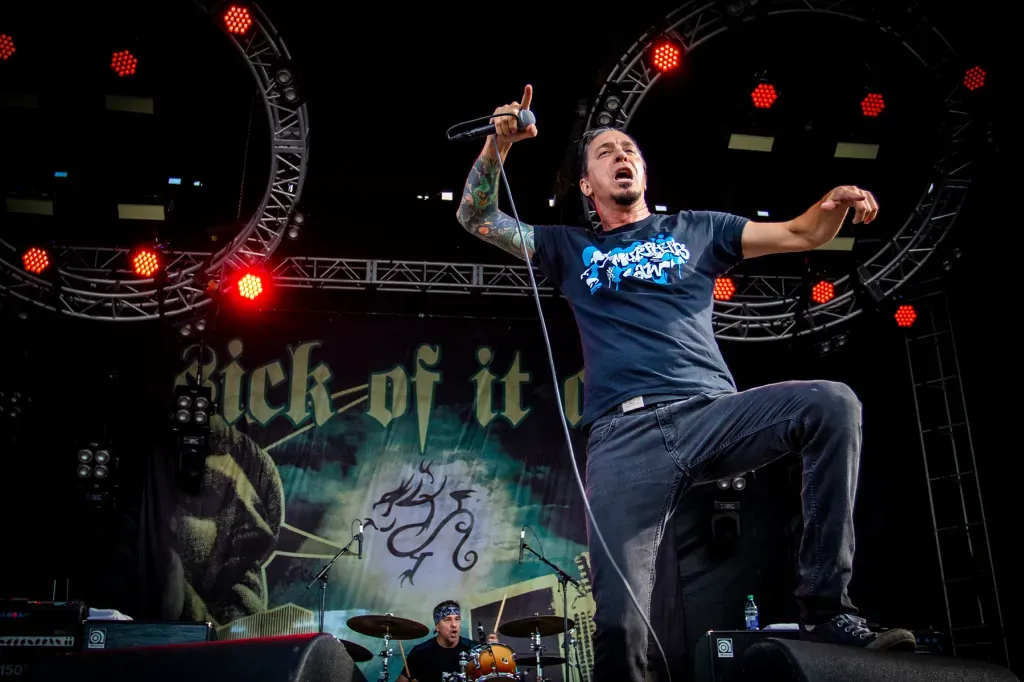
Lou Koller, founding frontman of New York hardcore pioneers Sick of It All, died at 59 after a battle with esophageal cancer. The band confirmed the death on Friday, July 24, just days ahead of what would have been their 40th anniversary in 2026, reshaping how the hardcore community planned its commemorations.
Lou Koller, the founding frontman of New York hardcore institution Sick of It All, died at 59 after a battle with esophageal cancer. Sick of It All confirmed his passing in a statement posted to Instagram on Friday, July 24, just days before the band would have marked 40 years together in 2026. The timing matters more than usual in this corner of music. Anniversaries are not just dates on a calendar. They are the moments when communities rally, promoters schedule, labels line up, and fans decide what kind of tribute they want to show up for.
In the statement, the band called Koller “our brother” and said, “We have lost a beloved friend and an iconic frontman.” They also described what many in the scene already knew: Koller's presence at shows, his smile, his sarcastic comments, and the way he “won people over wherever we played, from every culture and every corner of the world.” Finally, the group thanked people who contributed to Koller's medical fund, saying his “battle is over now and he can finally rest.” That last line hits like a full stop. The fundraising story, the cancellations, the benefits, the donations. All of it was in service of extending a life, and now the arc has ended.
If you zoom out, Koller’s public diagnosis started in the summer of 2024, when he revealed that doctors had found a tumor in his esophagus that extended into his stomach. Sick of It All then cancelled a European tour so he could undergo treatment. For a band that built its identity on relentless touring, that kind of cancellation is not minor. It is a disruption to revenue, momentum, and a community rhythm that runs on shared nights in clubs. But in hardcore, the decision also signals priorities. The band effectively told the machine to pause, because the founder’s care came first.
The hardcore community responded quickly. According to the report, benefit concerts and donations rallied around him. That is the ecosystem at work. Sick of It All was not just a corporate music property with a marketing calendar. It was an institution with a global fan network formed through touring. When members of that network hear that a founder is in medical trouble, they show up with the only leverage they have: events, money, and attention.
By May 2025, Koller announced he was cancer-free following a final round of chemotherapy, a moment that would naturally shift planning back toward the future. But the disease returned months later. That pattern, unfortunately, is part of why stories like this reverberate beyond fandom. People see how uncertain outcomes can be even after an apparent victory. It also explains why the band’s final statement includes both gratitude and closure. They were acknowledging not just his passing, but the full period of waiting, hoping, preparing, and then coping again.
Sick of It All formed in Queens, New York in 1986, built around Koller and his brother Pete, the band’s guitarist. The group emerged from the same late-’80s New York hardcore scene as Agnostic Front, Cro-Mags, and Madball, and became known for playing clubs like CBGB while building a devoted following through relentless touring. Their 1989 debut, Blood, Sweat and No Tears, is described as a genre landmark. By 2020, they had sold at least half a million records worldwide across a nearly four-decade career.
Their commercial peak, according to the source, came in the mid-’90s major-label era. Scratch the Surface (1994), released on East West, drew critical acclaim and produced the singles “Scratch the Surface” and “Step Down,” with “Step Down” earning MTV rotation. The report says it remains the band’s best-selling album. The follow-up Built to Last (1997) reached No. 32 on Billboard’s Heatseekers Albums chart. Later, Sick of It All signed to Fat Wreck Chords and continued releasing music into the 2010s, with their most recent album, Wake the Sleeping Dragon!, arriving in 2018.
For decision-makers who care about how communities and brands behave under pressure, this story is a case study in incentive alignment under real stress. Touring schedules are fragile. Medical situations are not. Fans and promoters are not passive. They reallocate attention, organize benefits, and absorb disruption when the people at the center of the culture are suffering. And when the end comes, it changes everything from how anniversaries are framed to what “legacy” actually means in practice.
Koller is survived by his bandmates, including his brother Pete, and a global community of fans built across 40 years on the road. The hardcore world now has to do what it always does, but with fewer distractions and more honesty: remember the music, yes, but also remember the person who helped carry the room. 2026 will still come, but it will arrive without the frontman who helped define the band’s heart.
This story's Key Insights and Take-aways are locked.
Create a free account to unlock Executive Actions for one credit.
Register to UnlockAlways free for Executives Club members. Join the Club
More in Business

Anthropic’s Levant Alpöge cracks the Jacobian conjecture after 87 years
A Harvard valedictorian used Claude to hit a 1939 breakthrough, but the missing “why” is the real problem.

Uber buys Delivery Hero for nearly $15B, vaulting to top food delivery outside China
The deal doubles Uber's dual-services footprint and pushes a ride-and-eats bundling play into 50 more markets.

Epic and Google drop settlement bid, forcing rival Android app stores by July 22
Google told the court it is ready to carry third-party app stores starting Wednesday, July 22.