

Mathematicians map “hidden order” in chaos, turning a decades-old randomness puzzle closer to solved
A new result narrows the gap between truly random behavior and the structure that still leaks through.
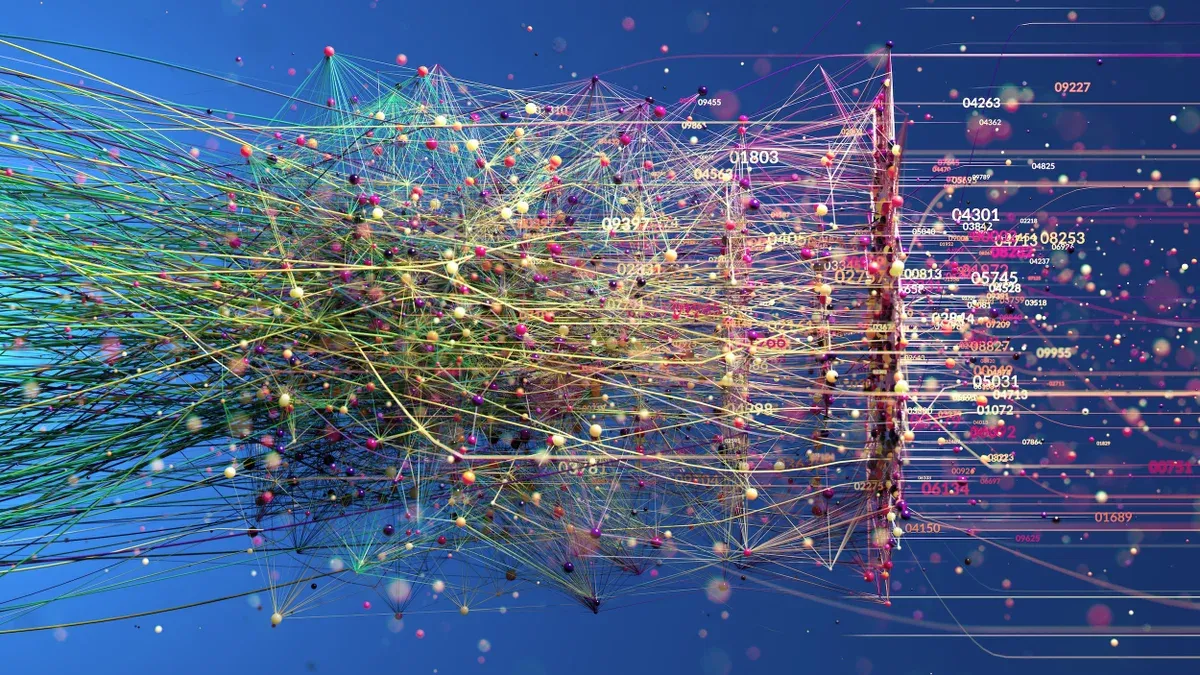
A new breakthrough in mathematics pushes the limits of randomness while bringing a decades-old mystery about hidden structure inside chaos closer to resolution. Decision-makers in tech, research, and risk-focused industries should care because better randomness models affect everything from simulation to security and system reliability.
Mathematicians are closing in on the hidden order inside chaos, and the breakthrough matters because it targets a problem that has annoyed serious thinkers for decades: how to understand what randomness really means when nature seems lawless. Scientific American describes a new result that pushes the limits of randomness, moving a decades-old mathematical mystery closer to being resolved.
In plain English, the story is about limits. “Chaos” suggests unpredictability, but the decades-old mystery has been that even chaotic systems can exhibit structure. The new breakthrough tightens the connection between what looks random and what is actually constrained. That is the core of why this is more than a curiosity for math people: the ability to reason about randomness under real constraints changes how we validate models, interpret simulations, and stress-test systems that are supposed to behave unpredictably.
To appreciate the stakes, you have to zoom out to how randomness gets used in the real world. Randomness is not just a vibe. It is a design input. Cryptographic systems rely on unpredictable outputs. Randomized algorithms use chance to guarantee performance properties. Risk models use stochastic processes to represent uncertainty. When executives approve budgets for security, simulation, or reliability, the underlying assumption is often that randomness in the model represents randomness in the world.
But if chaos has hidden order, then the relationship between “random enough” and “actually structured” becomes a business issue, not a theoretical one. When randomness is too constrained, models can become brittle. Outputs that were expected to be effectively uncorrelated may carry subtle dependencies. In safety-critical environments, that means surprises can be worse than expected. In security, subtle structure can be the difference between strong protection and exploitable weakness. The Scientific American framing, that the new breakthrough “pushes the limits of randomness,” signals that researchers are refining the boundary between what can be treated as random and what cannot.
There is also an incentive angle. Many math breakthroughs are slow because the payoff is abstract, not immediate. Years of progress can disappear into proofs that only a narrow set of specialists fully appreciate. That means the scoreboard is different for researchers than for product teams. A result that “brings a decades-old mathematical mystery closer to resolution” is the kind of milestone that changes how quickly the field converges on a final understanding. For boards and leaders funding research, this is the practical version of a leading indicator. It suggests the field is approaching an “answer” state, where additional work can move from exploring possibilities to verifying and applying conclusions.
Second-order implications show up in where uncertainty gets monetized. Financial firms, for example, translate stochastic behavior into pricing, hedging, and stress scenarios. Cloud providers and data centers translate uncertainty into capacity planning and operational risk. Regulators often do not regulate “randomness” directly, but they do regulate model governance. Even when rules focus on transparency, validation, and documentation, the quality of the mathematical assumptions under the hood matters. A breakthrough that clarifies randomness in chaotic settings can feed back into how model validation teams justify their methods and how internal controls describe limitations.
Then there is the tech stack reality: simulation is everywhere, from training machine learning systems to running digital twins. Most simulations need randomness, whether for sampling, approximating distributions, or exploring rare events. If mathematics can better characterize the “hidden order inside chaos,” it can help teams design simulations that are both realistic and robust. The win is not necessarily that chaos becomes predictable. The win is that chaos becomes better understood, with randomness treated more carefully, less as a black box.
So what should decision-makers take from this? Not that executives suddenly need to sponsor chaos theory. The point is strategic: when Scientific American reports that mathematicians are closing in on hidden order inside chaos and that the breakthrough pushes the limits of randomness, the direction of travel is clear. The theoretical boundary that controls how we treat unpredictability is shifting. Companies that depend on randomness in security, simulation, and risk governance will want to track how research communities formalize these ideas, because the downstream impacts can show up quietly at first, then suddenly in audits, model performance, and incident analysis.
At a high level, this is the kind of progress that reshapes a foundation without announcing itself with a press release. The decades-old mystery is closer to resolution. And if you build systems on the assumption that randomness is simple, that is a risk worth noticing.
This story's Key Insights and Take-aways are locked.
Create a free account to unlock Executive Actions for one credit.
Register to UnlockAlways free for Executives Club members. Join the Club
More in Science
2026 Nikon Small World Winners Reveal the Hidden Machinery of Everyday Life
A mycologist's frozen Edinburgh garden became the backdrop for vivid views inside cells, a reminder of what advanced imaging now makes visible to researchers and the industries built on biology.

Study: 1 in 4 depression cases may be a body-clock problem, not a chemical one
A 10,000-person study finds standard antidepressants often fail these patients, but melatonin and morning sunlight may hit the real root cause.

Start-Up Says A.I. Designed a Virus to Attack One Patient's Superbug
If the claim holds up, personalized phage therapy could become a new frontline weapon against antibiotic resistance - but proof is far from final.