
MCU draws “prestigious actors,” but the real cost is blank-check capitalism
Superhero films may steal star power. The bigger story is how capital chases taste, and what boards learn from it.
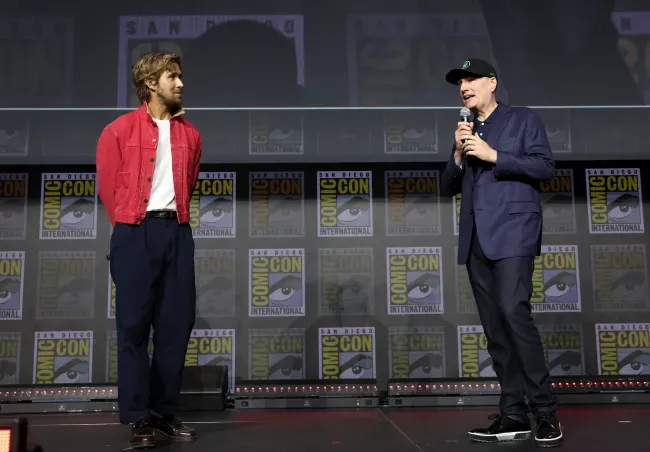
IndieWire frames the debate around rising star talent and “prestigious actors” heading to MCU films as a cultural loss for cinephiles. But it argues the alternative path, making “blank-check money,” is arguably even more capitalistic, with broader consequences for how studios and talent optimize incentives.
A certain slice of movie lovers is mourning a “loss” they associate with MCU films: the idea that “prestigious actors” are being pulled away to superhero franchises instead of staying in more prestige, director-driven projects. That grief has a familiar tone in entertainment media. It assumes taste and craft move in one direction, and that franchise dominance is a kind of cultural theft.
IndieWire’s counterpoint is sharper and more uncomfortable. Yes, MCU films can redirect talent. But the other option people point to, the one where actors and filmmakers chase “blank-check money,” is framed as arguably even more capitalistic. In other words, the debate is not only about which genre gets the actor. It is about what the industry is rewarding.
To understand why this matters for executives, you have to look past the headline fight about “taste” and ask what the incentive system is actually doing. Big-budget franchise work offers something the rest of the market struggles to match: scale. When a studio can build a predictable pipeline, quantify demand through global release patterns, and finance a slate with a clearer line of sight, executives tend to treat the franchise like infrastructure. The creative upside still exists, but the economic logic becomes the driver, not the garnish.
Meanwhile, indie and prestige projects are where people go to feel the industry’s soul. They also tend to be harder to underwrite. Budgets are smaller, marketing reach is narrower, and the distribution upside depends more on word-of-mouth and critical validation. For decision-makers, that means more variance. When you have that variance, the boardroom naturally asks for mitigations, and those mitigations can look like star casting, packaging, or financing structures designed to reduce downside. When Indy Wire says “blank-check money,” it is pointing at a version of the same solution. Instead of betting on uncertain taste, you buy certainty with capital.
This is why the “loss” narrative is only half the story. The MCU is not the only way money steers careers, it is just the most visible one. If an actor opts into a guaranteed paycheck and a massive audience reach, that can be read as a trade of craft for cash. But if the alternative is to accept similarly strong financial terms for prestige projects, then the underlying engine is the same: capital is still buying outcomes, only with different branding.
There is also a structural reason the MCU conversation keeps resurfacing. Modern studios do not operate like an art house. They operate like portfolio managers. One film can disappoint. A franchise can amortize risk across sequels, spin-offs, merchandising, and long-tail audience retention. That is why superhero films become magnets for capital and talent. They are easier to model, easier to defend in front of stakeholders, and easier to market at global scale. When critics or cinephiles say MCU is “where prestige goes to disappear,” what they are often reacting to is that this business logic crowds out the less predictable lanes.
Regulatory framing matters too, even if today’s debate is cultural rather than legal. Film markets are heavily influenced by how public policy shapes industry competition, investment, and labor. The Hollywood machine is not operating in a vacuum. Tax incentives, funding rules, and distribution frameworks can alter which projects pencil out and which do not. Even without naming a specific regulation in this piece, the second-order implication for executives is straightforward: policy and capital policy choices determine where money flows, and money determines where talent can realistically go. When a studio can justify a franchise on financial grounds shaped by its broader ecosystem, it effectively sets the baseline that other studios have to compete with.
Now connect the dots to governance. Boards that oversee media companies are accountable for returns, not film school syllabi. If they see franchises outperforming, they will lean in. If they see prestige projects succeed, they will still ask why the upside could be replicated across a slate. That is how “blank-check” dynamics enter the conversation. A blank check is just capital acting on uncertainty. When uncertainty rises, capital gets more decisive.
So the strategic stakes for executives in neighboring companies are not really about whether superhero movies are “good” or “bad.” They are about what your org is optimizing. Are you optimizing for cultural legitimacy, financial predictability, or some hybrid? IndieWire’s framing suggests that whatever your taste preferences, the market is increasingly shaped by the money structure behind the projects. If you want talent to choose your slate, you are not just competing on scripts. You are competing on incentives, financing comfort, and the economics of certainty. That is the cost of the current moment: taste is not being lost to one franchise. It is being priced into whichever option makes the numbers easiest to defend.
This story's Key Insights and Take-aways are locked.
Create a free account to unlock Executive Actions for one credit.
Register to UnlockAlways free for Executives Club members. Join the Club
More in Entertainment

Ali G's 'stooge' says he was in on joke, outplayed Sacha Baron Cohen
A 54-year-old aspiring actor says he recognized Sacha Baron Cohen mid-shoot, kept his MAGA act up, and let the film-makers think they had fooled him.

Entertainer Russell Brand denies 7 sex charges amid accuser's 'couldn't breathe' claim
The alleged victim's account sharpens the reputational and legal stakes for Brand, his platforms, and any business tied to a public figure under criminal scrutiny.

Russell Brand's accuser 'bewildered and confused' as he denies 7 sex charges
The criminal case against the comedian is a live test of how media companies manage talent risk when serious allegations go public.