

Meta bans some Meta glasses videos after backlash over privacy and prank filming
Business Insider reports Meta is restricting content from its smart glasses, as “pervert glasses” talk turns into policy.
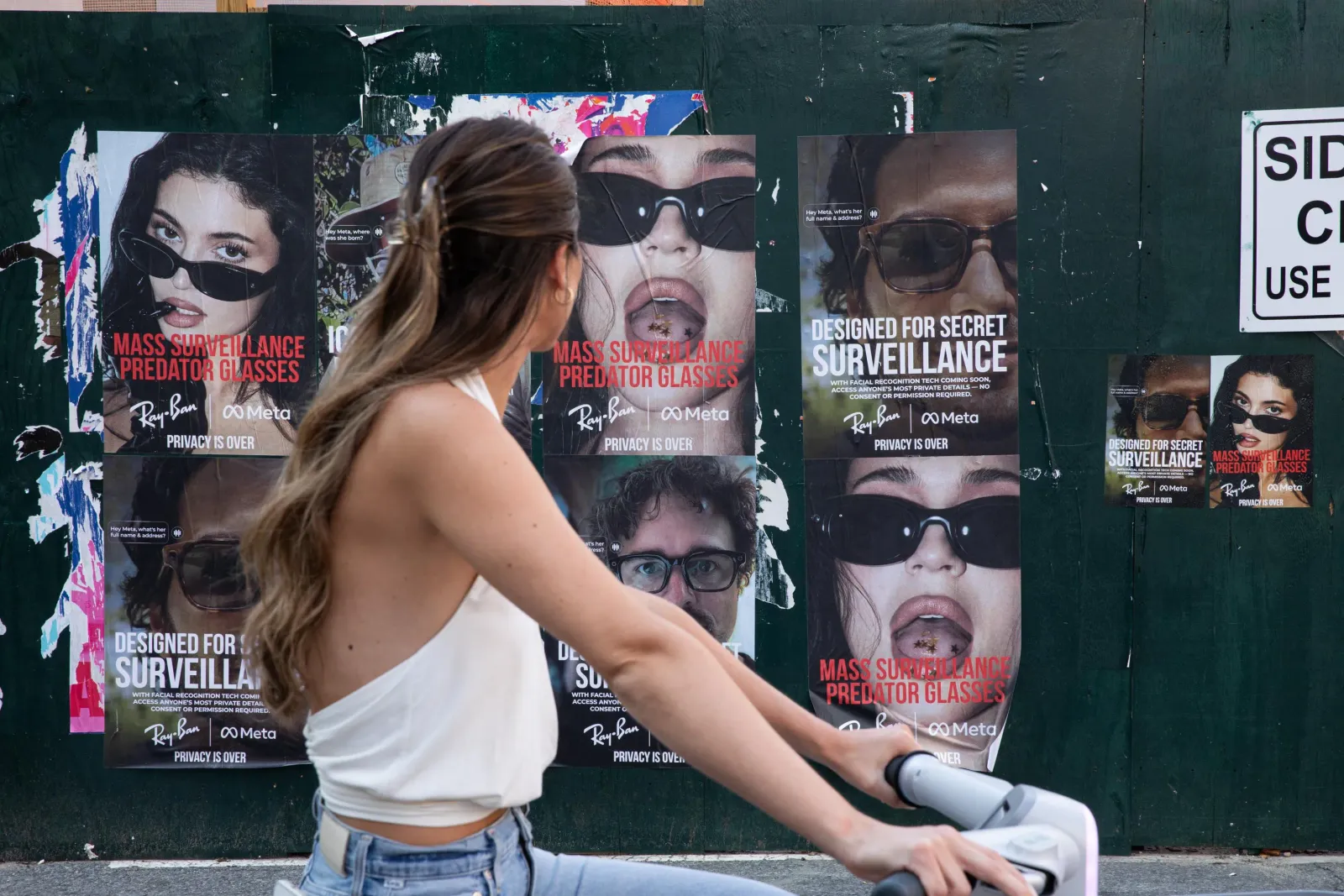
Meta is facing mounting backlash around its smart glasses, including concerns about privacy, surveillance, and non-consensual filming. Business Insider reports Meta is taking the unusual step of banning some content filmed with the glasses, a move that has major governance and compliance implications for decision-makers.
Meta’s smart glasses just ran into a moderation brick wall, and it is the kind that can damage trust faster than a hardware defect. According to Business Insider, Meta is taking the fairly extraordinary step of banning some content filmed with Meta glasses. The decision lands after a wave of public backlash that has been swift and fierce, with people arguing the devices erode privacy and expand surveillance in daily life.
The problem is not abstract. Some especially bad actors have been using the glasses to film themselves “pranking” random strangers, turning the streets into a feed without consent. Women have been shown as unsuspecting social media content for men filming themselves hitting on them without their knowledge. When your product starts getting referred to as “pervert glasses,” you do not just have a PR issue. You have a safety and legitimacy issue, and Meta appears to be reacting by tightening what gets through, not by changing the camera.
That “tightening” matters because moderation is where consumer hardware becomes a governance problem. Smart glasses are not only capturing images; they can also reshape how people behave around each other. If bystanders believe they are being recorded without a clear signal or expectation, the tech can shift from “cool gadget” to “ambient surveillance.” Even if the underlying recording features are the same, the social interpretation changes the moment the internet starts amplifying the worst use cases.
Meta’s reported move to ban some content is also a signal about incentives. Companies can reduce reputational damage in two ways: mitigate harm directly in the product, or restrict harmful outcomes at the distribution layer. In this case, the distribution layer is moderation, the gate where platforms decide what is allowed. When the content involves real-world interactions with non-consenting people, the enforcement bar tends to rise quickly, because the reputational and legal risk is immediate and visceral.
There is a regulatory shadow over all of this, even when the source does not spell it out line by line. Privacy and surveillance concerns are already central themes in policy debates worldwide, and they get sharper when recording technologies move from phones to always-on wearable devices. Regulators tend to focus on consent, notice, data handling, and the ability for impacted people to opt out or avoid being recorded. Non-consensual “prank” behavior and targeted attention toward women add a layer that often triggers stricter scrutiny, because it resembles harassment or covert capture rather than casual consumer media.
For Meta, the second-order question is whether moderation alone can fix the trust gap. A ban on some videos can reduce the most visible abuses, but it does not necessarily address the underlying social friction that caused backlash in the first place. If people assume they are being recorded, even responsibly used glasses will feel intrusive. That is why policy changes can be necessary but insufficient, and why decision-makers inside big platform companies often treat moderation changes as part of a broader risk program rather than a one-off reaction.
For other executives watching this, the lesson is not “ban everything.” It is that content governance is now tightly coupled to physical tech. Smart cameras, wearables, and any system that can capture bystanders can quickly create moderation nightmares that feel out of proportion to the team’s original expectations. The faster the internet finds and labels the worst behavior, the faster public pressure reaches leadership. And once a product becomes a meme like “pervert glasses,” internal teams are forced into crisis mode because the brand damage is now behavioral, not just reputational.
In that sense, Meta’s reported ban is a governance move that peers should study, even if the details are still emerging. Business Insider reports Meta is banning some content filmed with Meta glasses, which suggests the company is trying to stop specific classes of harmful or unwanted recordings from spreading. If you run a platform, the strategic stake is clear: moderation can prevent escalation by limiting distribution of abuse. But it also becomes a public test of your values, your enforcement consistency, and your readiness to respond when hardware meets society in the messy real world.
This story's Key Insights and Take-aways are locked.
Create a free account to unlock Executive Actions for one credit.
Register to UnlockAlways free for Executives Club members. Join the Club
More in Technology

Google quietly links your phone number to every Android account on your SIM
Adding a SIM now ties your phone number to all Google accounts - and future accounts inherit it. Here's the security and privacy stakes.

Hijacker AI 'Skynet mode' runs 100,000 attack steps against exposed models
Symantec caught a criminal AI agent that borrows other models, steals data, and mines crypto; the only relief is no confirmed victims yet.

Nvidia's AI-financier shift faces its first big test as neoclouds stumble
A rout in neocloud stocks is forcing investors to weigh Nvidia's hidden exposure as both supplier and lender to the AI buildout.