
Meta launches cheaper smart glasses under its own brand in select countries today
A new, lower-cost Meta-branded glasses line starts rolling out now, with multiple colors and lens options.
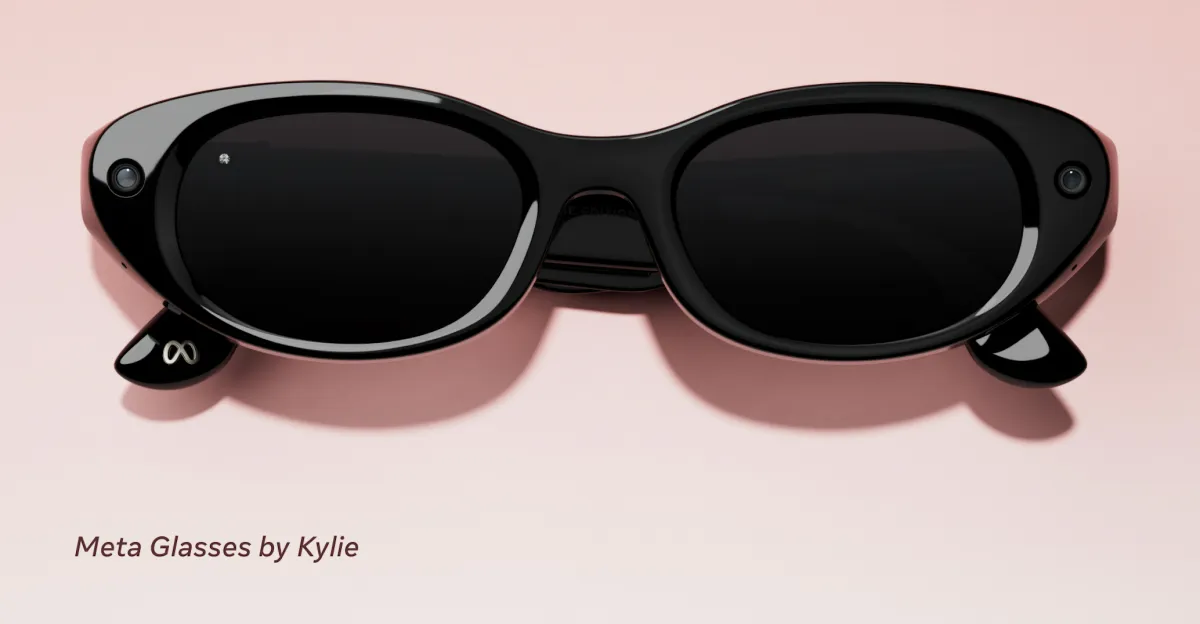
Meta is debuting a new smart glasses product under its own brand, positioned as cheaper than its prior offerings. Decision-makers should track how the rollout, bundling of options, and direct-to-consumer framing could shape the near-term wearable landscape.
Meta has debuted new smart glasses under its own brand, and the key detail is simple: they are cheaper, and they are available starting today in several countries. The product is not a concept or a future promise. It is shipping into real markets now, which matters because wearables do not win on slides, they win on distribution, customer trials, and repeat purchases.
According to the reporting, the glasses are available in several countries starting today, with a variety of color and lens combinations. That combination list is the part executives tend to underestimate. Smart glasses are not like a phone where “one model fits all” is close enough for mainstream buyers. Vision is personal, and lenses are a friction point. Offering multiple lens configurations at launch reduces the “wait for the right setup” problem, and offering multiple colors lowers the “this looks wrong” objection. Put those together and you get a product line optimized for fast consumer experimentation, not for a slow-moving enterprise procurement cycle.
This is also a branding and channel story. The original news angle is that Meta is launching under its own brand, which signals a tighter grip on the customer experience and the product narrative. When a company sells smart hardware under its own name, it can align pricing, warranty, software support, and future accessories with one coherent roadmap. That coherence is especially important in wearables, where buyers worry about longevity. If glasses are “cheap” but the ecosystem is unstable, consumers hesitate. If glasses are “cheap” and the ecosystem is stable, the cost barrier becomes less scary.
There is another reason “cheaper” is more than a marketing word. In most tech categories, the first wave of buyers is made of enthusiasts and early adopters who tolerate rough edges. But mass adoption depends on shrinking the buyer pool to include people who have less patience for setup hassle, uncertainty about durability, and unclear day-to-day value. By lowering the price relative to whatever came before, Meta is trying to widen the funnel right when it introduces the product. That is a direct pressure move against competitors who may be stuck selling to narrower niches.
Rollouts in “several countries” starting today also suggests a deliberate regulatory and operational path. Smart glasses usually sit at the intersection of consumer electronics, user interface, and sometimes camera or communication features, which can trigger different rules across regions. Even when the technical hardware is similar, compliance, labeling, and distribution requirements can vary by market. A multi-country launch indicates Meta is confident it can meet local constraints and support customers in those jurisdictions without fragmenting the product too much.
Still, the lens-and-color approach hints at a pragmatic product philosophy. Options make the product feel tailored, but they also add complexity behind the scenes. Companies that succeed in consumer hardware learn to manage supply and support for variations without letting inventory chaos drown the launch. In other words, this launch is not just “we built cheaper glasses.” It is “we built cheaper glasses and made them configurable enough to sell without turning the customer into an engineer.” For decision-makers, that is a repeatable playbook for hardware adoption.
For Meta specifically, there is strategic weight in what this tells the market. If smart glasses are moving from experimental to mainstream-grade distribution, the competitive clock speeds up. Other players, suppliers, and platform partners will have to respond to pricing expectations and to the expectation of immediate availability rather than “coming soon” roadmaps. If customers can buy in multiple countries right now, competitors cannot rely on long development cycles or hope that consumers will wait.
Executives at device and platform companies should read this as a signal about where budgets, attention, and partnerships may flow next. Wearables are often where companies test user interface changes with lower switching costs than laptops or phones. If Meta can reduce the entry price and support multiple lens combinations at launch, it may accelerate how quickly software experiences get to scale. And once the installed base grows, the incentive for app developers, content partners, and ecosystem players shifts from curiosity to commitment.
This story's Key Insights and Take-aways are locked.
Create a free account to unlock Executive Actions for one credit.
Register to UnlockAlways free for Executives Club members. Join the Club
More in Technology

Nvidia's $89B data center quarter: the 9 companies cashing in
The AI buildout is minting fortunes beyond GPUs, and memory, cloud, and cooling suppliers are riding the same wave.

Google quietly links your phone number to every Android account on your SIM
Adding a SIM now ties your phone number to all Google accounts - and future accounts inherit it. Here's the security and privacy stakes.

Hijacker AI 'Skynet mode' runs 100,000 attack steps against exposed models
Symantec caught a criminal AI agent that borrows other models, steals data, and mines crypto; the only relief is no confirmed victims yet.