
Michael Burry questions SpaceX’s $3T valuation, says he’d bet against it
The investor is challenging SpaceX’s headline market size and the logic behind it, with real implications for valuation-minded capital.
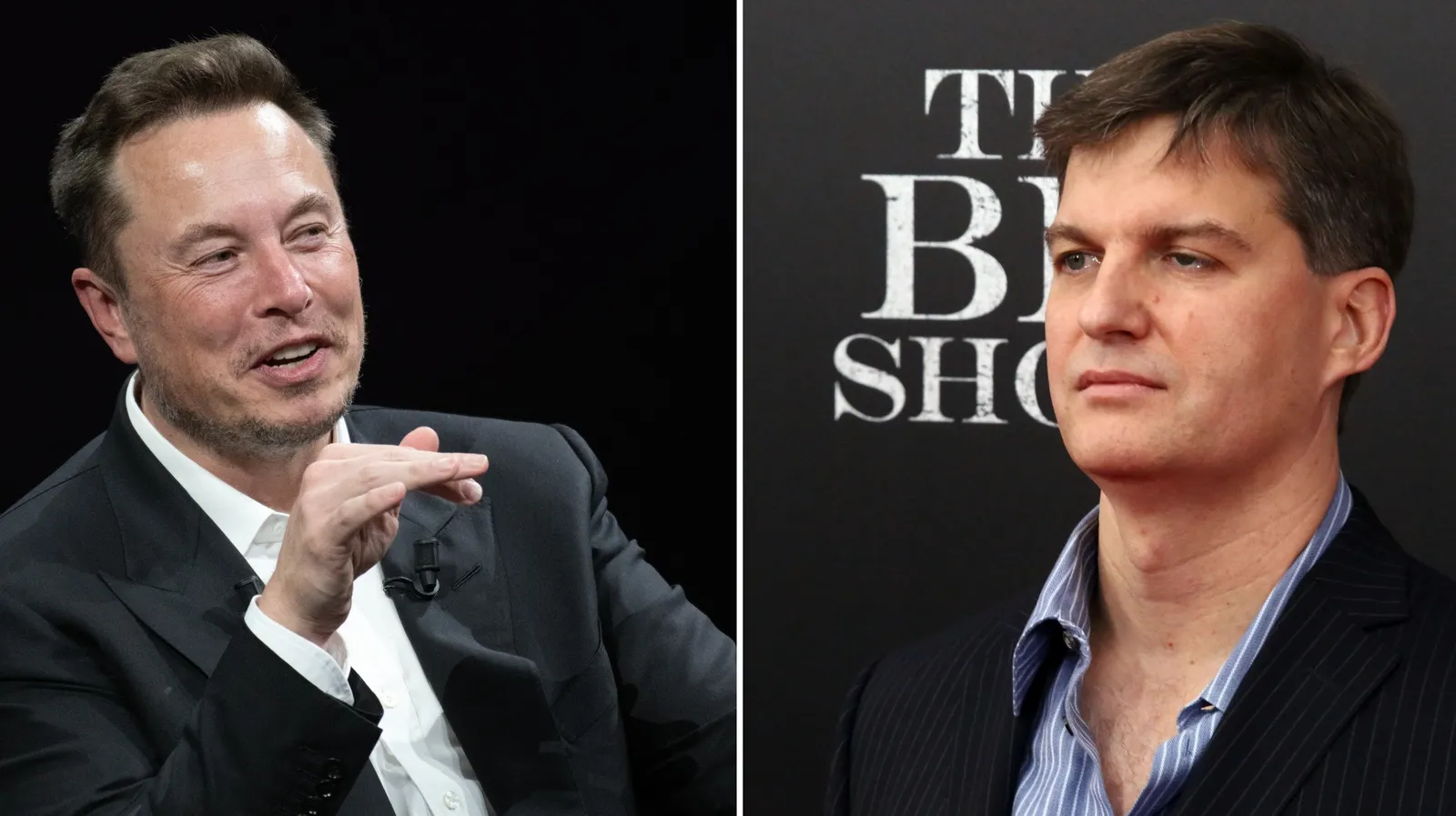
Michael Burry is questioning SpaceX’s $3-trillion market valuation and says he would be tempted to bet against it. For decision-makers, it spotlights how market caps get priced, and how vulnerable they can be when expectations outpace proof.
Michael Burry says he is questioning SpaceX’s $3-trillion market valuation, and he even hints he’d be tempted to bet against it. That is a big deal because Burry is not just another commenter. When an investor known for contrarian, thesis-driven bets puts a valuation on blast, it forces everyone else to ask a simple question: what exactly is the market paying for, and what happens if that story breaks?
Burry’s framing matters because SpaceX’s valuation is not a small, academic number. In practice, a market valuation becomes shorthand for what investors think the company will look like over years: revenue trajectory, margins, competitive position, and how quickly the regulatory and operational pieces fall into place. So when Burry challenges the $3T figure, he is effectively challenging the assumptions under the hood of that shorthand. And if you are sitting on a board, building an underwriting model, or allocating risk capital, this is the kind of moment that can ripple into how you mark your own comps, structure your own bets, and stress-test your own expectations.
To understand why this lands so loudly, you have to remember how market valuations for companies like SpaceX tend to work. They often blend present-day performance with “option value” for future dominance. Space is expensive, timelines are long, and outcomes are uncertain. That uncertainty creates room for wide valuation ranges, especially when investors believe a company will become the default infrastructure provider for specific parts of the industry. But it also creates asymmetry. If the market is pricing a future that requires everything to go perfectly, the valuation can wobble quickly when proof arrives slower than hoped or when bottlenecks show up in regulation, manufacturing, or launch cadence.
Regulatory background is a key part of that “proof gap.” Space activity is constrained by multiple rulebooks: licensing, safety requirements, environmental considerations, spectrum and communications issues, and orbital governance concerns. Those are not the kind of obstacles that vanish just because a company is innovative. They can shape timelines and costs, and they can influence how much capacity can be deployed when the demand arrives. So even if SpaceX executes exceptionally well, the market still has to translate execution into commercially usable output under regulatory constraints. A valuation that assumes frictionless scaling can be vulnerable to reality.
There is also a governance angle that matters for executives and boards, even if this specific commentary is from Burry rather than from a regulator. Market valuations can become self-reinforcing. Higher valuations can attract capital, talent, and attention. They can also influence internal pressure: teams might feel driven to keep hitting milestones that support the valuation narrative. When an investor publicly questions that valuation, it is not just about numbers. It can pressure management to defend the assumptions, clarify the path to monetization, and show how expected cash flows connect to the headline market cap. In other words, valuation skepticism can turn into a communication and execution challenge.
For decision-makers considering similar assets, the second-order implication is about how bets are structured. If you believe a valuation is overstated, one approach is to hedge or short. Burry says he would be tempted to bet against SpaceX, which underscores that he sees asymmetry in the valuation downside. But even if you are not taking a direct short position, the logic still applies to portfolio risk. Boards and CFOs should think about what events would cause a valuation re-rate: regulatory delays, operational hiccups, slower-than-expected revenue conversion, competitive pressure, or funding dynamics that change. The more a valuation depends on a clean glide path, the more you should model worst-case timing.
The strategic stakes for peers are straightforward. If a prominent contrarian investor questions a $3-trillion valuation, it signals that even believers may be forced to tighten their logic. It can also influence how other investors underwrite future rounds and how existing stakeholders negotiate terms. And because SpaceX sits at the intersection of tech, industrial execution, and heavily regulated infrastructure, the industry is watching not just for outcomes, but for how valuation rationales are defended. Burry’s comments, therefore, are a reminder that in markets where the future is priced aggressively, the cost of being wrong is not evenly distributed. It hits the headline first, then the funding story, then the confidence that everything else will follow.
This story's Key Insights and Take-aways are locked.
Create a free account to unlock Executive Actions for one credit.
Register to UnlockAlways free for Executives Club members. Join the Club
More in Business

Anthropic’s Levant Alpöge cracks the Jacobian conjecture after 87 years
A Harvard valedictorian used Claude to hit a 1939 breakthrough, but the missing “why” is the real problem.

Uber buys Delivery Hero for nearly $15B, vaulting to top food delivery outside China
The deal doubles Uber's dual-services footprint and pushes a ride-and-eats bundling play into 50 more markets.

Epic and Google drop settlement bid, forcing rival Android app stores by July 22
Google told the court it is ready to carry third-party app stores starting Wednesday, July 22.