

Microsoft’s AI bet buckles: stock down 24% as Azure capacity fights Copilot, M365, and GitHub
Satya Nadella’s “north star” is turning into a capacity tug-of-war, and investors get their report card Wednesday.
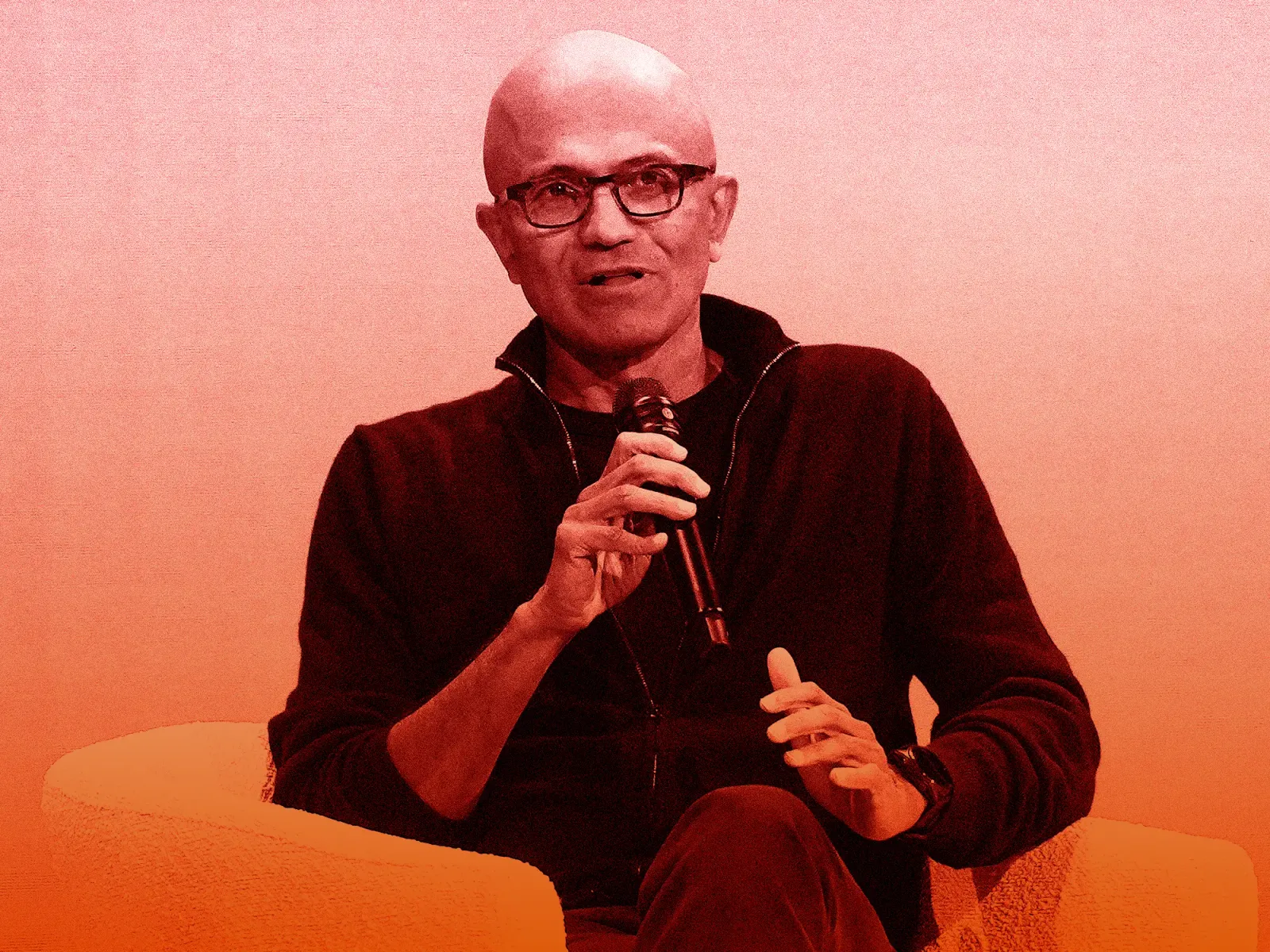
Satya Nadella’s Microsoft has spent record amounts to build AI infrastructure while pushing Copilot, Microsoft 365, GitHub, and Azure. The consequence for decision-makers: investors are questioning whether Microsoft’s multibillion-dollar AI strategy is being allocated in the right order, and the financial results Wednesday are likely to sharpen that debate.
Three years ago, Satya Nadella helped catapult Microsoft into the AI race. In February 2023, after betting early on OpenAI, he unveiled Microsoft’s AI-powered Bing search engine outside Seattle and declared “a race starts today,” escalating a war on Google’s search dominance. That era came with a stack of praise: a recent former Microsoft executive compared Nadella to “like a superhero,” Bill Gurley described the OpenAI board navigation as an “amazing shift in corporate reputation,” and CNN Business chose Nadella as CEO of the Year.
Now, the scorecard is getting brutal. Microsoft’s stock is down more than 24% from 12 months ago, worse than the rest of the Magnificent 7, and investors are increasingly skeptical that the company’s multibillion-dollar AI bet will deliver. Copilot, Microsoft’s flagship AI product, is described as lagging behind other AI tools like ChatGPT and Claude. The pressure is showing up in multiple businesses at once: LinkedIn is drawing criticism for being flooded with AI-generated “hustleporn,” Xbox’s business is “not healthy” (with layoffs and restructuring underway), and Microsoft is also facing internal questions about its planned record $190 billion this year to build AI infrastructure. With the company releasing its fourth-quarter earnings results on Wednesday, decision-makers will get a clearer report card on whether Microsoft’s AI “north star” is guiding the business or tightening into something harder to unwind.
What makes this moment especially fraught is that Microsoft’s biggest opportunities are also its most traditional chokepoints. Generative AI is changing how people work, write software, and consume information. Microsoft’s three core businesses that sit closest to that behavior shift are Microsoft 365, GitHub, and Azure. For decades, Microsoft productivity software has been the default home base for knowledge workers, where they start the day with Word, analyze in Excel, and build presentations in PowerPoint. But now, millions of those workers can do more of those tasks inside AI tools directly, which is exactly what worries analysts.
Earlier this year, Gartner analysts predicted AI would threaten to dethrone traditional productivity suites like Microsoft 365 and Google Workspace in a $58 billion market shakeup. Microsoft’s defense is that the center still matters. Microsoft executives point to continued growth in Microsoft 365 and increasing Copilot adoption. One executive told employees that “the M365 business is seeing tons of new adoption and M365 Copilot usage,” and that Microsoft is specifically chasing computing capacity to meet demand. It is the same story, with different pressure points, for GitHub. Since acquiring the software development platform in 2018, Microsoft has held a dominant position with developers, and GitHub Copilot gave it an early advantage in AI coding. Internally, an executive told employees that GitHub recently had its “best month ever,” though the source does not specify the measure.
But the competitive map has changed faster than the infrastructure can comfortably keep up. Upstarts have swarmed in as engineers adopt AI-native coding tools like Cursor, which SpaceX recently announced plans to acquire for $60 billion, and Anthropic’s Claude Code. Meanwhile, AI demand has strained GitHub operationally. As AI usage surged, GitHub experienced dozens of major outages this year. And beyond reliability, there is the harder constraint: compute capacity. The source describes Microsoft as struggling broadly to keep up with demand for computing infrastructure, which turns cloud into the bottleneck for every AI push.
That is why the Azure story matters so much for investors. Despite being Microsoft’s fastest-growing strategic business, Azure is portrayed internally as a constant balancing act. Microsoft is raising salespeople quotas for selling Azure, some by 30% this year, according to people familiar with the change. But AI infrastructure needs are outpacing Microsoft’s ability to build new capacity, forcing the company to make difficult decisions about where its resources go. Even with this year’s $190 billion in capital expenditures, largely aimed at expanding data-center capacity for AI workloads, executives say Microsoft is still constrained.
Chief Financial Officer Amy Hood provided the clearest window into that prioritization problem. During Microsoft’s January earnings call, Hood said the company is solving first for increased usage in sales and the accelerating pace of M365 Copilot, along with GitHub Copilot. Then it invests in the long-term nature of R&D and product innovation, and “the remainder going towards serving the Azure capacity” that continues to grow in demand. Hood also suggested that if GPUs that came online during the first half of Microsoft’s fiscal year had been allocated to Azure instead of its own AI products, Azure growth would have exceeded 40% instead of 39%. Microsoft previously reported $75 billion in Azure revenue for its 2025 fiscal year. That earnings report triggered one of Microsoft’s biggest post-earnings stock declines of more than 10%, as investors questioned the slower Azure outlook despite record AI spending and the growing belief that Microsoft was diverting capacity away from cloud customers. Executives who spoke to Business Insider say those tradeoffs have intensified.
In plain English, this creates the central tension behind the “north star” metaphor turning into a “noose.” Microsoft executives say “all of the supply is gone once you solve for frontier labs and our internal businesses like M365 and Microsoft AI,” according to one executive. That means capacity decisions are not simply strategy, they are math. And when math drives strategy, communication becomes its own problem. The source describes a difficult internal question: “Why would Satya prioritize growing Adobe over growing M365?” and notes the person had “no idea how we’re going to land that message with customers.”
Microsoft is also trying to solve the capacity crunch by looking outward. Following a series of GitHub outages, Amazon bailed out Microsoft. Microsoft explored leasing Oracle cloud infrastructure but walked away due to security and compliance concerns. Microsoft is now seeking additional cloud capacity from other providers, including evaluating Amazon and Google, according to people familiar with the discussions, with one of them saying, “We are shopping for capacity everywhere.” For boards and leadership teams, this is the second-order effect that matters: when internal demand is treated as the “front of the line,” external customers feel the consequences, and goodwill becomes a resource you can run short on.
At the same time, the pressure on Nadella is being pushed down through Microsoft’s leadership structure. Nadella promoted Judson Althoff to CEO of Microsoft’s commercial business to free himself and engineering leaders to focus more directly on AI, according to Business Insider’s earlier reporting. It also says Nadella described the moment as “a tectonic AI platform shift” in an internal memo viewed by Business Insider. The company also effectively retired its traditional senior leadership team structure in favor of smaller, flatter leadership groups. AI CEO Mustafa Suleyman has narrowed his focus to Microsoft’s superintelligence efforts, and top Nadella lieutenant Rajesh Jha retired, according to the source.
All of this lands back on the Wednesday earnings event, not as a dramatic reset, but as a reality check. For Microsoft executives and peers across enterprise software, the lesson is less about whether AI is real (it is) and more about whether the business can allocate constrained compute and capex fast enough across internal products and external customers. If it can, Copilot adoption and M365 growth can keep momentum. If it cannot, the “race” becomes a rerouting problem, and the north star risks becoming a noose that tightens with every quarter.
This story's Key Insights and Take-aways are locked.
Create a free account to unlock Executive Actions for one credit.
Register to UnlockAlways free for Executives Club members. Join the Club
More in Business

Anthropic’s Levant Alpöge cracks the Jacobian conjecture after 87 years
A Harvard valedictorian used Claude to hit a 1939 breakthrough, but the missing “why” is the real problem.

Uber buys Delivery Hero for nearly $15B, vaulting to top food delivery outside China
The deal doubles Uber's dual-services footprint and pushes a ride-and-eats bundling play into 50 more markets.

Epic and Google drop settlement bid, forcing rival Android app stores by July 22
Google told the court it is ready to carry third-party app stores starting Wednesday, July 22.