
miHoYo drops an AI piano student on Steam after planning $14.6B AI push
The Shanghai “piano” chatbot shows how miHoYo is turning its AI investment into playable, shippable product features.
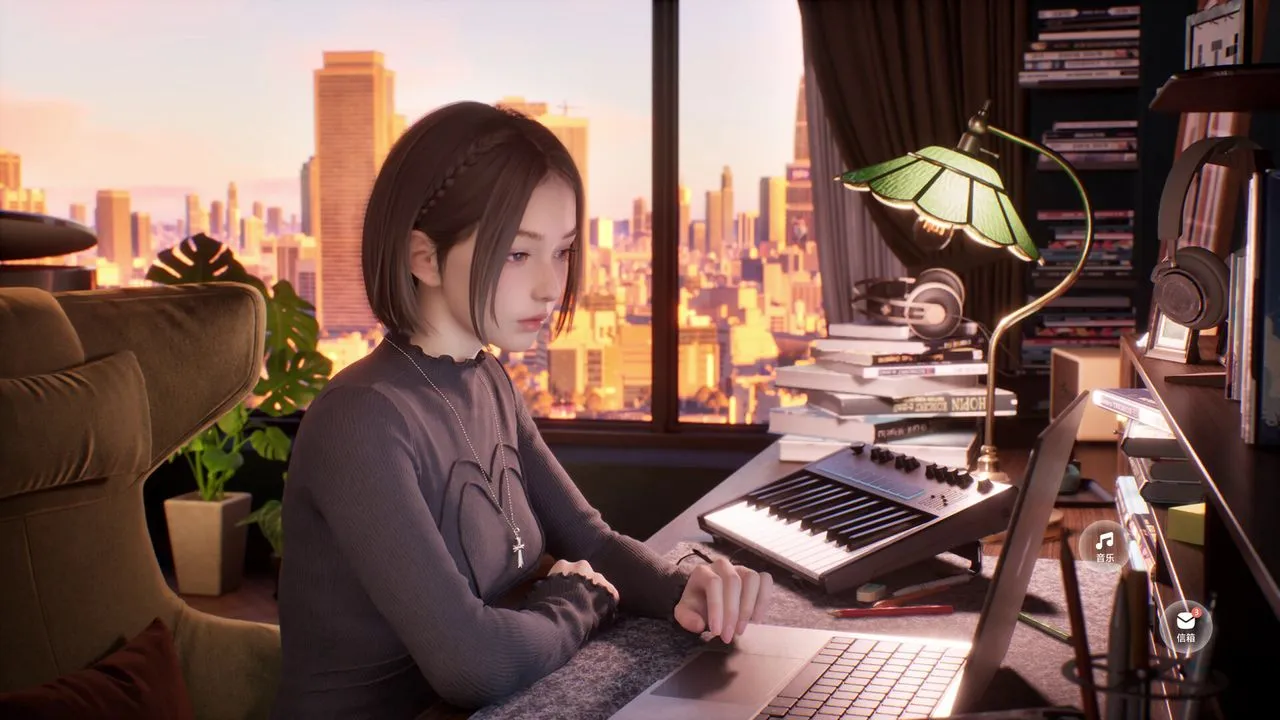
miHoYo, the studio behind Genshin Impact, Honkai Star Rail, and Zenless Zone Zero, released an AI companion on Steam called BSide: Olivia Lin. The move follows miHoYo’s announcement last month to invest up to $14.6bn into AI for in-house tools, and signals AI is becoming a core production workflow across multiple new games.
miHoYo is moving AI from “research topic” to “consumer feature” with unusually direct product form. After announcing it would invest up to $14.6bn into AI for in-house tools last month, the studio has released an AI companion on Steam in China: BSide: Olivia Lin, an AI chatbot “masquerading as a Shanghai student” with a Steam description that says she is “majoring in piano and minoring in psychology.”
The key detail is not just that it is an AI chatbot. It is presented as a playable companion with specific interaction modes. The description says Olivia Lin “loves vinyl records, old movies, and rainy days,” that you can listen to her play music on her piano, and that you can upload files if you want her to play something specific. You can also write letters to “express your current emotions in words and exchange a story that belongs only to you.” In other words, this is not merely a text box. It is an interface for content generation and personalization that is designed to feel like a character, not a tool.
To understand why this matters, zoom out to the studio behind the move. miHoYo created major gacha franchises including Genshin Impact, Honkai Star Rail, and Zenless Zone Zero. Those games are not just big in popularity. They also run on a continuous content pipeline, because live-service gacha economics require steady updates to keep players engaged, and because the genre thrives on repeatable hooks that can be expanded over years. That kind of environment rewards teams that can accelerate iteration across assets, writing, and game systems. The source notes that miHoYo expanded into other industries, but at least some of that cash is going into AI tech. The “up to $14.6bn” figure makes the intent hard to miss: AI is positioned as a central capability for problem-solving, not a side experiment.
The Olivia Lin release is also telling because it signals where miHoYo thinks AI will actually land first. The source describes BSide: Olivia Lin as “currently only available on Steam in China,” with the author translating the text because it is not globally accessible. That is a practical constraint, but it also hints at launch strategy: ship the experiment where language, compliance, and platform dynamics can be managed fastest. Even if global availability comes later, the company has already created a live environment for feedback. Uploadable files for music, interactive letter writing, and character behavior cues are all things you can measure, tune, and scale.
This is not a one-game, one-off story. The source frames BSide: Olivia Lin as an experiment, but it says it is not stopping here. miHoYo is using AI-powered tools to create its upcoming life sim, Petit Planet, including the “Planet Life Guide” chatbot NPC. It also reports that Genesis, an upcoming MMO made in Unreal Engine 5, is “reportedly integrating AI to some degree.” Then there is the studio’s parallel pipeline: the source says miHoYo is reportedly hiring artists with experience using generative AI for Honkai: Nexus Anima, a Pokémon-like auto-battler.
For executives, the non-obvious implication is organizational. When a company hires generative-AI-experienced artists for a specific project, it is not just adopting a tool. It is changing workflows, asset production expectations, and the skill mix across teams. That can compress timelines, but it also introduces new review loops for quality control, brand consistency, and user experience. It is one thing to generate draft content. It is another to ship games and companions that players trust. A “character” built with AI has to behave in ways that feel coherent, safe, and emotionally on-brand. That is product execution, not just tech.
There are also second-order effects for governance and risk. The story as provided does not cite specific regulators or policy actions, but it does point to a category of features that typically draw scrutiny: file uploads, personalized emotional expression, and interactive content generation. The fact that Olivia Lin is only available on Steam in China right now suggests miHoYo is staging rollout under real-world platform and regional constraints. For decision-makers, that staging is a clue: when AI becomes a user-facing product surface, compliance and safety become part of the roadmap, not an afterthought.
Finally, the competitive stake is obvious if you have ever watched what happens when big studios parallelize. The source notes miHoYo is working on multiple new games at once, “at least four,” while also maintaining “unceasing, substantial updates” for its gacha suite even years after release. The Olivia Lin release is a concrete artifact from that machine. If miHoYo can turn its AI investment into shippable interactions for companions and NPCs, then peers should expect the bar for personalization, content throughput, and production speed to rise across the games industry. For founders, investors, and operators, the question is no longer whether AI will be used. It is how quickly studios like miHoYo can turn AI spend into repeatable product advantage, and what it means for teams that still treat AI as experimentation instead of infrastructure.
This story's Key Insights and Take-aways are locked.
Create a free account to unlock Executive Actions for one credit.
Register to UnlockAlways free for Executives Club members. Join the Club
More in Entertainment

Disney Lorcana’s Attack of the Vine adds Up’s Carl, Ellie, Russell, and Paradise Falls
Ravensburger’s next set finally brings Pixar’s Up into Lorcana, starting with Carl, Ellie, Russell, and the Falls.
A24 hands Google DeepMind a seat, after years of guarding its creative workflow
The films stay separate. The deal shifts who gets to see A24's process, and what that enables downstream.

Elizabeth Banks is Ms. Frizzle as Legendary develops Magic School Bus live-action
Rob Letterman writes the treatment and Elizabeth Banks stars, as Legendary acquired rights from Universal for a big-screen debut.