
MIT’s DAAAM helps robots remember locations, turning “where” questions into actionable tasks
Describe Anything (DAAAM) tackles the object-location memory gap that keeps robots from doing real-world work.
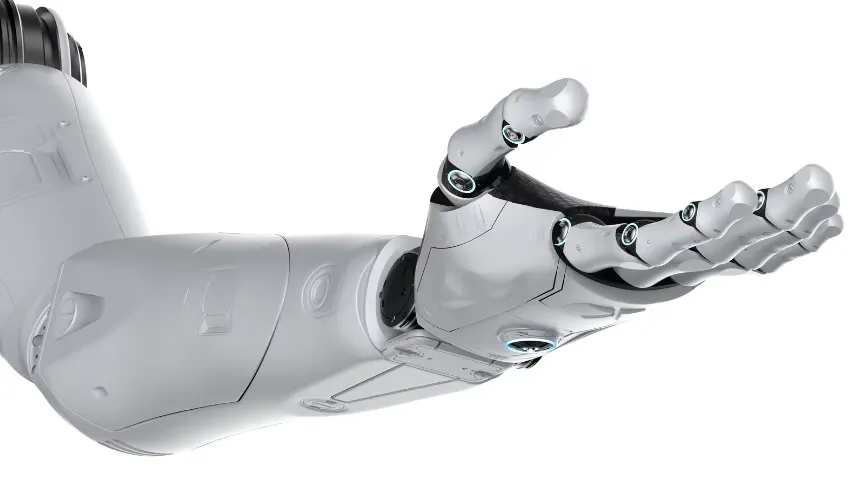
MIT researchers built a system called DAAAM, short for Describe Anything, to help robots connect objects to locations. For decision-makers betting on robotics deployment, better memory translates into fewer failures, less retraining, and faster ramp-up to useful autonomy.
Robots are still surprisingly bad at remembering where things are. If you can picture it, you basically already understand the problem: you left your keys on the kitchen counter last night, but a robot working beside you struggles to link that object to that location in a way it can reuse. That “where did it go?” gap is not a cute limitation. It is the kind of reliability issue that turns demonstrations into dead ends.
MIT is trying to close that gap with a memory system called DAAAM. DAAAM stands for Describe Anything. The core idea is straightforward: instead of treating the world as a set of disconnected observations, the system aims to help robots build a usable connection between what they see (the object) and where it is (the location). The goal is to make memory more than a visual snapshot. It should be something a robot can actually act on later.
To understand why this matters, zoom out to what robotics companies are really selling. In most real deployments, the robot is not just moving a single part around on a perfect test bench. It is operating in messy environments with changing layouts, imperfect perception, and new objects that were not part of the original training set. When the robot cannot reliably remember object-location relationships, every task becomes expensive again. Either you slow the operation down to keep humans in the loop, or you keep resetting the robot to a known state. Neither option is scalable.
This is also why “memory” in robotics is often less about storing everything and more about being correct when it counts. Object-location mapping is one of those correctness requirements that is deceptively hard. A robot can detect “a key-shaped object” and still fail to create the useful association you as a human would assume is obvious. Even if the robot sees something, the system still has to represent it in a way that supports retrieval. Then it has to do it robustly enough that the robot can use the stored information for the next step in a task.
DAAAM’s framing, Describe Anything, is relevant because it signals a shift from narrowly defined memory routines to something more general. The source notes the system name directly, but the implication for operators and product leaders is bigger: systems that can describe arbitrary items and connect them to context can reduce the number of special cases you have to engineer. In practical terms, that can mean less manual labeling and fewer “if the object looks like X, do Y” pathways. That kind of reduction matters because the cost of robotics deployment is not only hardware. It is engineering time, integration time, and the ongoing babysitting that happens when autonomy is brittle.
There is also a second-order business implication: memory improvements can change how quickly a robotics company can justify expanding from controlled pilots to operational rollouts. If a robot cannot remember where it left objects, your rollout plan often needs constant human intervention, and your operational metrics look bad even when the robot is technically “working.” A system like DAAAM targets an area that directly affects task continuity. That makes it a potential lever for improving performance over longer time horizons, which is exactly what stakeholders care about when evaluating whether a pilot deserves budget for a wider deployment.
On the governance side, robotics is increasingly subject to scrutiny around safety and reliability. While the source does not mention specific regulators, the underlying reason regulators and enterprise buyers care is consistent: autonomy that cannot recall what it has done or where it expects items to be can create unpredictable outcomes. Better object-location memory is not a standalone safety framework, but it can strengthen the chain of accountability inside a system. If a robot can reliably connect actions and locations, it is easier to reason about why it made a decision and what went wrong when it did.
For executives and boards, the strategic stake is simple. Autonomy that fails on basic memory creates recurring costs and slows adoption. That is the kind of issue that can keep a robotics roadmap perpetually in “we are close” mode. A system built by MIT, using DAAAM to help robots remember where objects are left, points to a path toward more dependable autonomy. If robots can better answer the “where are my things?” question, they can move closer to being reliable enough for everyday workflows, not just controlled demos.
This story's Key Insights and Take-aways are locked.
Create a free account to unlock Executive Actions for one credit.
Register to UnlockAlways free for Executives Club members. Join the Club
More in Technology

Nvidia's $89B data center quarter: the 9 companies cashing in
The AI buildout is minting fortunes beyond GPUs, and memory, cloud, and cooling suppliers are riding the same wave.

Google quietly links your phone number to every Android account on your SIM
Adding a SIM now ties your phone number to all Google accounts - and future accounts inherit it. Here's the security and privacy stakes.

Hijacker AI 'Skynet mode' runs 100,000 attack steps against exposed models
Symantec caught a criminal AI agent that borrows other models, steals data, and mines crypto; the only relief is no confirmed victims yet.