

Mulberry posts double-digit growth in every region, beating expectations and calm nerves
Luxury handbag maker Mulberry says it grew across all regions, giving boards and investors a rare all-clear.
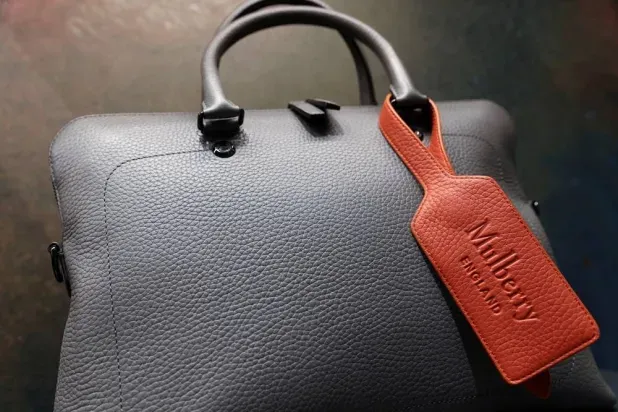
Mulberry, the luxury handbag maker, reported double-digit growth across all regions, according to Asharq Al-Awsat. For decision-makers, that broad-based momentum reduces earnings uncertainty and strengthens the case for sustained demand.
Mulberry just handed the kind of quarter many luxury investors only hope for: growth that is not just positive, but consistent across geographies. Asharq Al-Awsat reports that the luxury handbag maker posted double-digit growth across all regions. The key word there is all. In consumer brands, “regional mix” can be the difference between a good print and a fragile one, because a downturn in one market can quietly offset strength elsewhere.
This isn’t a narrow win. “Double-digit” signals a pace that tends to matter for both profit expectations and management credibility, especially when luxury demand can be choppy. Mulberry’s message, as framed by the report, is that sales momentum is broad rather than localized. For boards and investors, that matters because it changes the risk shape. Instead of relying on one lucky market or one channel, Mulberry is effectively telling stakeholders the engine is working everywhere it operates.
To understand why this feels like more than a headline, zoom out one layer. Luxury handbags are a particular kind of product: they rely on brand equity and design cycles, but they also get pulled by real-world consumer spending. That makes outcomes sensitive to shifts in discretionary income, currency moves, and travel patterns. Even in stronger macro periods, regional demand can diverge sharply based on local economic conditions and shopping behavior. When a company reports growth across all regions, it usually reduces the need for scenario gymnastics in earnings models. CFOs and controllers do not just ask, “Did we grow?” They ask, “Can we underwrite it?” All-region growth is the kind of fact that supports underwriting.
There is also a governance angle. Luxury brands often face the classic board-level tug of war between protecting margins and scaling volume. Product-heavy companies can grow while still making choices that preserve brand perception, like controlling discounting and managing inventory. A result that is both double-digit and spread across regions can give directors more confidence that management’s strategy is landing, not just in one sales office but throughout the operating footprint.
Now, add the capital-market lens. Investors in consumer and luxury names live and die by consistency. When results are strong but uneven, analysts tend to respond with “yes, but.” They adjust forecasts for the weakest region and then wait for management to explain whether the next period will rebalance. When the company reports double-digit growth across all regions, it removes a common source of skepticism. It also makes it easier for asset managers to justify staying invested, because the company’s performance is less dependent on one geographic bet.
Regulatory context matters here too, even for a fashion business. While the report focuses on growth, luxury companies operate in markets where reporting requirements and scrutiny on financial disclosures are ongoing. In practical terms, stronger trading performance can reduce pressure to use accounting adjustments to tell a smoother story. That can improve clarity for stakeholders reading filings and investor updates. The takeaway for decision-makers is not that regulation suddenly “causes” handbags to sell, but that clean, broad performance tends to fit better with the way markets evaluate transparency and durability.
Finally, consider second-order implications for peers. When one luxury handbag maker demonstrates double-digit growth across all regions, competitors get a reality check. It suggests either stronger brand resonance, better product-market fit, or more effective distribution and marketing execution across the board. For other brands, that can influence staffing and inventory decisions, especially for teams responsible for forecasting and procurement. It can also raise expectations for category performance, because the market often reframes “industry demand” around the best-performing operators.
So the strategic stakes are simple. Mulberry’s all-region, double-digit growth headline gives boards a more stable basis to defend their capital allocation and operating targets, and it gives investors a lower-drama narrative than “one region saved us.” In a sector where the mix can shift fast, broad-based momentum is not just good news. It is a signal that the business model is working beyond a single market cycle, and that is exactly what decision-makers try to see before committing more time, capital, or attention.
This story's Key Insights and Take-aways are locked.
Create a free account to unlock Executive Actions for one credit.
Register to UnlockAlways free for Executives Club members. Join the Club
More in Business

Anthropic’s Levant Alpöge cracks the Jacobian conjecture after 87 years
A Harvard valedictorian used Claude to hit a 1939 breakthrough, but the missing “why” is the real problem.

Uber buys Delivery Hero for nearly $15B, vaulting to top food delivery outside China
The deal doubles Uber's dual-services footprint and pushes a ride-and-eats bundling play into 50 more markets.

Epic and Google drop settlement bid, forcing rival Android app stores by July 22
Google told the court it is ready to carry third-party app stores starting Wednesday, July 22.