

Musk's SpaceX stake tops $866 billion as trillion-dollar mark nears
SpaceX's updated IPO prospectus puts Elon Musk's shares above $866 billion, sharpening the stakes for investors, rivals, and boards watching private-market valuations.
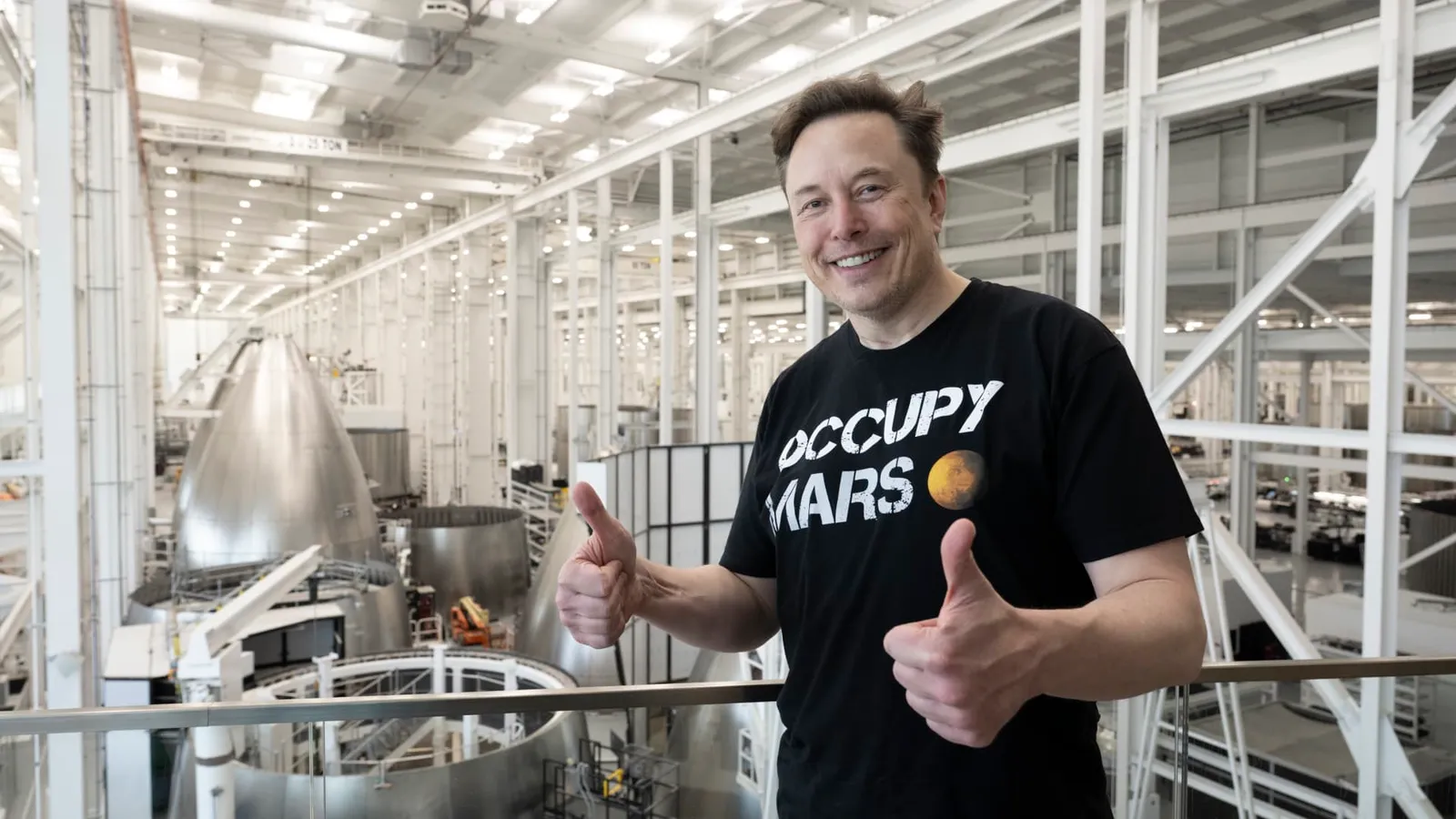
Elon Musk's shares in SpaceX are worth over $866 billion, according to the company's updated IPO prospectus. That valuation pushes Musk closer to a net worth milestone that changes the conversation around how far private-company ownership can stretch individual wealth.
Elon Musk's SpaceX stake is now the kind of number that makes most balance sheets look like pocket change. Based on SpaceX's updated IPO prospectus, Musk owns shares in the company worth over $866 billion, which is why CNBC framed his net worth as poised to sail past $1 trillion in the IPO context. The immediate point is simple: one private-company holding is doing extraordinary work in his wealth picture, and the prospectus gives a fresh, concrete peek at just how much that holding matters.
The second point is the bigger one for anyone running a company, sitting on a board, or tracking private markets. SpaceX is not a public company yet, but its updated IPO prospectus still acts like a spotlight on one of the most valuable private assets in the world. When a filing says a founder's shares are worth over $866 billion, it is not just trivia for finance Twitter. It is a signal about scale, about how private-market pricing can rewrite the upper bounds of founder wealth, and about how one company's valuation can become a benchmark everyone else is forced to react to.
That matters because IPO prospectuses are where companies open the hood for investors before a public listing. They are designed to disclose financial details, ownership structures, and other material information that helps the market assess the business. In this case, the updated prospectus does something especially eye-catching: it translates Musk's ownership into an amount so large that the familiar billionaire conversation starts to break down. The usual conversation is about who is richest. This one is about how many digits the answer requires.
For decision-makers, the practical lesson is less about the headline-grabbing number and more about what it reveals about private capital formation at the very top of the market. SpaceX has spent years as a closely watched private company, and every new disclosure feeds a wider debate about valuation, liquidity, and how much wealth can remain locked up in equity before a public market event changes the math. A stake worth over $866 billion also underscores why IPO timing can matter so much. Until a company goes public, valuations can climb inside a private market framework without the same day-to-day public scrutiny that listed companies face. Once the IPO happens, the story shifts from estimates and prospectuses to live trading and continuous judgment from the market.
There is also a governance angle here that founders and boards should not ignore. When a single founder's stake is this large, the company's capital structure and future listing mechanics become part of a much bigger story about control, influence, and market perception. The prospectus does not just tell investors what they might buy; it tells them how much of the enterprise is anchored to one person. In a public-market environment, that concentration can be seen as a strength, because it aligns the founder tightly with the company's fortunes. It can also raise familiar questions about succession, voting power, and how much a business can depend on one individual's reputation and judgment.
For peers in tech, aerospace, and other capital-intensive sectors, the broader implication is clear: the private market is still capable of producing valuations that dwarf even the most aggressive public-market assumptions. That can be useful when raising money, recruiting talent with equity, or signaling momentum to the market. But it also raises the bar for credibility. The larger the number, the more scrutiny will follow the assumptions behind it. An updated prospectus is not a victory lap. It is a document that invites closer inspection.
And for everyone else, this is a reminder that the wealth leaderboard is increasingly shaped by equity in companies that are still not fully public. Musk's SpaceX stake, as disclosed in the updated IPO prospectus, shows how founder ownership can compound into staggering paper wealth before most investors ever get a chance to trade the stock. If you lead a company, sit on a board, or back businesses in private markets, the message is straightforward: valuations are not just accounting artifacts. They shape leverage, expectations, and strategic options long before an IPO opens the door to the public market.
The real takeaway is that the SpaceX filing turns an abstract founder-success story into a hard number with real strategic consequences. Musk's shares are worth over $866 billion, and that alone tells you how much influence one private asset can have on a person's net worth, a company's market story, and the conversation around the next giant listing. For executives watching from the sidelines, the question is not whether this number is large. It is what kind of company, investor appetite, and market structure it takes to make a number like this possible in the first place.
This story's Key Insights and Take-aways are locked.
Create a free account to unlock Executive Actions for one credit.
Register to UnlockAlways free for Executives Club members. Join the Club
More in Business

Anthropic’s Levant Alpöge cracks the Jacobian conjecture after 87 years
A Harvard valedictorian used Claude to hit a 1939 breakthrough, but the missing “why” is the real problem.

Uber buys Delivery Hero for nearly $15B, vaulting to top food delivery outside China
The deal doubles Uber's dual-services footprint and pushes a ride-and-eats bundling play into 50 more markets.

Epic and Google drop settlement bid, forcing rival Android app stores by July 22
Google told the court it is ready to carry third-party app stores starting Wednesday, July 22.