

Nadella unveils Copilot super app, betting on 'agent-native' AI stack
Microsoft is making a massive, multi-front play to re-center itself in the AI race against Google, Meta, and OpenAI.
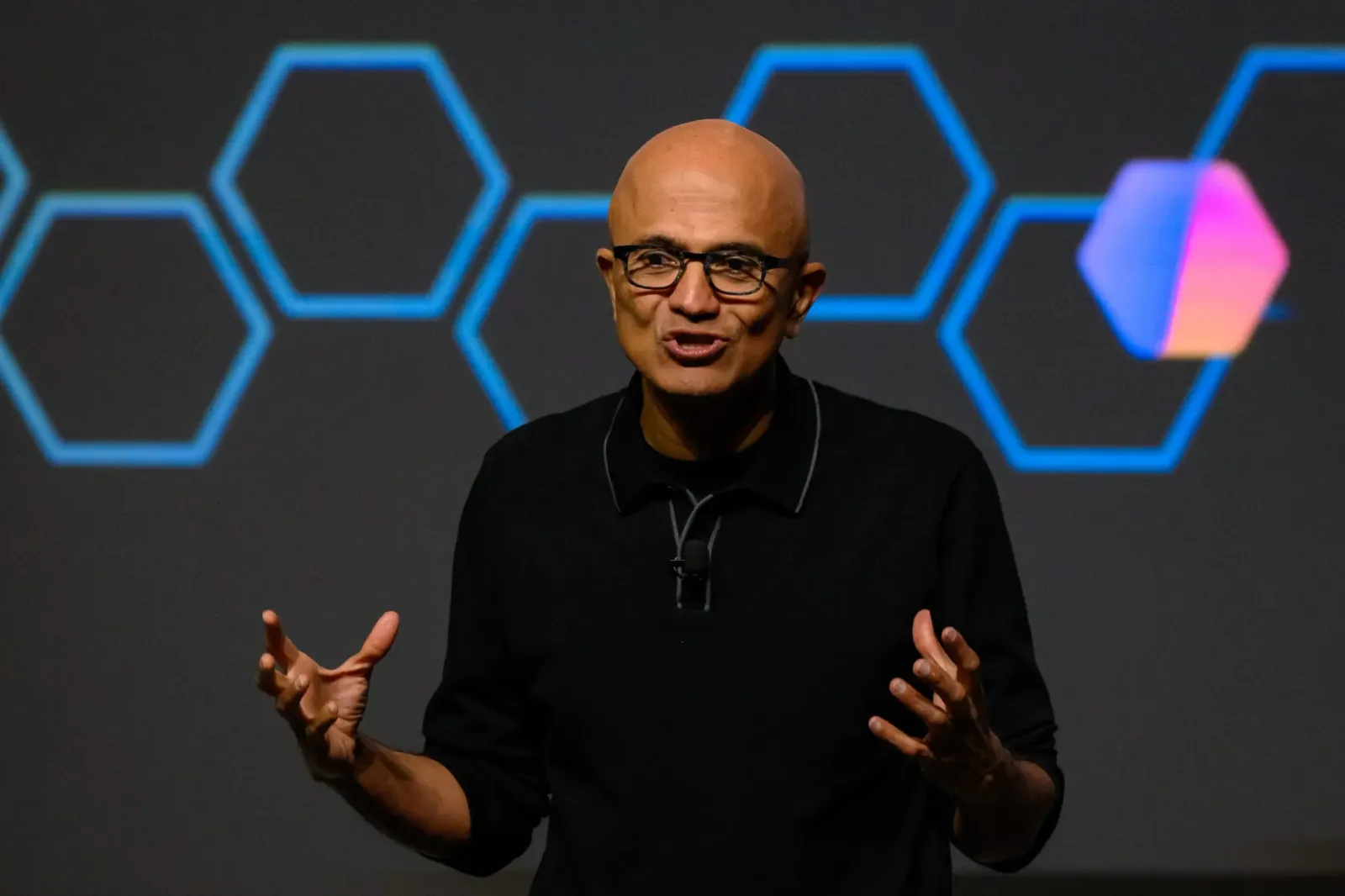
Microsoft CEO Satya Nadella announced a sweeping vision for an 'agent-native stack' at the Build conference, centered on the upcoming Copilot super app. This signals a major strategic pivot, positioning Microsoft to compete directly for developer mindshare and enterprise workflow dominance against rivals.
Microsoft CEO Satya Nadella used his Build keynote to announce a massive, multi-front strategic pivot, betting that the future of computing belongs to 'agents' rather than just cloud services. The centerpiece of this effort is the forthcoming Copilot super app, a project led by Copilot chief Jacob Andreou, which is designed to combine chat, coding, and a function called Autopilot. This super app is not just an incremental update; it is a declaration that Microsoft is aggressively fortifying its position in an ultra-competitive AI landscape, aiming to anchor itself back at the center of the industry.
Nadella framed this shift by declaring that the technology industry is transitioning from a 'cloud-native era' to an 'agent-native stack.' In plain terms, this means the focus is moving from simply storing and processing data in the cloud to having autonomous software agents that can execute complex tasks across multiple environments. These agents, according to Nadella, are designed to 'reason continuously,' generating and running code dynamically, and taking actions across files, devices, and the network. To support this vision, Microsoft revealed several key components, including 'Project Solara,' a purpose-built agentic platform intended for devices, potentially including a desktop device and a wearable badge for user interaction.
The hardware and software announcements were designed to create a comprehensive ecosystem lock-in. Beyond the agent platform, Microsoft unveiled a new family of homegrown AI models, including specialized models for image generation, coding, and a foundational reasoning model. Furthermore, the company brought Peter Steinberger, the founder of the open-source agent tool OpenClaw, onto stage to announce that the trendy personal AI assistant would be integrated directly into Windows. This move is critical, as it embeds the AI capability into the operating system layer, making it a default, inescapable part of the user experience. The strategy is clear: make Copilot the indispensable layer over every Microsoft product and device.
The hardware component of the strategy was further bolstered by the virtual appearance of Nvidia CEO Jensen Huang. During the keynote, Nadella detailed major upgrades to custom infrastructure optimized for AI workloads and discussed Nvidia’s recently announced PC “superchip” that is designed to pair with Windows. This partnership is a powerful signal of commitment, linking the core operating system (Windows) directly to the specialized hardware required to run advanced AI agents. This synergy aims to solve the compute bottleneck that has challenged Microsoft's early lead, ensuring that the devices running Copilot have the necessary power to handle complex, continuous reasoning.
The scope of the agent's capability was also expanded with the announcement of Autopilot. Autopilot is designed to connect to an agent named Scout, which Nadella said is the first of a new category of agents. These agents are positioned to handle sophisticated, real-world tasks, such as joining group chats in Microsoft Teams or managing complex email threads in Outlook. This moves the AI from being a simple search tool or content generator to a proactive, administrative assistant capable of managing workflows across different business applications. The combination of these features-the super app, the agent platform, the OS integration, and the specialized hardware-is an attempt to prove Microsoft's continued relevance in a market that is intensely competitive, facing rivals like Google, Meta, and Amazon, and even OpenAI and Anthropic.
Microsoft has faced immense pressure to prove its continued leadership. Historically, the company has contended with challenges ranging from data center capacity constraints to an over-reliance on OpenAI and a Copilot assistant that has trailed its rivals. To counter this, Microsoft is aggressively fortifying its weak spots. This includes giving greater priority to training Copilot on its own servers, deploying homegrown chips, and securing a new deal with OpenAI that provides both parties greater flexibility to compete and innovate independently. The messaging from Nadella was a direct response to this pressure, painting a picture of a unified, self-contained ecosystem where Microsoft controls the stack from the operating system up through the specialized hardware and the agent layer itself. The ultimate goal is to make the second story true: that this next wave of AI will unlock opportunity for developers, scientists, enterprises, and every community, rather than simply concentrating power and reducing human agency.
This story's Key Insights and Take-aways are locked.
Create a free account to unlock Executive Actions for one credit.
Register to UnlockAlways free for Executives Club members. Join the Club
More in Technology

OpenAI says 10,000 agents cracked a 90-year math problem in 88 hours
The company's claim is audacious, but one mathematician is pushing back. Here's what it means for AI-driven discovery.

Meta still serves child sexual abuse ads on Instagram in India - BBC report
A new report following the BBC Eye investigation says the ads are still there - what it signals for every platform with a self-serve ad engine.

White House yanks 'Build the Wall' game after Tetris Company copyright warning
The administration's arcade game vanished in hours - and the takedown playbook every brand can learn from.