

NASA+ lands on Amazon Fire TV Channels, with Alexa access on compatible devices
Decision-makers get NASA streaming content distribution on Fire TV, with NASA+ still free and ad-free on NASA platforms.
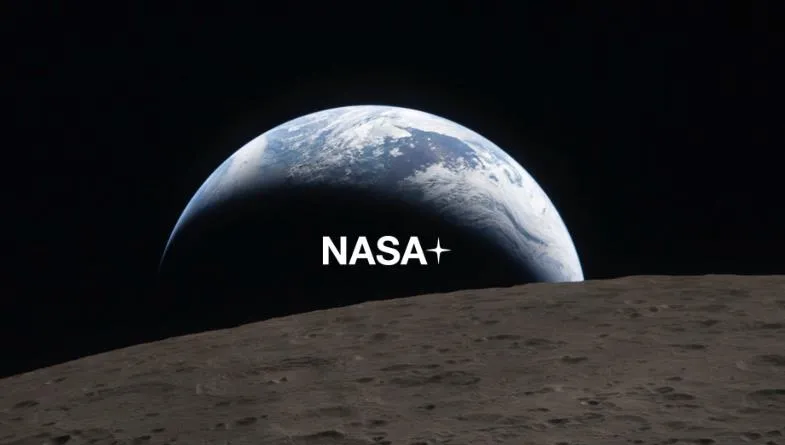
NASA announced on Thursday that NASA+ programming is now available on Amazon Fire TV Channels, discoverable via Alexa+ on compatible Fire TV devices. The move widens distribution of mission and education coverage across more screens while keeping NASA+ free and ad-free through the NASA app and nasa.gov.
NASA+ is now on Amazon Fire TV Channels, meaning Fire TV customers can find NASA programming by asking Alexa+ on compatible devices. On Thursday, NASA made the distribution expansion official, continuing its push to bring space exploration “closer to home” by meeting audiences where they already watch.
This matters beyond convenience. It is a deliberate shift in how NASA allocates attention and reach, by turning mission coverage and educational programming into something that flows through mainstream living-room ecosystems. NASA also confirmed that NASA+ remains available for free, with no ads, through the NASA app and on the agency’s website. So for viewers, the headline benefit is access. For decision-makers watching the media and distribution landscape, the signal is that NASA is doubling down on multi-platform availability, not retreating to a single owned channel.
Why is Fire TV such a big deal in practical terms? Fire TV is built for discovery. When content lives in a familiar device interface and can be surfaced via voice prompts on supported hardware, it lowers the friction from “I might watch that” to “it’s right here.” NASA, in its announcement, positioned this as part of executing a promise to the public for greater access, making mission and educational content available across multiple devices so viewers can use their preferred channels.
That preferred-channel logic connects to how NASA thinks about its mission at the system level. NASA cited the National Aeronautics and Space Act of 1958, which calls on the agency to share its story of space exploration with the broadest possible audience. NASA’s framing is clear: distribution partners are not just extra marketing lanes, they are a mechanism to fulfill a legal and public-facing mandate. In other words, this is not a “streaming only” strategy. It is a public communications strategy that treats distribution as part of the mission.
NASA also tied the rollout to current audience momentum. It referenced that Artemis II captured the hearts and minds of viewers globally, inspiring the Artemis generation. The agency then connected today’s availability expansion to where it is headed next, saying that as it works toward building humanity’s first Moon Base, it will continue providing transparent, engaging content coverage every step of the way.
And while the Fire TV announcement is about distribution, it also hints at programming themes coming next. NASA said future programming on Fire TV may include science mission launches, a test flight for rendezvous and docking with human landing systems, robotic lunar deliveries, the first crewed mission to the Moon under Artemis, and more. That list is not just content marketing. It is a calendar of what NASA expects the public to be curious about, packaged into episodes and coverage designed for ongoing engagement rather than one-off news cycles.
This expansion sits inside a wider media posture NASA has been building. Earlier this year, during its Ignition event, NASA shared plans for a bold path forward for the agency. Those plans included increasing its cadence of Artemis missions to the lunar surface and building the first Moon Base, among other agency priorities. As mission frequency increases, so does the need to keep audiences oriented. More screens, more pathways to content, and more frequent storytelling are how you reduce drop-off over time.
For executives, the second-order implication is simple: even public agencies are operating like content networks now. They have to coordinate what is happening in science and engineering with how people consume information, and distribution becomes a strategic lever. The decision to place NASA+ on Fire TV Channels suggests NASA is prioritizing predictable discoverability and broad audience access, while maintaining the trust and integrity that comes from keeping NASA+ free and ad-free on NASA app and nasa.gov. If you are an operator or investor watching where attention flows next, this is a reminder that the next wave of mainstream streaming may come from places you would not traditionally count as “media companies,” but still have deep stakes in audience reach.
In the end, NASA’s move is about keeping space exploration visible and reachable. It is also about making mission education a habitual part of daily viewing. Fire TV is the latest venue. NASA+ is still free. And the programming, from science launches to Artemis milestones, is framed as ongoing coverage, not a one-time event.
This story's Key Insights and Take-aways are locked.
Create a free account to unlock Executive Actions for one credit.
Register to UnlockAlways free for Executives Club members. Join the Club
More in Business

Anthropic’s Levant Alpöge cracks the Jacobian conjecture after 87 years
A Harvard valedictorian used Claude to hit a 1939 breakthrough, but the missing “why” is the real problem.

Uber buys Delivery Hero for nearly $15B, vaulting to top food delivery outside China
The deal doubles Uber's dual-services footprint and pushes a ride-and-eats bundling play into 50 more markets.

Epic and Google drop settlement bid, forcing rival Android app stores by July 22
Google told the court it is ready to carry third-party app stores starting Wednesday, July 22.