

NASA's moon base plan: -410°F craters and a China sprint
The second space race is on: NASA and China both want permanent lunar bases, but the south pole's extreme cold and radiation could decide the winner.
NASA Administrator Jared Isaacman is pushing a sweeping moon base plan, with astronaut landings targeted for 2028 and permanent habitats by the 2030s. For executives, the race with China over lunar resources and infrastructure will shape the next decade of space investment.
The moon's south pole is one of the coldest places in the known universe, with craters dipping below -410°F, and that is exactly where NASA wants to build a permanent base. The agency, under Administrator Jared Isaacman, is flooding the zone with bold announcements: drones, robotic landers, communication satellites, a nuclear power plant, plant terrariums, moonquake sensors, and mechanized scouts hunting for water ice. Initial astronaut missions are planned for 2028, with long-term habitation quarters targeted for the 2030s.
The reason for the rush is a second space race, this time between America and China, alongside a host of varyingly friendly and rival nations and a cornucopia of private spaceflight companies. Beijing has near-identical plans to build its own lunar base, and being first matters because the victor gets to define what the moon is: a militarized outpost, a manufacturing hub, or a wilderness to be preserved. NASA's moon base program manager, Carlos García-Galán, says the eventual expanse will cover hundreds of square miles.
The stakes go beyond flags and national pride. The moon holds primeval rocks that could explain the formation of the solar system, and its far side is a 'fantastic place to explore the further universe,' says Josef Aschbacher, director general of the European Space Agency. Low gravity also makes the moon a cheaper launchpad for missions to Mars and beyond. Aschbacher calls it 'a stepping stone for going further.'
But building a base there is brutally hard. Daytime temperatures can exceed 250°F, then plummet below -200°F at night. The surface is bathed in carcinogenic radiation, hit by meteoroids, and covered in sticky, corrosive volcanic dust that destroys equipment and chokes lungs. The south pole is even harsher: its permanently shadowed craters may hold water ice, which would be more precious than gold, but they are also some of the coldest places in the universe.
Radiation is the more pernicious threat. Stuart George, a physicist at NASA's Johnson Space Center, explains that galactic cosmic rays from supernovas and neutron star mergers move at near light speed and can punch through thin shielding, fragmenting into secondary particles that blast anyone behind it. Solar flares and coronal mass ejections add another layer of danger. During Apollo, says Philip Metzger of the Florida Space Institute, a large solar flare while the crew was on the moon would have left no way to keep them alive.
Surviving means building shielded storm shelters and accepting risk. 'What it comes down to is acceptable risk of death,' Metzger says. 'What can we reasonably survive without breaking the bank?' Temperature swings are manageable with modern materials, but long-duration equipment durability is unproven. Astronauts would face 14 days of scorching sun followed by 14 days of frigid night, and the base must be self-sustaining enough to weather political changes without ruinous costs.
The economics are daunting. The plan will likely cost tens of billions of dollars to start, and the vision depends on using lunar resources for water, air, and rocket propellant, plus autonomous robots that can build and maintain the base without humans present. 'It's almost like starting civilization from scratch,' says Simon Middleburgh, co-director of the Nuclear Futures Institute at Bangor University.
For executives, the second space race is not just a government program. It is a signal that lunar infrastructure, resource extraction, and long-duration space operations are moving from science fiction to procurement pipelines. Companies that can solve radiation shielding, extreme cold electronics, or autonomous construction may find themselves in the middle of a multibillion-dollar buildout. By 2100, the vision goes, those bases could grow into luminous cities. 'It's like science fiction today that we really want to turn into a reality,' says García-Galán.
This story's Key Insights and Take-aways are locked.
Create a free account to unlock Executive Actions for one credit.
Register to UnlockAlways free for Executives Club members. Join the Club
More in Science
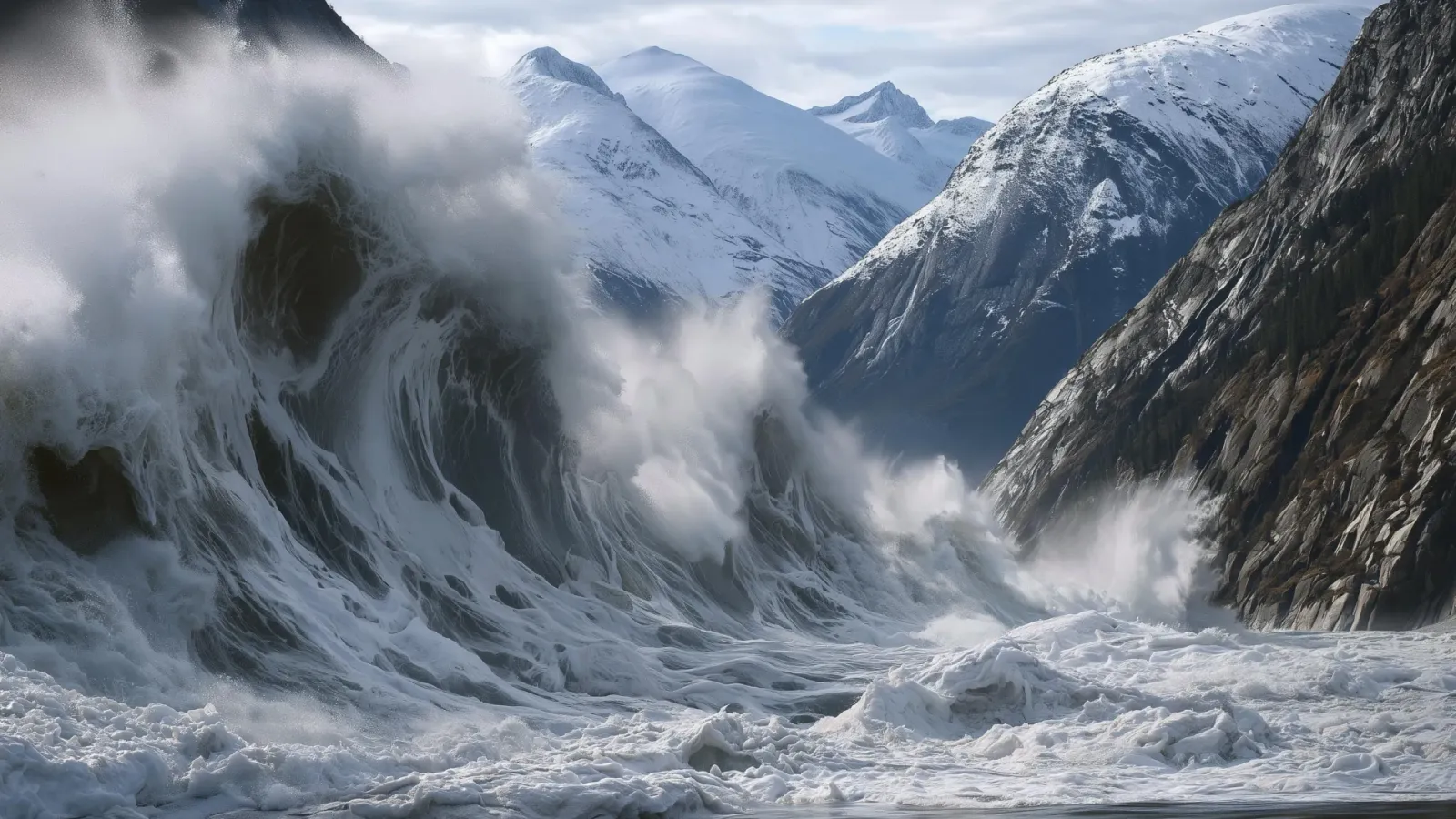
Alaska's 1,580-foot tsunami had warning signs. Scientists just found them.
Rapid glacier retreat, heavy rainfall, and thousands of tiny tremors preceded Alaska's 1,580-foot tsunami, a warning for every coastal community in a warming world.

The rare mutation that lets high-risk brains dodge Alzheimer's
Scientists found a natural defense against protein buildup, opening a new path to preventive treatments.

3,000 steps a day may halve Alzheimer's decline, study finds
New research links a modest daily walk to less tau buildup and nearly half the cognitive and functional decline, even for those with early signs.