
NASA’s Swift Boost launches this month to save a failing telescope
A rescue mission is set for liftoff, because one space telescope is falling and science timelines cannot slip.
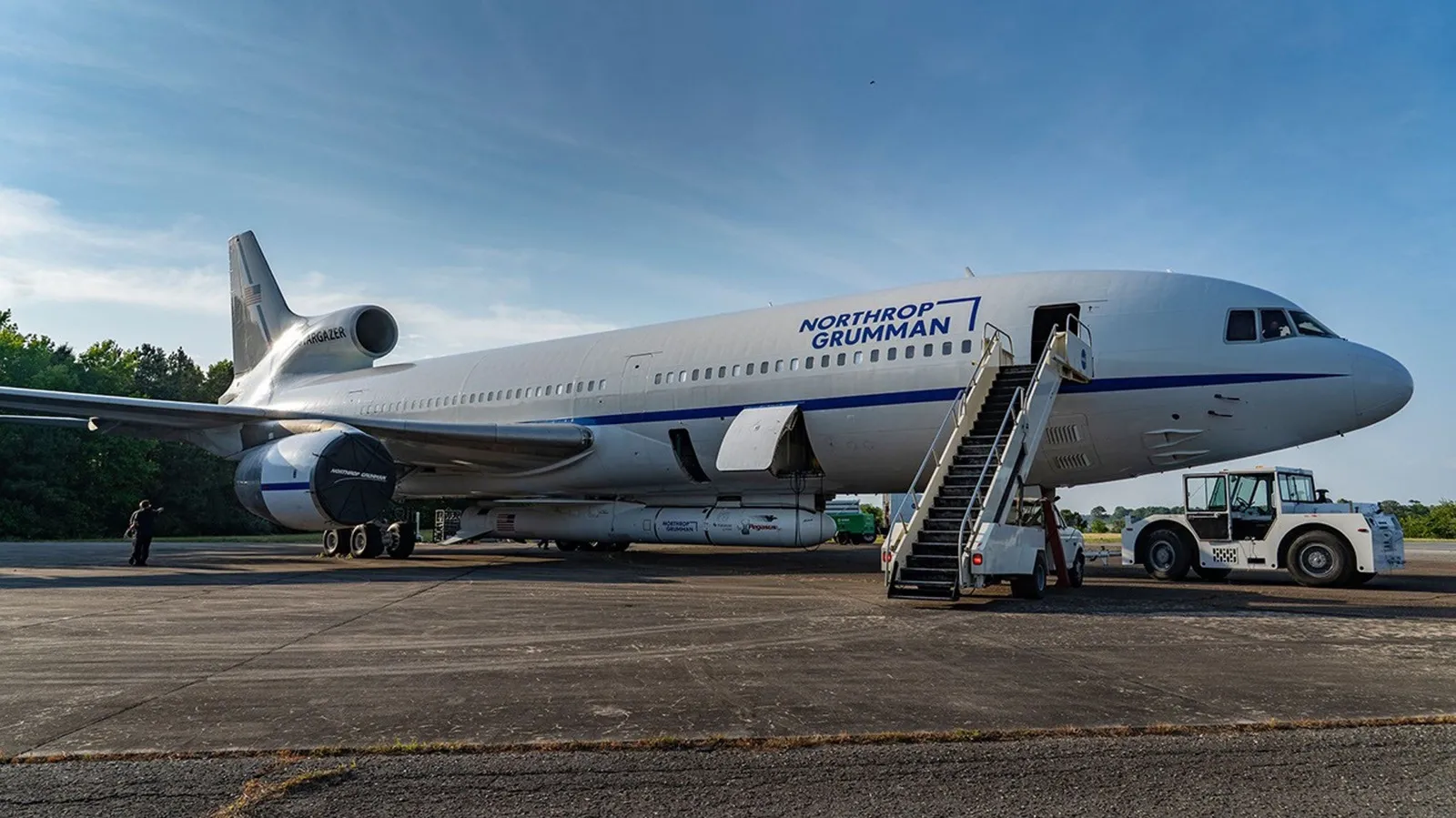
NASA’s Swift Boost mission will launch later this month to rescue a falling space telescope. For decision-makers, it is a live reminder that spacecraft operations, risk controls, and contingency funding are becoming mission-critical.
NASA’s Swift Boost mission is set to launch later this month, and it exists for one reason: a space telescope is falling, and the mission is meant to rescue it. That single sentence matters more than it sounds. In space, you do not get second chances. You get checklists, simulations, and contingency plans, and then you either execute or you watch months or years of scientific and engineering work drift away.
The core idea behind Swift Boost is straightforward. NASA is using a planned maneuver to change the trajectory of an at-risk spacecraft, effectively giving the telescope a fighting chance instead of letting the situation play out. The mission is “ready to launch,” which is a big operational milestone because launch readiness is not a vibes-based status. It means the mission timeline, spacecraft health, ground systems, and launch vehicle integration have all cleared the hurdles needed to move from planning to execution. In other words, the rescue attempt is not theoretical anymore.
For executives and boards watching from Earth, this is a case study in how contingency operations work when the margin for error is thin. Space missions are expensive, and they rarely fail in one dramatic moment. More often, the problem is a chain of dynamics that eventually forces a high-stakes decision: do you spend more to fix it now, or accept a degraded outcome later? Swift Boost suggests NASA is choosing “fix it now,” using a dedicated mission approach rather than waiting for another cycle of opportunity.
It also highlights an uncomfortable reality about satellite and telescope operations: even “working” systems can become urgent when control and orbit are on the line. When a spacecraft’s path deteriorates, the decision window shrinks. Atmospheric drag, orbital perturbations, and the limits of station-keeping can all become part of the story, depending on the specific circumstances. The important executive takeaway is not the physics details. It is the operational pattern. Once the trajectory goes off the rails, the organization must pivot quickly to protect mission value, data collection schedules, and stakeholder commitments.
There is also a regulatory and governance angle, even if the source piece stays high-level. Space agencies operate with strict safety and mission assurance frameworks, and launch readiness is tied to a chain of accountability: what was tested, what was verified, what was modeled, and what was signed off. Missions like Swift Boost are the kind of operation that sits at the intersection of engineering execution and institutional process. Boards tend to ask about risk, but operational teams live inside risk. Readiness for launch signals that, at least in NASA’s assessment, the remaining risk is within tolerable bounds for the mission to proceed.
The market context here is that the space industry is increasingly crowded with constellations, commercial providers, and tightly scheduled science programs. That competition does not remove the need for backups. It raises the bar for reliability and for how quickly organizations can respond when something goes wrong. A rescue mission is expensive, but so is losing years of observational capability. From a decision-making standpoint, Swift Boost reinforces a principle: operational resilience is not a nice-to-have. It is a requirement that shapes budgeting, staffing, and how aggressively companies plan for “known unknowns.”
Finally, consider the second-order implications for peers. If NASA is executing a rescue mission later this month, other operators and vendors will be tracking what that means for best practices in contingency planning. The industry learns from outcomes, not from intentions. A successful rescue strengthens confidence that trajectory problems can be mitigated with timely mission actions. Even if you are not in NASA, you are in the same ecosystem of spacecraft control, ground operations, and launch integration, where timing is everything.
In short, Swift Boost is a reminder that space is unforgiving, and it is getting more so as schedules tighten and missions overlap. NASA is ready to launch a mission designed to rescue a falling telescope, and that readiness is the headline. The strategic stakes are simple: save the mission, preserve the science, and demonstrate that the organization can still act decisively when reality gets weird.
This story's Key Insights and Take-aways are locked.
Create a free account to unlock Executive Actions for one credit.
Register to UnlockAlways free for Executives Club members. Join the Club
More in Technology

Nvidia's $89B data center quarter: the 9 companies cashing in
The AI buildout is minting fortunes beyond GPUs, and memory, cloud, and cooling suppliers are riding the same wave.

Google quietly links your phone number to every Android account on your SIM
Adding a SIM now ties your phone number to all Google accounts - and future accounts inherit it. Here's the security and privacy stakes.

Hijacker AI 'Skynet mode' runs 100,000 attack steps against exposed models
Symantec caught a criminal AI agent that borrows other models, steals data, and mines crypto; the only relief is no confirmed victims yet.