

Nasdaq skids after DeepSeek sparks broad AI rout; Nvidia drops 16%
U.S. markets sell off AI infrastructure makers in double digits as investors reprice the cost and pace of AI builds.

U.S. stocks were mostly lower, with the Nasdaq leading declines as makers of AI infrastructure fell sharply during an AI rout sparked by China's DeepSeek. The selloff hit Nvidia particularly hard, with Nvidia down 16%, forcing executives to rethink AI cost curves and near-term capital allocation.
U.S. stocks were mostly lower, and the Nasdaq led the declines after an AI rout sparked by China's DeepSeek. The damage was concentrated in companies that build the plumbing for modern AI, not just the apps on top. Nvidia was down 16%, a move that matters because Nvidia is a central supplier in the compute stack investors rely on to turn AI demand into revenue.
Why did this particular trigger set off such a broad move? Investors appear to have used DeepSeek as a real-time datapoint to reprice how quickly AI capability can improve and what that implies for the economics of AI infrastructure. When the market runs a stress test like that, it does not just trim one stock. It starts repricing an entire category, and that is exactly what happened: many AI infrastructure makers fell steeply, “many in the double digits,” with the Nasdaq bearing the brunt.
To understand why a headline-driven catalyst can translate into double-digit moves across a sector, you have to remember what these companies sell. AI infrastructure firms are typically exposed to how much compute demand exists, how expensive it is to deliver, and whether customers believe they need to keep scaling hardware, power, and data center capacity right now. In other words, the market is not only forecasting future revenue. It is also pricing how confident customers and the supply chain are that today’s AI ramp is the fastest possible ramp.
DeepSeek, a China-linked AI development referenced as the spark, landed in that fragile zone where expectations are high and margins can swing quickly. If investors conclude that frontier performance can be achieved with different tradeoffs than previously assumed, the implication can be brutal for infrastructure names that had been priced for a certain trajectory of spending. Nvidia’s 16% decline is the cleanest signal in the source because it gives a single, exact number. But the story is wider: the outlet notes “steep falls” across AI infrastructure makers, and that broad set of declines is what turns a single stock move into a market episode.
This is also where regulatory and geopolitical framing tends to leak into markets, even when the immediate catalyst is technical. The U.S. AI market is not moving in a vacuum. China competition, export controls, and data governance debates shape what is possible to build, ship, and deploy. Even without getting into any new details beyond what is provided, it is fair to say that when investors see a China-linked AI event drive a U.S.-traded selloff, it reflects how much the market is watching for competitive shocks that could change procurement decisions or timelines.
For decision-makers inside AI-adjacent companies, the second-order issue is not just whether demand exists. It is how fast demand is expected to grow, and what type of demand the market believes is most durable. Infrastructure businesses often face the classic mismatch problem: build and supply commitments take time, while customer buying decisions can shift rapidly when the frontier looks like it is moving faster or cheaper than expected. A broad rout like this can compress the window in which investors reward long-duration AI capex narratives, even if end demand remains strong.
Boards and CFOs, meanwhile, should focus on how the market is reading the next few quarters. When “many” infrastructure names are down in double digits and the Nasdaq leads declines, investors are signaling that uncertainty is rising and that they want to see proof in results, not just ambition in product roadmaps. Even without more data from the source, the pattern itself is the message: the market is repricing risk across the AI stack.
Strategically, the stakes are clear for peers in similar roles. Nvidia down 16% is not just a trading blip. It signals that the market is willing to mark down the infrastructure layer quickly when the competitive narrative shifts. Executives should treat that as a reminder that AI is not only a technology race. It is a capital allocation race. And when investors reinterpret what DeepSeek suggests about AI progress, the winners are the companies that can translate that repricing into resilient supply planning, customer commitments, and credible financial visibility.
This story's Key Insights and Take-aways are locked.
Create a free account to unlock Executive Actions for one credit.
Register to UnlockAlways free for Executives Club members. Join the Club
More in Technology
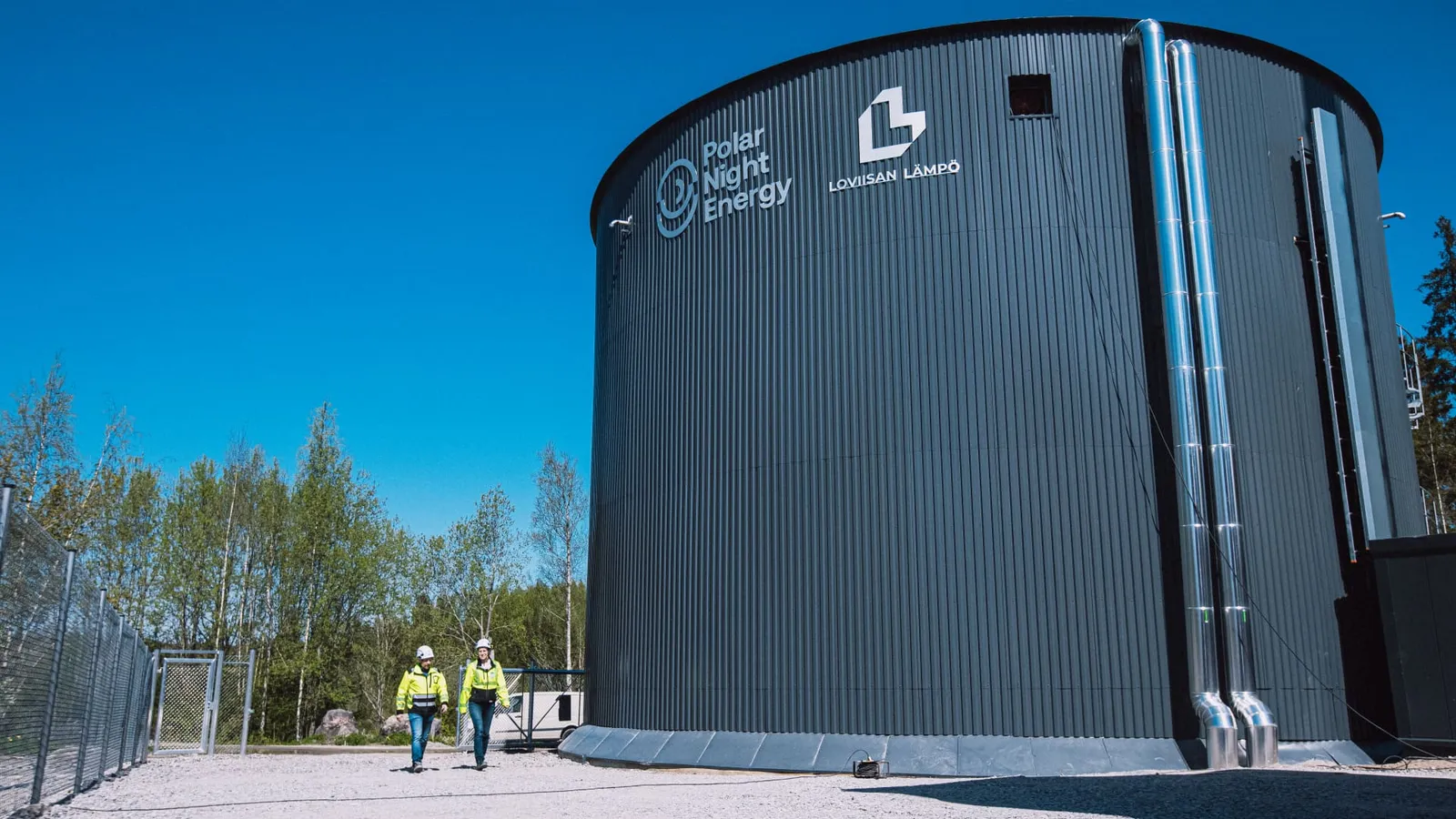
Finland powers through wind and solar lulls with the world’s largest sand battery
A small town in Finland is using the world’s largest commercial sand battery to solve intermittency.

Nvidia locks SK Hynix memory supply to power its $500B AI push
Nvidia is securing high-bandwidth memory access for its AI systems, and that supply chain control matters more than ever.

Beijing-backed money quietly ties DeepSeek, Zhipu AI, Unitree, and CXMT
The SCMP report shows state capital is reshaping “VC-style” funding across China’s frontier tech ecosystem.