

NATO's New Red Line: Hybrid Attacks on Members Will Not Be Tolerated
The US envoy to NATO signals a tougher collective response to cyber, disinformation, and sabotage - a shift with direct implications for multinational boards and risk officers.
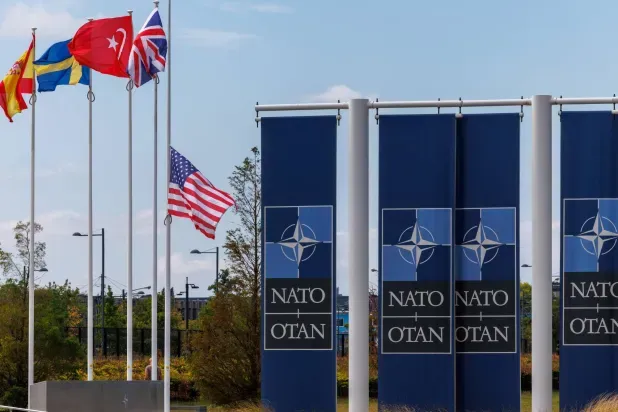
The US envoy to NATO stated that the alliance will not tolerate hybrid actions against member states, signaling a harder line on cyberattacks, disinformation, and sabotage. For executives, this means heightened expectations for resilience and potential collective countermeasures that could affect cross-border operations.
In a blunt warning to adversaries, the US envoy to NATO declared that the alliance will not tolerate hybrid actions against its members, drawing a red line on a growing arsenal of non-military tactics that have blurred the boundaries of modern conflict. The statement, reported by Asharq Al-Awsat, is a clear signal that NATO is moving beyond traditional defense postures to confront the gray-zone warfare that has become a hallmark of geopolitical rivalry. For decision-makers, this is not just diplomatic rhetoric - it is a preview of a more assertive collective response that could reshape risk assessments for governments and corporations alike.
Hybrid actions encompass a broad spectrum of coercive activities that fall short of conventional armed attack: cyber intrusions against critical infrastructure, disinformation campaigns designed to destabilize democracies, election interference, sabotage of undersea cables and energy grids, and economic coercion through weaponized trade dependencies. These tactics have been used with increasing frequency and sophistication in recent years, often by state actors seeking to achieve strategic objectives while staying below the threshold that would trigger NATO's Article 5 mutual defense clause. The envoy's warning directly challenges that calculus, signaling that the alliance is prepared to treat such actions as a collective threat requiring a unified response.
For NATO, the statement represents a significant evolution in its strategic doctrine. Historically, the alliance has struggled to define a proportionate response to hybrid attacks, which are designed to be ambiguous and deniable. The envoy's language - that NATO "will not tolerate" such actions - suggests a willingness to invoke collective measures, potentially including economic sanctions, diplomatic isolation, or even kinetic responses in extreme cases. This is a departure from the reactive posture that has often characterized NATO's approach to gray-zone conflicts, where attribution is difficult and retaliation risks escalation. The message is intended to deter adversaries by removing the ambiguity that has long been their shield.
The implications for member states are immediate and practical. Governments will need to invest more heavily in cyber defense, intelligence sharing, and resilience planning for critical infrastructure. They will also face pressure to align domestic laws with NATO's collective response mechanisms, which could include new authorities to sanction entities that facilitate hybrid attacks. For businesses operating across borders, this means a more complex regulatory environment. Companies in sectors such as energy, telecommunications, finance, and technology - all prime targets for hybrid tactics - should expect heightened scrutiny from both national regulators and NATO-aligned bodies. Supply chain due diligence will become more rigorous, particularly for firms with exposure to regions where hybrid threats are most acute.
For multinational corporations, the envoy's warning is a strategic wake-up call. The line between state-sponsored cyber operations and criminal activity is already blurring, and NATO's new stance could lead to mandatory reporting requirements, stricter cybersecurity standards, and potential liability for companies that are unwittingly used as vectors for hybrid attacks. Boards and risk officers must now treat hybrid threats as a first-order concern, not a remote tail risk. This includes not only technical defenses but also the ability to detect and counter disinformation that could damage brand reputation or manipulate markets. The cost of inaction is likely to rise as NATO and its members translate political will into concrete enforcement mechanisms.
The strategic stakes extend beyond the immediate members. The envoy's statement is a direct signal to Russia, China, and other actors that have employed hybrid tactics in Europe and beyond. It raises the prospect of a coordinated NATO response that could include collective economic sanctions, cyber counter-operations, or even the deployment of rapid response teams to assist affected allies. This could escalate tensions in contested regions, but it also offers a deterrent effect that may reduce the frequency of low-level provocations. For global investors, this introduces a new layer of geopolitical risk that must be priced into cross-border investments, particularly in Eastern Europe, the Baltics, and other frontline states.
For executives, the takeaway is clear: the era of treating hybrid attacks as a nuisance is over. NATO's red line means that governments will expect the private sector to be a partner in resilience, not a passive victim. Companies should proactively engage with national cybersecurity agencies, participate in threat intelligence sharing platforms, and stress-test their crisis response plans against scenarios that combine cyber, disinformation, and physical sabotage. The envoy's words are a call to action - a reminder that in the gray zone, the first line of defense often lies in the boardroom, not the battlefield.
This story's Key Insights and Take-aways are locked.
Create a free account to unlock Executive Actions for one credit.
Register to UnlockAlways free for Executives Club members. Join the Club
More in Business

Death sentence for TV presenter Sarah Khalifa: Egypt's drug case hits media
The sentencing of Sarah Khalifa and 11 others underscores the severity of Egypt's anti-drug laws and the exposure of public figures to capital punishment.

Tim Cook steps down as Apple CEO, stays on as chair with $45M equity
The 'Trump whisperer' keeps his White House and Beijing access as Apple navigates tariffs and a $4.6 trillion market cap.

Snowflake shares surge as AI data demand crushes estimates, lifting full-year forecast
Stocks jumped on stronger-than-expected guidance, signaling enterprise AI workloads are accelerating faster than Wall Street priced in.