

Netflix bets Millie Bobby Brown as the star system test case, and it’s a mixed grade
Enola Holmes worked. Damsel and The Electric State show what happens when a homegrown icon is boxed in by the platform.
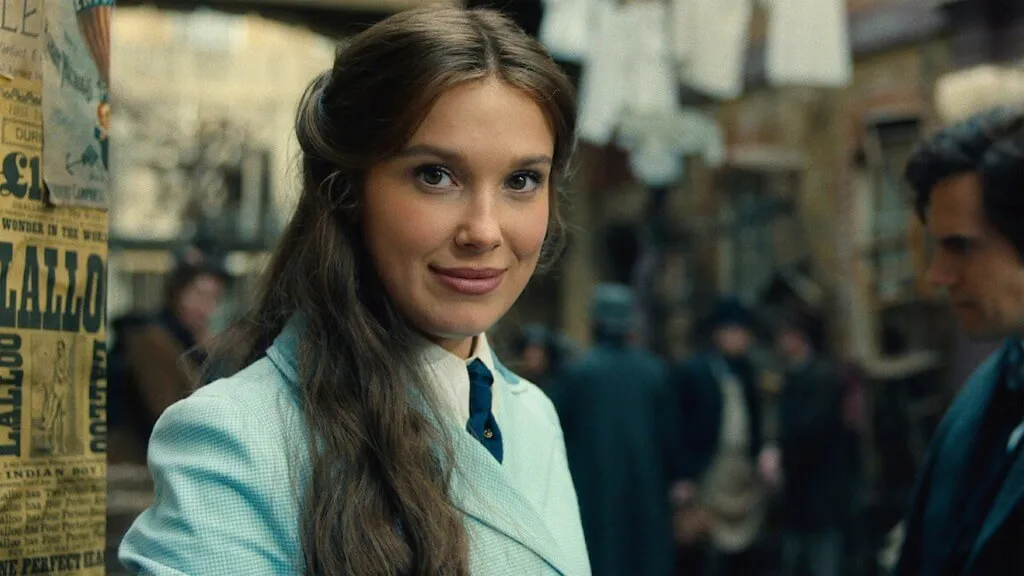
Millie Bobby Brown, Netflix's “homegrown star,” moves from Eleven in Stranger Things to leading roles as Netflix builds around her. For decision-makers, her next-era placement is a live test of whether Netflix can grow stars without recycling old studio logic.
In Enola Holmes 3, Millie Bobby Brown finally steps into adult stakes: she’s preparing for her wedding to Lord Tewkesbury (played by Louis Partridge) on the island of Malta, until her brother Sherlock is kidnapped. It is a fun setup, but it also marks a real career inflection point for Brown. This is her first major step into post-child-actor work, and Netflix has treated her like the proof-of-concept for its entire “star system” strategy.
Netflix’s bet is blunt: build performers you can only see on Netflix, then keep them in your orbit with monthly-fee exclusivity. The source’s big argument is that Netflix claims it disrupted Hollywood, but for films it has often replicated the old playbook: bank-breaking salaries for established big-screen performers and blockbuster filmmakers, worldwide press tours, and theatrical-style marketing built to sell the next big thing. When those efforts produced widely forgettable outcomes like Red Notice and The Gray Man, Netflix allegedly needed something studios did not have: homegrown stars, especially ones that could appeal to a younger demographic. Enter Eleven, and then enter Brown as Netflix’s marquee “icon you can only see” at home.
Stranger Things was the moment the plan became a blueprint. The first season, described as a Stephen King-inspired sci-fi thriller, was “meant to be a throwaway summer release.” Instead, it became Netflix’s foundational series, a multibillion-dollar worldwide phenomenon that won awards, spawned a Broadway play, and generated merchandising that Disney “would blush at.” That scale mattered because it made the entire cast bigger, but it was Brown who was flung into the spotlight as something new. Barely 12 when the show premiered, she came from bit parts like Grey's Anatomy and Modern Family, and then landed as the shaved-head, near-silent presence that turned “Who’s that girl?” into mainstream attention.
Once that happened, Netflix leaned into a classic studio-era instinct: maintain a curated image and develop projects around a performer’s type. The source contrasts this with the long-standing, over 50-year studio system where studios owned stars, reinvented appearances, and shaped vehicles around them. The stifling system eventually broke under New Hollywood, where actors pushed back to shape their own fortunes. But Netflix, in this telling, returned to that logic by keeping Brown outside of cinemas and more importantly, outside the “you already know this face from theaters” cycle. The platform wanted Eleven’s halo to travel with Brown, even as she aged.
This is where Enola Holmes looks like Netflix’s smartest move in the franchise era. Brown’s first major movie role was Godzilla: King Of The Monsters, but much of her film work after Stranger Things happened at Netflix. Enola Holmes positioned her as a witty, intelligent, fiercely feminist young detective in a YA rewrite of Sherlock Holmes told from his younger sister’s perspective. The tone is described as a higher-budget Nancy Drew mystery by way of Guy Ritchie’s Sherlock Holmes movies, with Brown at her best as cheeky and self-assured without being saccharine. The film was initially intended as a Warner Bros. release, but Netflix picked it up when COVID-19 hit, betting it needed to keep Brown on home turf. The payoff, per the source: Enola Holmes became a delight, a hit, and a franchise. It also gave Netflix a strong narrative: Brown “grew up” on the platform, just like Eleven did, across three movies.
But a star system is not just about hitting once. It’s about what happens when the franchise light moves and the performer needs a new niche. The source argues Netflix struggles with true originality, particularly when aiming at adults, and that overreliance on copying well-worn big-budget molds has led to forgettable flops. Brown has not escaped this struggle. Damsel (a 2024 dark fantasy about a young woman thrown into royal treachery and dragon attacks) had a great hook, but the role is described as offering Brown little beyond a thin Strong Female Character stereotype, smothered by “a sea of beige.” It is a “role anyone could have played,” with an implied mismatch between what the script gives and what Brown can do.
Then comes The Electric State, described as last year’s disastrous project built from Simon Stålenhag’s graphic novel. On paper it sounds like it should fit Brown’s demonstrated ability to do a lot with little dialogue: the story centers on Michelle, mostly alone besides her robot companion, and her search for her long-lost brother explores isolation and queerness in the before and after times. Yet the Russo brothers’ adaptation is portrayed as turning thoughtful source material into a ceaseless barrage of bad jokes, buddy-comedy shtick, and generic commentary on freedom. Brown’s on-screen constraints are emphasized too, including an egregiously fake wig, and the source says she’s forced to play second fiddle to tedious robot chatter with even less to do than in Damsel. The strategic point is sharp: when Netflix boxes Brown into the wrong genre mechanics, she can’t even “carry” through personality the way she could in Enola.
So the test case is not really Brown’s acting. It is whether Netflix can evolve its homegrown star beyond the system that made her. The platform’s insistence on keeping performers “outside of cinemas” may protect a monthly revenue model, but it can also limit the range of roles available to the person carrying the brand. If Enola Holmes proved the platform can create a franchise around a young icon, Damsel and The Electric State suggest Netflix’s adult ambitions can smother the very thing it needs to grow. For boards and exec teams, the lesson is straightforward: when you build a star system around one face, you inherit responsibility for every step after the spotlight. If the next step is miscast by process, the star does not just stumble. The model does.
This story's Key Insights and Take-aways are locked.
Create a free account to unlock Executive Actions for one credit.
Register to UnlockAlways free for Executives Club members. Join the Club
More in Entertainment

Halo: Campaign Evolved rebuilds the original in Unreal Engine 5, setting a remake benchmark
A full Unreal Engine 5 remake shows how studios can modernize legacy hits without erasing what made them great.

Miyamoto admits The Super Mario Galaxy Movie directly triggered Star Fox 64 Remake and Yoshi game
The director ties game releases to movie casting, with Nintendo treating synergy as a two-way development pipeline.

Amazon makes Luna games free on Fire TV for Prime members in U.S. and UK
A no-extra-charge add-on expands Luna access on Fire TV, signaling Amazon's next gaming bet after last year's relaunch.