
New robotaxi scorecard crowns China leaders, and U.S. players lose ground
A fresh robotaxi scorecard lays out who is ahead and why the next phase of competition will be about proof, not promises.
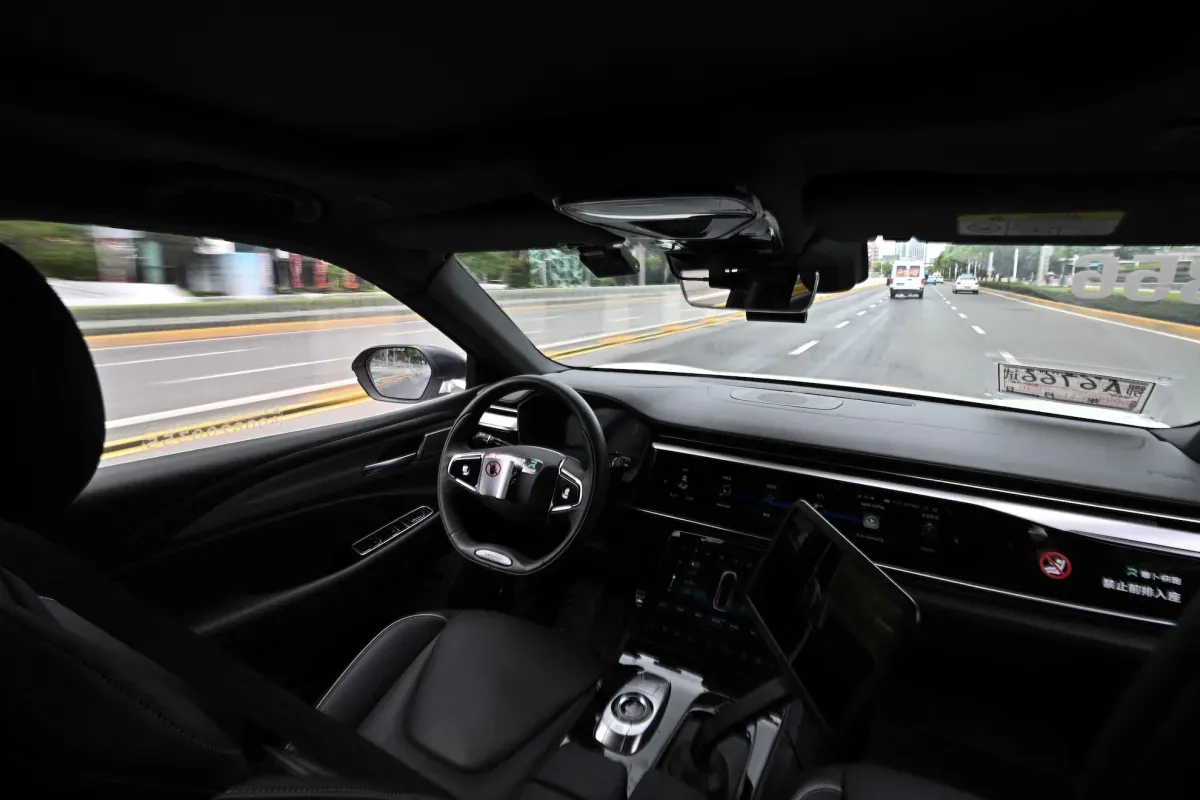
TechCrunch Mobility reports on a new robotaxi scorecard designed to benchmark the state of robotaxi programs and deployment. The scorecard highlights China’s dominance, a consequence that should reshape expectations for investors, regulators, and operators evaluating real-world readiness.
Welcome back to TechCrunch Mobility, your central hub for news and insights on the future of transportation. Today’s headline is simple, but it carries real market weight: a new robotaxi scorecard shows China’s dominance.
That is the whole point of the scorecard. It is meant to compare robotaxi progress across regions and companies, moving the conversation away from marketing language and toward a more structured view of performance and readiness. And if you were hoping the U.S. or other markets could close the gap just by “scaling pilots,” the direction of travel suggested by the scorecard is not comforting for those expectations. China is positioned as the leader.
To understand why this matters, zoom out to how robotaxis typically get evaluated in the real world. The technology story is only half the battle. The other half is the messy middle: how quickly systems move from restricted environments to broader roads, how incidents are handled, how operations scale, and whether partnerships and fleets can actually sustain service rather than run short-lived demos. A scorecard, by design, tries to force those messy inputs into a readable format.
In that context, “dominance” does not just mean “more news coverage” or “bigger headlines.” It implies something more operational: the winning ecosystem has more momentum, more deployment experience, and a more repeatable path through regulation. And regulation is not a side quest. Robotaxis sit at the intersection of technology, safety, and public policy, which means regulators can slow or accelerate entire business models. Where rules are clearer, approvals can turn into volume. Where approvals are harder to replicate, operators can end up stuck in limbo, spending time and capital without getting the kind of traction scorecards reward.
Robotaxi scorecards also change how boards and investors think about risk. In early-stage tech, risk is often framed as “will it work?” In autonomy, there is an additional risk layer: “will it work reliably enough at scale that cities and regulators will allow it to expand?” A scorecard that elevates one region over others helps decision-makers translate that reliability question into something closer to an investment thesis. It is one thing to fund a team building autonomy. It is another to decide which regulatory and operational approach will produce measurable progress.
There is also a strategic feedback loop here. When a market leader becomes the benchmark, competitors spend their next cycles trying to “catch up” on whatever metrics the scorecard uses. That can push companies toward clearer documentation, stronger operational discipline, and tighter integration between autonomy systems and day-to-day fleet management. It can also expose gaps. If your program is behind on execution, no amount of press releases can substitute for the inputs that a scorecard wants to see.
For U.S. and other non-China operators, the second-order implication is that the competitive game may be less about raw technology advancement and more about deployment readiness and ecosystem support. Robotaxis require partnerships, municipal relationships, compliance, and operational maturity. Even a strong AI stack can struggle if the route to scale is too slow or too unpredictable. That is why a scorecard that “crowns” one side is so consequential. It suggests that the market is already rewarding the companies and regions that have mastered the path from test to real-world usage.
The strategic stakes are straightforward for anyone in this space: investors, operators, and regulators are going to keep asking for evidence, not vibes. A new robotaxi scorecard that shows China’s dominance signals that the industry is moving toward more comparative, more accountable evaluation. For peers trying to raise capital, plan expansion, or design regulatory strategies, the message is: the next wins will likely go to the programs that can prove readiness in the real world, consistently enough to survive the scorecard.
This story's Key Insights and Take-aways are locked.
Create a free account to unlock Executive Actions for one credit.
Register to UnlockAlways free for Executives Club members. Join the Club
More in Technology

Meta still serves child sexual abuse ads on Instagram in India - BBC report
A new report following the BBC Eye investigation says the ads are still there - what it signals for every platform with a self-serve ad engine.

White House yanks 'Build the Wall' game after Tetris Company copyright warning
The administration's arcade game vanished in hours - and the takedown playbook every brand can learn from.

Zelda 40th Anniversary Direct: Ocarina of Time Details Expected in 30-Minute Stream
Nintendo's 30-minute Direct marks 40 years of Zelda, with fans eyeing Ocarina of Time and other project reveals. Here's how to watch and what to expect.