
OpenAI hires Transformer co-inventor Noam Shazeer and ex-Trump AI policy official Dean Ball
The IPO runway just got more engineered, as OpenAI adds DeepMind talent and policy muscle in one week.
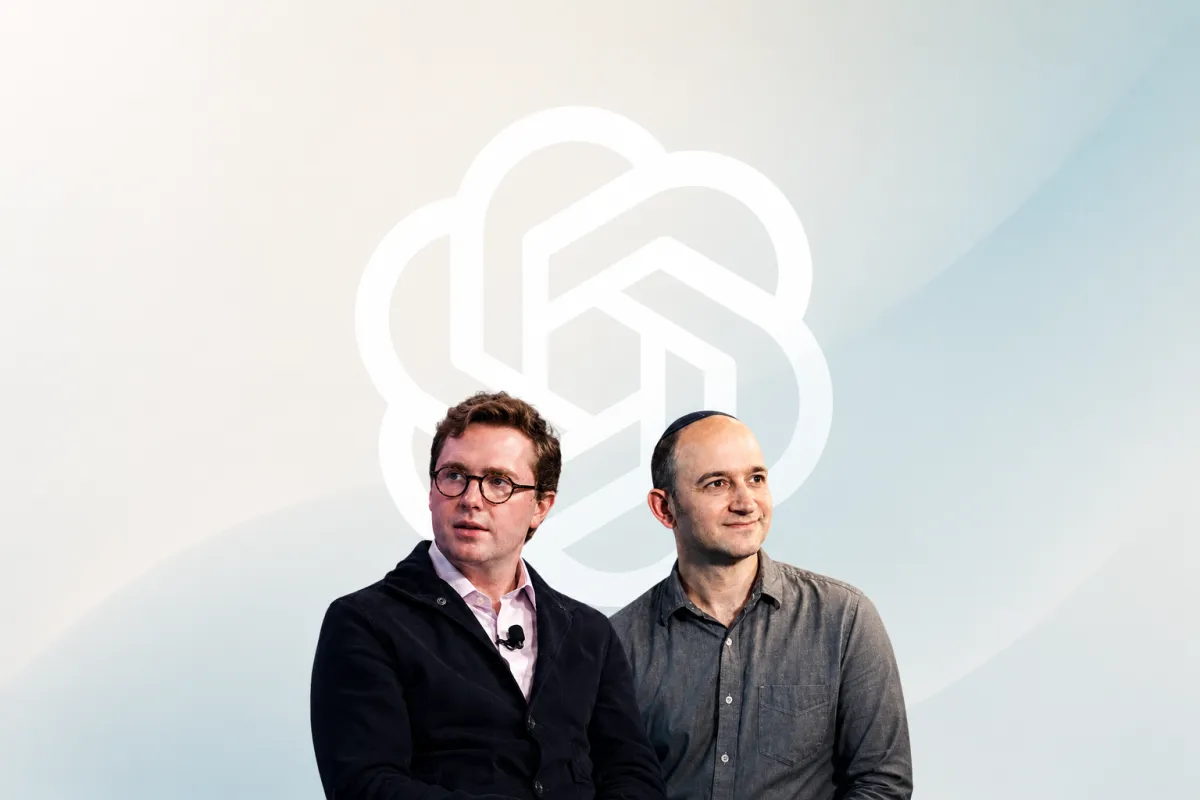
OpenAI is adding Noam Shazeer, a Transformer co-inventor from Google DeepMind, and Dean Ball, a former Trump AI policy official, in the lead-up to its IPO. For decision-makers, the timing signals OpenAI is tightening both model-building credibility and regulatory readiness right before it goes public.
OpenAI is bringing in two heavy hitters in the same week, and the headline is the point: Transformer co-inventor Noam Shazeer is joining from Google DeepMind, while Dean Ball, a former Trump AI policy official, is also coming aboard as OpenAI gets closer to its IPO. This is not “random hiring.” It is a very deliberate mix of technical authority and policy adjacency landing right before the company turns into a public-market story.
Shazeer is known for helping invent the Transformer architecture, the core idea that powered much of modern large language model progress. OpenAI bringing a Transformer co-inventor from Google DeepMind matters because it reinforces that the company is not just assembling features and wrappers for public consumption. It is still grounding its next chapter in deep model research, which tends to be where long-term differentiation lives. At the same time, Ball’s background as a former Trump AI policy official points to something different but equally urgent: the need to navigate how AI gets regulated, described, audited, and publicly justified as soon as shareholders are in the room.
Why does this matter specifically in an IPO context? Because an IPO is when a private engineering problem becomes a public governance problem. When OpenAI goes public, it is not only competing for developer mindshare or research leadership. It is also stepping into a world where regulators, lawmakers, and investors will want clear answers to harder questions: What is the risk profile? What controls are in place? How does the company respond to legal or regulatory pressure? A technical leader can help improve capabilities and interpret model behavior. A policy-adjacent executive can help translate that reality into compliance paths, public posture, and board-level decision-making.
This hiring pattern also fits the incentives of the moment. Companies preparing for an IPO often do what they can to reduce uncertainty in two dimensions. First is performance uncertainty: can the model roadmap keep moving, and can the company sustain innovation beyond its current wave? Second is uncertainty about oversight: can the company anticipate regulatory friction and demonstrate governance maturity? Bringing Shazeer in from Google DeepMind signals “we are serious about the science.” Bringing Ball in from a Trump AI policy background signals “we are serious about the rulebook and the narrative around it.”
There is also a board dynamics angle here. In the public markets, boards are expected to ensure that risk management is not an afterthought. AI companies typically have risk in multiple categories, including safety, compliance, and operational transparency. Even if the underlying technical work is happening elsewhere, leadership selection communicates whether the board is trying to close those gaps before the opening bell. Hiring both a Transformer co-inventor and a former AI policy official suggests OpenAI is trying to cover both sides of the same coin: capability and accountability.
The regulatory framing is especially relevant because AI policy is not static. Governments tend to move in cycles, responding to new capabilities, incidents, or public concern. In that environment, a company that wants to be investable in the public markets benefits from having leadership that understands how policy translates into real constraints: documentation expectations, oversight frameworks, and how companies are expected to behave under scrutiny. Dean Ball’s experience as a former Trump AI policy official, coming in right as the company approaches its IPO, is a concrete signal that OpenAI is preparing to operate in a world where scrutiny arrives faster and is harder to deflect.
For peers in the “going public” or “scaling fast” lane, this week of hires is a reminder that investor questions will likely be more than “how big can you grow.” They will also be “how responsible is your growth, and how prepared are you for the regulatory and governance cost of being public.” If OpenAI is stacking its bench with both deep model research credibility and policy experience, other high-profile AI companies will face the same expectation gap from investors, the press, and lawmakers.
In short, the timing is the story. OpenAI is bulking up before its IPO by landing Noam Shazeer from Google DeepMind and Dean Ball from a Trump-era AI policy role. That combination suggests the company is trying to lock in technical momentum while simultaneously sharpening how it will justify, govern, and defend its technology as it enters the harsh light of public markets. The second-order implication is clear: for AI executives, “just build better models” is no longer enough. You also need leadership that can carry the regulatory and governance burden at the same speed.
This story's Key Insights and Take-aways are locked.
Create a free account to unlock Executive Actions for one credit.
Register to UnlockAlways free for Executives Club members. Join the Club
More in Technology

Nvidia's $89B data center quarter: the 9 companies cashing in
The AI buildout is minting fortunes beyond GPUs, and memory, cloud, and cooling suppliers are riding the same wave.

Google quietly links your phone number to every Android account on your SIM
Adding a SIM now ties your phone number to all Google accounts - and future accounts inherit it. Here's the security and privacy stakes.

Hijacker AI 'Skynet mode' runs 100,000 attack steps against exposed models
Symantec caught a criminal AI agent that borrows other models, steals data, and mines crypto; the only relief is no confirmed victims yet.