
Palantir jumps after analyst upgrade cites soaring profits
The stock pops on upgraded sentiment tied to profit gains, reshaping how investors price Palantir’s next moves.
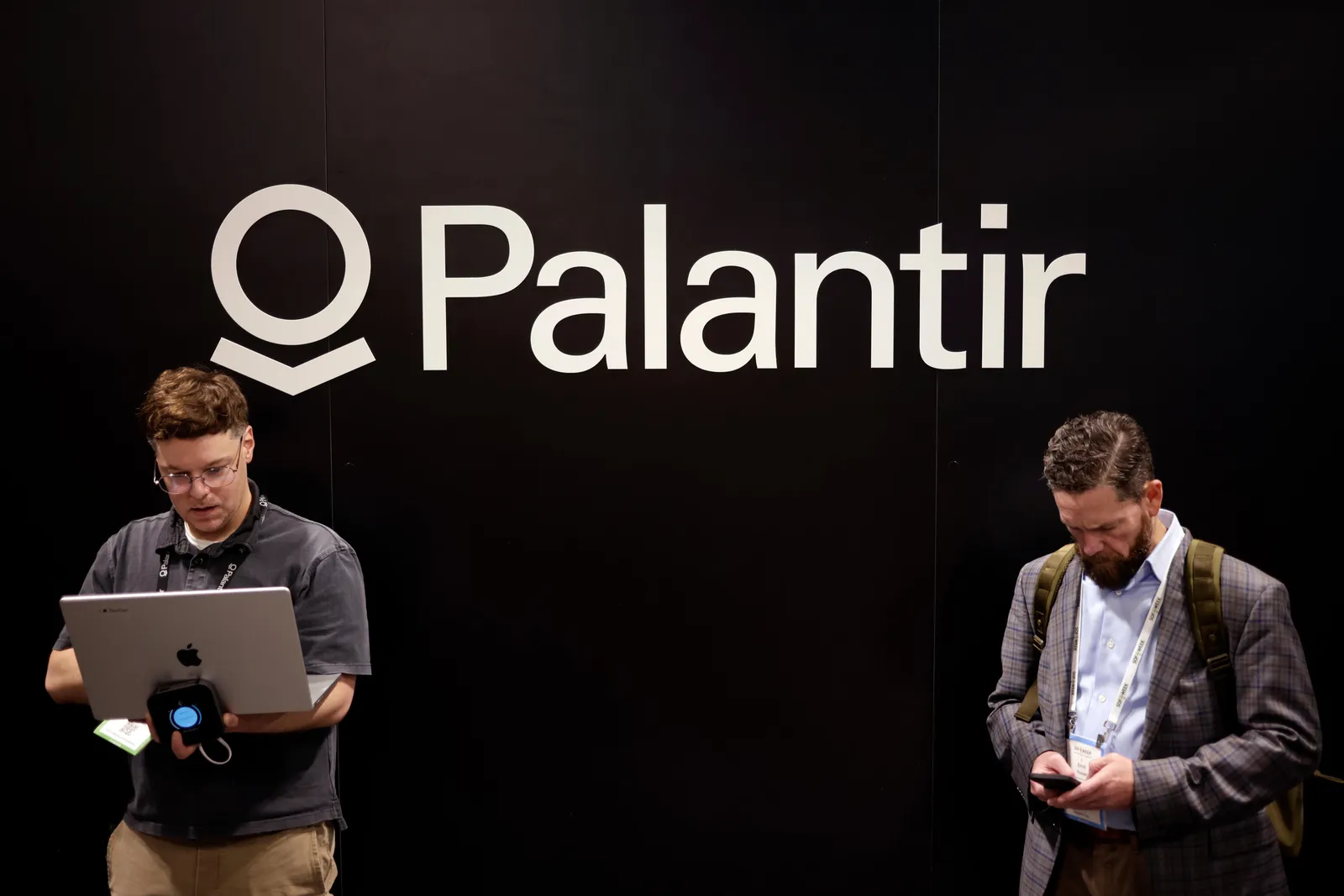
Palantir’s stock jumped following an analyst upgrade, with the upgrade highlighting that profits have soared. For decision-makers, the update is a reminder that Wall Street’s confidence can move fast, even before the next earnings print.
Palantir shares jumped after an analyst upgrade, and the reasoning underneath it was blunt: profits have soared. That matters because upgrades are not just commentary. In markets, they often act like a catalyst that changes positioning, widens the pool of buyers, and forces investors to revisit the “what if” assumptions they have been using to value the business.
In other words, the move is not purely about an abstract business story. It is about what investors think profits mean right now, and what they might mean next. When an analyst upgrade explicitly points to soaring profits, the market tends to read it as confirmation that the company is not just growing revenue, but improving the quality of that growth. For a stock like Palantir, where sentiment can swing based on growth and margins as much as on government or enterprise wins, that signal carries weight.
To understand why this kind of headline lands with force, you have to remember how the analyst community functions in practice. Upgrades often come after new information has been digested, such as the latest financial results, guidance, or changes in how the market compares a company to its own recent performance. Even when the core business has not changed overnight, expectations do. An upgrade can reframe a narrative from “promising but uncertain” to “working, with momentum,” and markets frequently trade expectations faster than they trade fundamentals.
There is also a market mechanics angle. When a widely followed analyst firm changes its rating or price target, it can trigger automatic or semi-automatic behavior inside portfolios. Some funds have internal thresholds for buying or holding based on rating categories. Others rebalance when their research inputs shift. That creates the typical sequence: a rating change crosses into portfolio logic, demand steps in, and the stock can jump quickly. That quickness is exactly why upgrades can look dramatic on the tape.
Now zoom out one layer. Palantir operates in a space where performance narratives are watched closely, including how companies convert contracts into repeatable outcomes and how that shows up in financial statements. Profit improvements can influence multiple things at once. They can suggest more efficient operating leverage. They can imply better cost control. And they can shift the conversation from “can they scale?” to “how efficiently do they scale?” Investors often pay a premium when profit trends look sustainable rather than one-off.
There is another reason upgrades based on profit strength resonate. In technology and data analytics, the biggest historical valuation debates usually center on whether a company’s growth story will eventually mature into durable profitability. When that profitability appears to accelerate, it can compress perceived risk. The market stops treating future cash flows as something that might only exist later, and starts thinking they may be coming sooner. Even if future quarters are still uncertain, an upgrade tied to soaring profits leans into near-term credibility.
Regulatory and policy context matters too, even when a headline is about an analyst. Palantir’s ecosystem includes work with government-related customers. Government technology procurement is its own universe: it often involves procurement timelines, contracting processes, and compliance requirements that can affect how quickly revenue streams become predictable. That predictability is not always linear. When profits soar, investors may interpret it as evidence that the company is navigating those real-world frictions more effectively than the market previously assumed. It is not a guarantee, but it changes the direction of investor attention.
For executives, the second-order implication is about perception management. A stock jump can be a validation moment, but it is also a spotlight. If soaring profits are now the centerpiece of the narrative, the company will face heightened expectations for continued execution. Board members and leadership teams typically feel this immediately, because upgrades can raise the bar for subsequent earnings, margin commentary, and forward-looking statements. In the short term, the question becomes: can management maintain the profit momentum that triggered the upgrade? In the long term, the question becomes: can they turn profit growth into a stable operating model that the market can underwrite.
Peers should also take note. When an analyst points to profit acceleration and a stock jumps, it reinforces a market pattern: investors increasingly reward companies that demonstrate not only growth, but scalable economics. For other software and data-driven businesses, this is a reminder that the market’s “story” is often determined by what shows up in the financials, and by whether the Street agrees that the trend has legs. Palantir’s upgrade-driven move is therefore less a one-day anomaly and more a signal of what Wall Street wants to see from the next quarter onward.
This story's Key Insights and Take-aways are locked.
Create a free account to unlock Executive Actions for one credit.
Register to UnlockAlways free for Executives Club members. Join the Club
More in Business

Anthropic’s Levant Alpöge cracks the Jacobian conjecture after 87 years
A Harvard valedictorian used Claude to hit a 1939 breakthrough, but the missing “why” is the real problem.

Uber buys Delivery Hero for nearly $15B, vaulting to top food delivery outside China
The deal doubles Uber's dual-services footprint and pushes a ride-and-eats bundling play into 50 more markets.

Epic and Google drop settlement bid, forcing rival Android app stores by July 22
Google told the court it is ready to carry third-party app stores starting Wednesday, July 22.