

Palo Alto CEO: AI Security Fears Are Driving Massive Cybersecurity Demand
Nikesh Arora confirms that the rapid adoption of artificial intelligence is creating an urgent, escalating need for enterprise-grade security solutions.
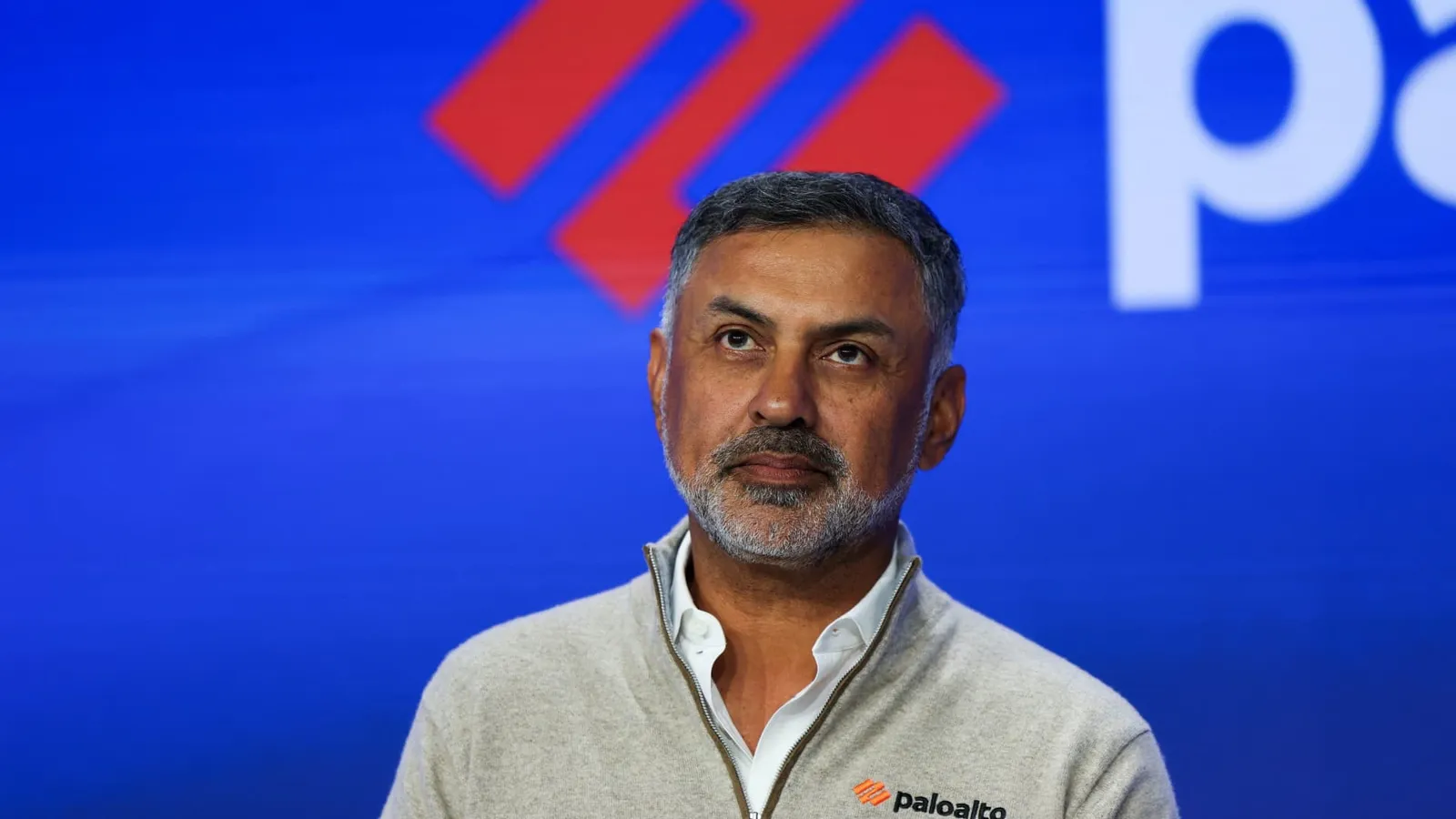
Palo Alto Networks CEO Nikesh Arora stated that the proliferation of artificial intelligence is significantly increasing the demand for advanced cybersecurity solutions. This signals a major shift in enterprise IT spending, forcing decision-makers to immediately re-evaluate their security posture and investment strategy.
Palo Alto Networks CEO Nikesh Arora recently highlighted a critical trend: the explosive growth of artificial intelligence is directly fueling a massive, escalating demand for sophisticated cybersecurity solutions. Arora's comments confirm that AI, while a powerful engine for innovation and productivity, simultaneously introduces a complex and rapidly expanding attack surface that traditional security measures are ill-equipped to handle. This isn't just a minor uptick in interest; it represents a fundamental re-pricing of risk across the entire enterprise technology stack. For companies, the stakes are immediate and existential: failing to secure the AI pipeline means risking not just data loss, but operational paralysis and regulatory penalties.
Arora's observation points to a market reckoning. As more businesses integrate generative AI into core workflows-from customer service chatbots to proprietary code generation-they are effectively building new, highly valuable digital assets that must be protected at every layer. The challenge is that AI models themselves, and the data they consume, are prime targets. Attackers are developing AI-powered tools to automate reconnaissance, execute sophisticated phishing campaigns, and exploit zero-day vulnerabilities at machine speed. Consequently, the demand is not just for more firewalls, but for AI-native security tools that can monitor, detect, and respond to threats generated by, and targeting, AI systems. This shift requires a move from reactive defense to proactive, predictive security architecture.
To understand the gravity of this shift, one must look at the underlying technological friction. Historically, cybersecurity was a perimeter problem: build a strong wall around the network. Today, the perimeter has dissolved. Data flows are decentralized, AI models are trained on vast, often unsecured, datasets, and the operational technology (OT) layer is increasingly connected to the IT network. This interconnectedness, which drives efficiency, is also the primary vector for attack. A single vulnerability in an AI model's input pipeline, or a compromise of the training data, can lead to catastrophic, systemic failure. The security solution, therefore, must be holistic, encompassing identity management, data governance, and continuous threat intelligence across the entire digital ecosystem.
This market pressure is creating a powerful tailwind for major cybersecurity vendors like Palo Alto Networks.
This story's Key Insights and Take-aways are locked.
Create a free account to unlock Executive Actions for one credit.
Register to UnlockAlways free for Executives Club members. Join the Club
More in Technology

OpenAI says 10,000 agents cracked a 90-year math problem in 88 hours
The company's claim is audacious, but one mathematician is pushing back. Here's what it means for AI-driven discovery.

Meta still serves child sexual abuse ads on Instagram in India - BBC report
A new report following the BBC Eye investigation says the ads are still there - what it signals for every platform with a self-serve ad engine.

White House yanks 'Build the Wall' game after Tetris Company copyright warning
The administration's arcade game vanished in hours - and the takedown playbook every brand can learn from.