
Palo Alto Networks beats earnings despite weak guidance, signaling AI's security urgency
The earnings report reveals how AI is forcing a massive, non-negotiable shift in enterprise security spending and market positioning.
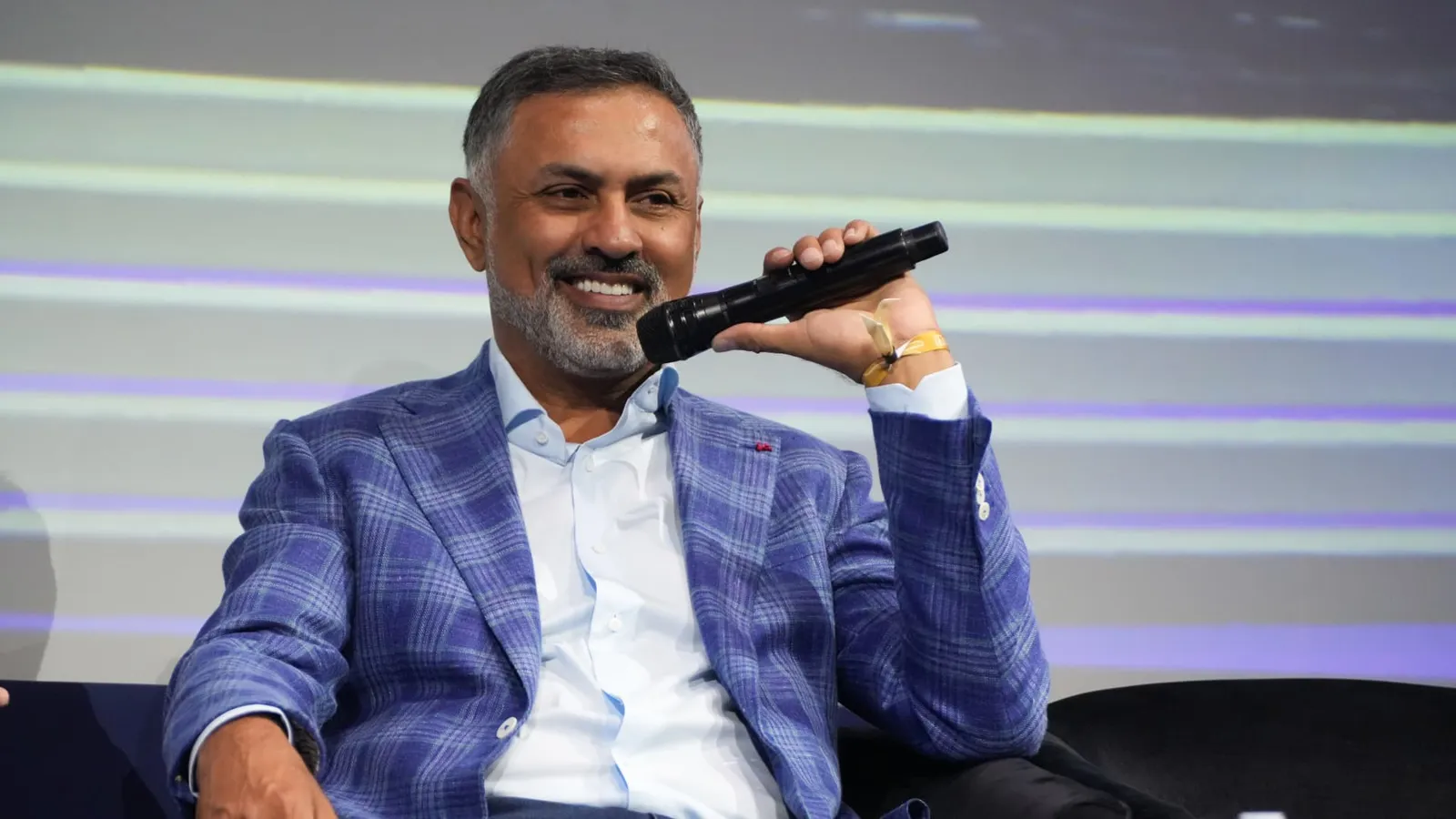
Palo Alto Networks reported strong earnings, beating analyst expectations despite having issued disappointing guidance earlier this year. This signals that despite macroeconomic headwinds, the foundational need for advanced cybersecurity solutions remains critically high, forcing immediate investment decisions across all sectors.
Palo Alto Networks delivered a strong earnings report, beating analyst expectations despite having issued disappointing guidance earlier this year. This performance is not a sign of a cyclical rebound, but rather a clear indicator that the foundational need for advanced cybersecurity solutions is accelerating, regardless of broader economic uncertainty. The company's ability to outperform expectations, even after warning of slower growth in February, suggests that the market's appetite for mission-critical security spending remains robust, driven primarily by the accelerating adoption of artificial intelligence and the resulting expanded attack surface.
For context, the cybersecurity market has been undergoing a profound structural shift. Historically, security spending was reactive, focused on patching vulnerabilities and responding to known threats. Today, the threat landscape is defined by AI-powered attacks, which are faster, more sophisticated, and harder to detect. This shift means that traditional, point-solution security stacks are insufficient. Enterprises are now demanding integrated, platform-level security that can manage the complexity of AI-driven risks across cloud, endpoint, and network layers. Palo Alto Networks' performance reflects its successful positioning at the center of this necessary platform consolidation.
This dynamic is creating a massive incentive structure for security vendors. The market is moving away from a 'best-of-breed' approach, where companies buy separate tools for different functions, toward a unified, comprehensive platform. This consolidation is crucial because the sheer volume and variety of data being processed by AI systems-from proprietary research to customer data-create unprecedented risk vectors. A single vulnerability in one component can compromise the entire system, making integrated risk management a non-negotiable requirement for any large enterprise or regulated industry.
Furthermore, the regulatory environment is intensifying the stakes. Governments worldwide are rapidly increasing scrutiny on data handling, privacy, and critical infrastructure protection. Regulations like GDPR, CCPA, and emerging sector-specific rules (especially those governing AI usage) are not just compliance checkboxes; they are forcing companies to fundamentally redesign their data architecture and security posture. For a company like Palo Alto Networks, this means its solutions must not only stop hackers but also provide auditable proof of compliance and risk mitigation, adding layers of value that justify premium pricing.
The competitive landscape is also intensifying, adding pressure to innovation. Major cloud providers (AWS, Azure, GCP) are building out their own security stacks, and hyperscalers are increasingly integrating security tools directly into their core services. This forces dedicated security vendors to become even more specialized and deeply integrated. Palo Alto Networks must prove that its platform offers superior visibility and control that the hyperscalers cannot match, or at least, that it complements them effectively. This competitive pressure drives continuous, expensive R&D into areas like AI-native threat detection and automated response mechanisms.
For investors and operators, the key takeaway is that cybersecurity is no longer a cost center; it is a core operational risk that must be managed at the board level. The decision to invest in security tools is now viewed through the lens of business continuity and regulatory survival. This elevates the role of the CISO (Chief Information Security Officer) from a technical expert to a strategic business advisor, reporting directly to the CEO and potentially the board. This structural change in corporate governance is perhaps the most significant second-order effect of the current security boom.
In summary, the strong earnings signal that the market is willing to pay a premium for security solutions that promise comprehensive, AI-powered risk management. The narrative has shifted from 'if' companies need better security to 'how quickly' they can afford to wait for it. This urgency is the primary driver of the current market valuation and the key area for competitors to monitor and exploit.
This story's Key Insights and Take-aways are locked.
Create a free account to unlock Executive Actions for one credit.
Register to UnlockAlways free for Executives Club members. Join the Club
More in Technology

OpenAI says 10,000 agents cracked a 90-year math problem in 88 hours
The company's claim is audacious, but one mathematician is pushing back. Here's what it means for AI-driven discovery.

Meta still serves child sexual abuse ads on Instagram in India - BBC report
A new report following the BBC Eye investigation says the ads are still there - what it signals for every platform with a self-serve ad engine.

White House yanks 'Build the Wall' game after Tetris Company copyright warning
The administration's arcade game vanished in hours - and the takedown playbook every brand can learn from.