
Paramount asks court to kill the $110 billion Warner merger lawsuit
Paramount says blocking the deal would weaken competition, but five streaming subscribers, regulators, and state attorneys general are all pressing on the brakes.
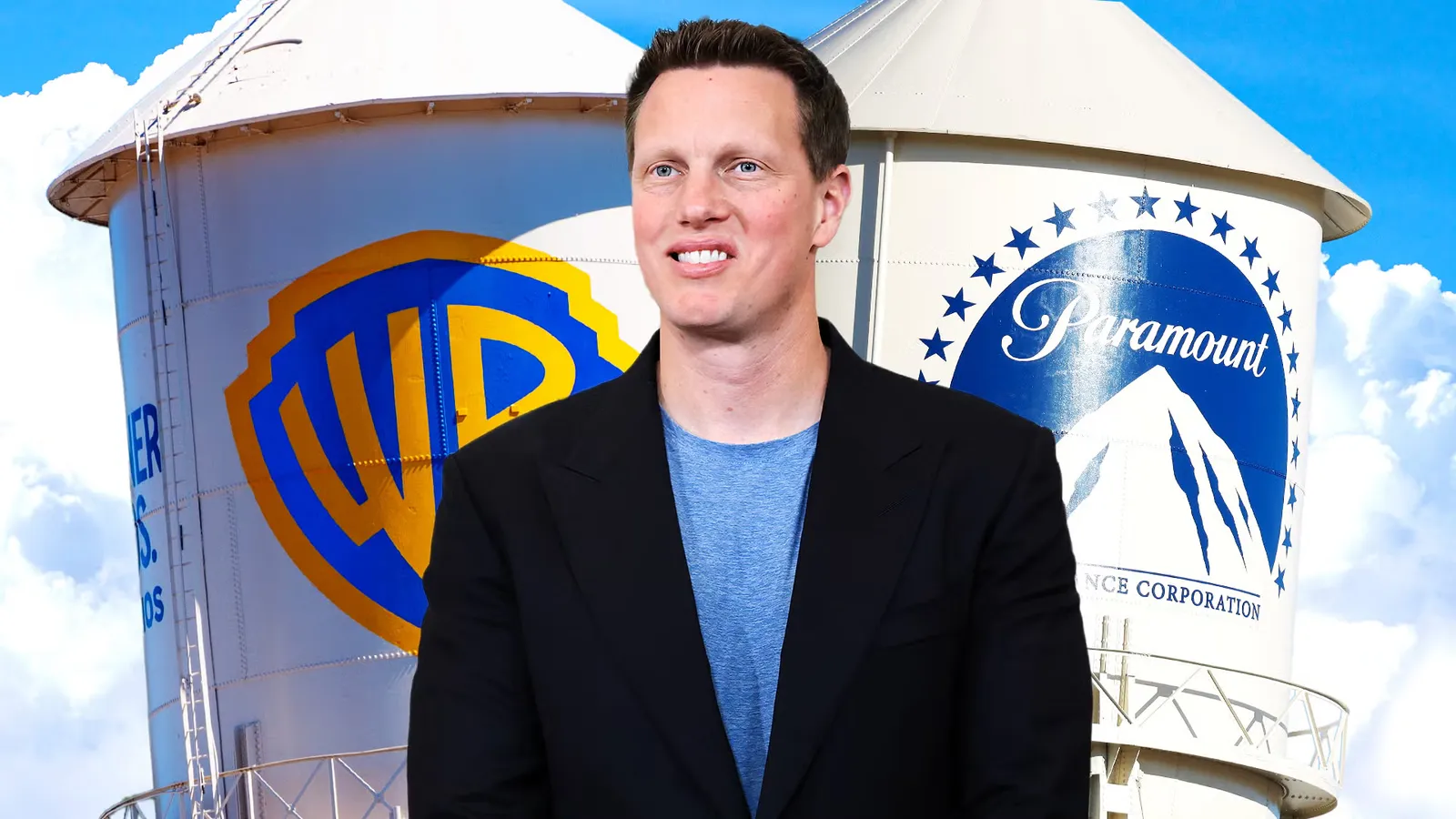
Paramount, led by David Ellison, has asked a California court to dismiss a lawsuit aimed at blocking its $110 billion merger with Warner Bros. Discovery. The fight now widens the deal timeline, raises closing risk, and signals how much antitrust scrutiny can still shape consolidation in media.
Paramount is trying to slam the brakes on a lawsuit that targets its $110 billion merger with Warner Bros. Discovery, and it is doing so with unusually blunt language. In a motion filed Wednesday in the U.S. District Court for the Northern District of California in Oakland, the David Ellison-led company called the case a “misguided” and “clumsy” attempt to “politicize antitrust law,” and asked the court to toss it out. That is the core issue here: Paramount wants the merger to move ahead, while five streaming subscribers are asking a judge to stop it before it can reshape the streaming and theatrical map.
Paramount’s pitch is straightforward. It says the merger would “revitalize Hollywood and the industry at large” by creating “greater competition that benefits consumers, theaters, and workers alike.” It also argues the combined company would stand up as a “stronger, better scaled rival” to Netflix, Disney, and Amazon, with more room for investment and more content output once the deal closes. The company says the alternative is worse: if the deal gets delayed or blocked, competition could suffer because Paramount would absorb “significant economic costs.” In its telling, a weaker Paramount and Warner Bros. would hand an edge to “Netflix and other scaled tech platforms,” while “consumers, theater owners and talent will suffer.”
That is exactly the opposite of what the lawsuit claims. Filed by five streaming subscribers, the complaint says the merger would strengthen Paramount’s “ability and incentive to raise prices, reduce output, narrow slates, reduce quality and worsen consumer-facing terms,” including through control of distribution, exclusivity, windowing and licensing. In plain English, the plaintiffs are saying a bigger combined player could have more leverage over what gets shown, when it appears, and how much viewers pay. They also argue Paramount would violate Section 7 of the Clayton Antitrust Act, the law that blocks mergers that substantially reduce competition and shrink the number of top companies in a market.
The complaint leans on market-share math to make its case, though it acknowledges theatrical share can swing from year to year depending on the movie slate. Still, it estimates that if Warner sits under Paramount’s ownership, the company would control roughly 24% of the theatrical distribution market. The lawsuit also takes a broader swipe at the strategy behind the deal, saying Skydance’s acquisition of Paramount Global and the proposed acquisition of Warner Bros. Discovery reflect the same approach: not competing by “building better products, investing, innovating, or winning customers through rivalry on the merits,” but instead chasing scale through consolidation that removes independent rivals and weakens the competitive guardrails that protect consumers.
The legal fight now sits alongside a much larger regulatory pileup. A hearing in the case is scheduled for July 16, while Paramount is still aiming to close the merger by the end of the third quarter, or Sept. 30, and hopes to finish as early as July. That timing matters because every extra week adds pressure to a deal already facing public pushback from federal lawmakers and more than 5,500 filmmakers, actors and other Hollywood professionals. The merger has also already won shareholder approval, but that does not make the finish line simple. It is under review by the European Commission, which has set a provisional deadline of July 7, and regulators in the U.K. are reviewing it as well, with public comments due by the end of April.
And that is before you get to Washington. Paramount has asked the FCC to approve its foreign investment in the transaction, with those investors expected to account for 49.5% of the equity of the combined company. The company has also met with U.S. Department of Justice officials to discuss the deal. The DOJ’s Hart-Scott-Rodino review period expired in February, though the regulator can still step in at any point. On top of that, a group of U.S. state attorneys general led by California’s Rob Bonta is reviewing the merger and weighing legal action of its own. Bonta told TheWrap that “red flags are everywhere when you have a merger of this type” and that the states are prepared to “act timely,” though he would not give a timeline. Paramount recently disclosed in a regulatory filing that it has received subpoenas, or civil investigative demands, from various state AGs focused on the DOJ investigation and the merger’s competitive effects, but it did not say which states were involved or how many sent requests.
For dealmakers, the stakes are blunt and expensive. If the transaction is not closed by Sept. 30, WBD shareholders will get a 25 cent per share “ticking fee” for each quarter until closing. If the merger falls apart entirely because of regulatory issues, Paramount will owe WBD a $7 billion termination fee. That means the question is no longer just whether the merger is strategically attractive. It is whether the company can clear a regulatory gauntlet that now includes a federal court challenge, the European Commission, U.K. officials, the FCC, the DOJ, and state attorneys general all looking at the same transaction from different angles. For anyone running a media company, or betting on one, the message is hard to miss: scale may still be the prize, but antitrust review is the price of admission, and it can get very expensive very fast.
This story's Key Insights and Take-aways are locked.
Create a free account to unlock Executive Actions for one credit.
Register to UnlockAlways free for Executives Club members. Join the Club
More in Business

Anthropic’s Levant Alpöge cracks the Jacobian conjecture after 87 years
A Harvard valedictorian used Claude to hit a 1939 breakthrough, but the missing “why” is the real problem.

Uber buys Delivery Hero for nearly $15B, vaulting to top food delivery outside China
The deal doubles Uber's dual-services footprint and pushes a ride-and-eats bundling play into 50 more markets.

Epic and Google drop settlement bid, forcing rival Android app stores by July 22
Google told the court it is ready to carry third-party app stores starting Wednesday, July 22.