
Paramount Skydance freezes WBD merger until antitrust rulings, or June 1, 2027
David Ellison’s deal pause shifts a $650 million-a-quarter ticking-fee risk into a longer courtroom grind.
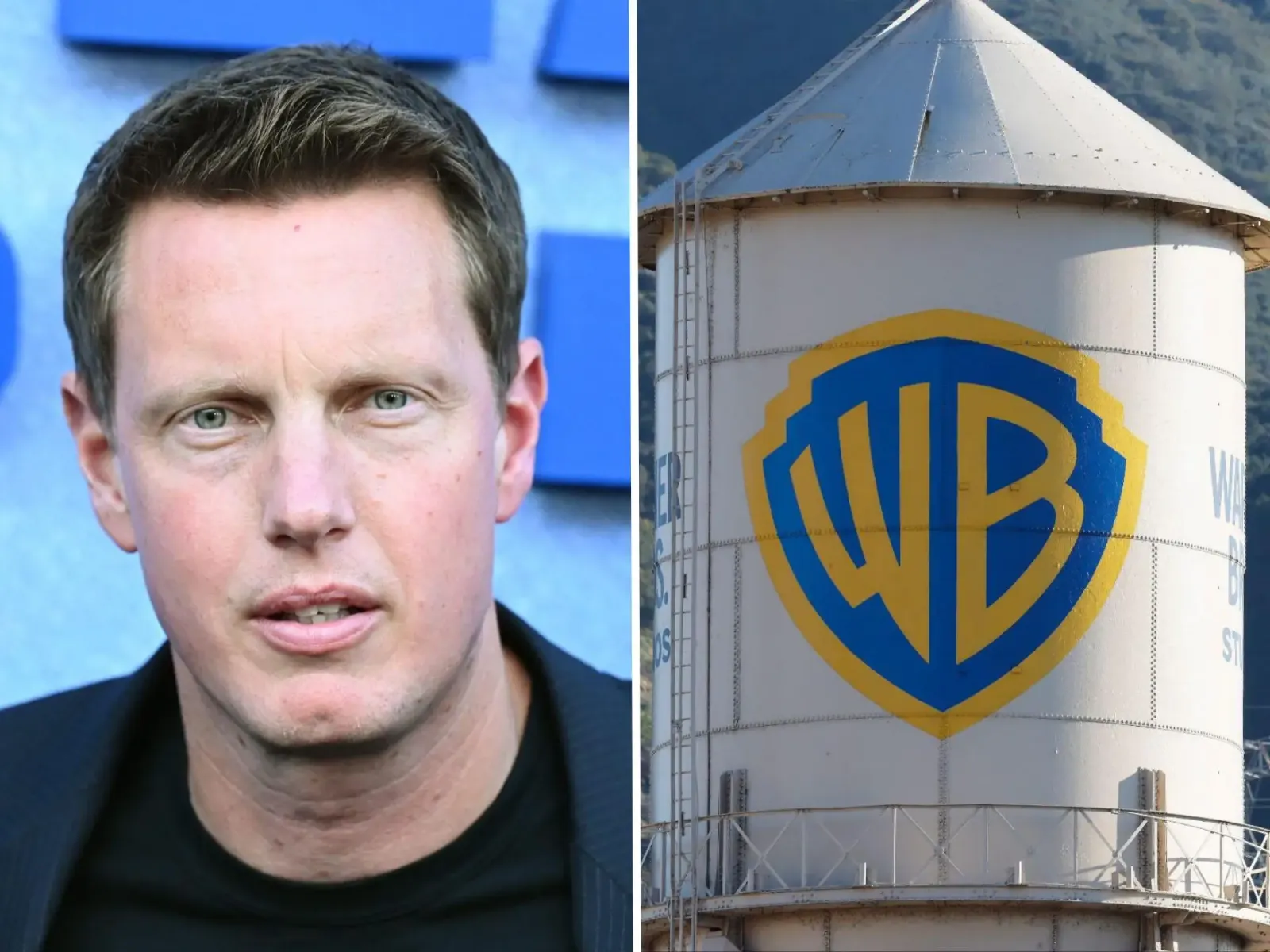
Paramount Skydance CEO David Ellison has agreed to pause its plan to buy Warner Bros. Discovery while antitrust cases play out. The delay, driven by legal challenges from 12 US states and the Writers Guild of America, pushes the close beyond Paramount’s hoped mid-July timeline and raises uncertainty for executives.
Paramount Skydance agreed to freeze its mega-merger with Warner Bros. Discovery until five days after the antitrust cases are ruled on, or until June 1, 2027, whichever comes sooner. In plain English, this is not a short “we’ll wait and see” pause. It is a scheduled, regulatory-driven timeout that can push the entire transaction into 2027.
That matters because the deal is already tied to a cost-of-waiting mechanism. Paramount has agreed to pay WBD shareholders a so-called "ticking fee" of about $7 million each day the deal does not close, starting after September 30. Paramount lawyer Jeffrey Kessler told the judge in a hearing that the company “would suffer very severe harm” if it had to pay the ticking fee, which is $650 million per quarter. So while the company is buying time with this freeze, it is also living inside a financial clock that can become expensive fast if the case timeline stretches.
The reason the pause is happening is simple: legal challenges. Paramount is facing an antitrust lawsuit from 12 US states and a legal challenge from the Writers Guild of America. Paramount spokespersons say they plan to fight. “We look forward to proving our case at trial,” a Paramount spokesperson said. Another statement framed the pause as the fastest and clearest way to demonstrate the transaction is good for competition, consumers, and creators, echoing that dozens of competition authorities worldwide have already reached a conclusion that regulators are comfortable with the deal.
But the global approvals add a twist, not a finish line. The deal has received approval from the US Department of Justice, the European Union, and other global regulators. That means the pause is not about whether the acquisition is inherently impossible. It is about whether specific antitrust concerns can survive in court in the US, state-by-state, in front of judges who can be less convinced than regulators that already signed off.
The states challenging the deal argue it raises antitrust concerns in three markets: wide-release film distribution, big-budget movie distribution, and cable network licensing. In other words, they are not only worried about content volume. They are worried about leverage and distribution power across the pipeline. If the merger goes through, Paramount would control two top film studios, Paramount Pictures and Warner Bros. Studios, along with TV networks such as HBO, CBS, and CNN, and streaming services including Paramount+, Pluto TV, and HBO Max. That vertical and horizontal stacking is precisely the kind of structure antitrust lawyers look for when they argue concentration could harm competition.
For executives trying to run a media portfolio, this is where the real headache lands: deal timing gets embedded into planning cycles. David Ellison’s media company had been hoping to close its WBD deal by mid-July. This agreement changes the calendar and, with it, how internal teams think about headcount, budgets, and product priorities. Some Paramount employees Business Insider talked to earlier this week were worried about layoffs after the merger. “I'm definitely worried about impending layoffs post-merger,” one Paramount worker said. “But I'm worried about the company as a whole if it doesn't go through.” That is a classic M&A tension: the merger can threaten roles through overlap, but the absence of the merger can also threaten the company if it cannot execute its strategy.
There is also a second-order effect for everyone watching deal-making in entertainment: delays increase friction costs. One Paramount streaming employee who supports the deal compared the situation to Spirit Airlines and JetBlue, arguing that regulators blocked a Spirit-JetBlue-type merger and that Spirit ended up bankrupt while JetBlue struggled. Another streaming staffer who disliked the deal said they were “tired of mergers and chaos.” Those comments are not legal filings, but they reflect something boards learn the hard way: when timelines slip, culture and confidence slip with them.
Industry observers are already translating the pause into a cost and complexity problem. Forrester research director Mike Proulx said the deal “just got longer, messier, and likely more expensive.” He added that he was “not sure how Paramount can frame this as a win when the deal just became more uncertain than it was 24 hours ago,” and that “The timeline is now out of Paramount's control.” That line captures the executive problem: even if the company believes it can win at trial, the market, employees, and capital planning still have to operate while the uncertainty drags on.
Finally, the market reaction was immediate. Shares of Paramount and WBD each fell on the news. Paramount’s stock finished the day down 3.3% while WBD shares slid about 0.7%. That is not just a trading footnote. It is a signal that investors are pricing in not only legal risk, but also the ripple effects of delay: prolonged integration uncertainty, prolonged strategic ambiguity, and a higher chance that capital allocation decisions get second-guessed.
For boards and senior leaders at companies considering M&A, this pause is a reminder that regulatory outcomes can be uneven across forums. DOJ and EU approval did not prevent a US-state antitrust fight. And when agreements include ticking fees, timelines stop being abstract. They become numbers that hit cash flow, quarterly economics, and the kind of pressure that can change what a management team is able to execute next. In this deal, the courtroom timetable is now part of the business plan.
This story's Key Insights and Take-aways are locked.
Create a free account to unlock Executive Actions for one credit.
Register to UnlockAlways free for Executives Club members. Join the Club
More in Business

Anthropic’s Levant Alpöge cracks the Jacobian conjecture after 87 years
A Harvard valedictorian used Claude to hit a 1939 breakthrough, but the missing “why” is the real problem.

Uber buys Delivery Hero for nearly $15B, vaulting to top food delivery outside China
The deal doubles Uber's dual-services footprint and pushes a ride-and-eats bundling play into 50 more markets.

Epic and Google drop settlement bid, forcing rival Android app stores by July 22
Google told the court it is ready to carry third-party app stores starting Wednesday, July 22.