
Perseverance breaks the off-world driving record, and it's a Mars milestone
NASA's rover has now traveled farther than any vehicle on another world, a feat with direct stakes for the Mars Sample Return campaign and future human missions.
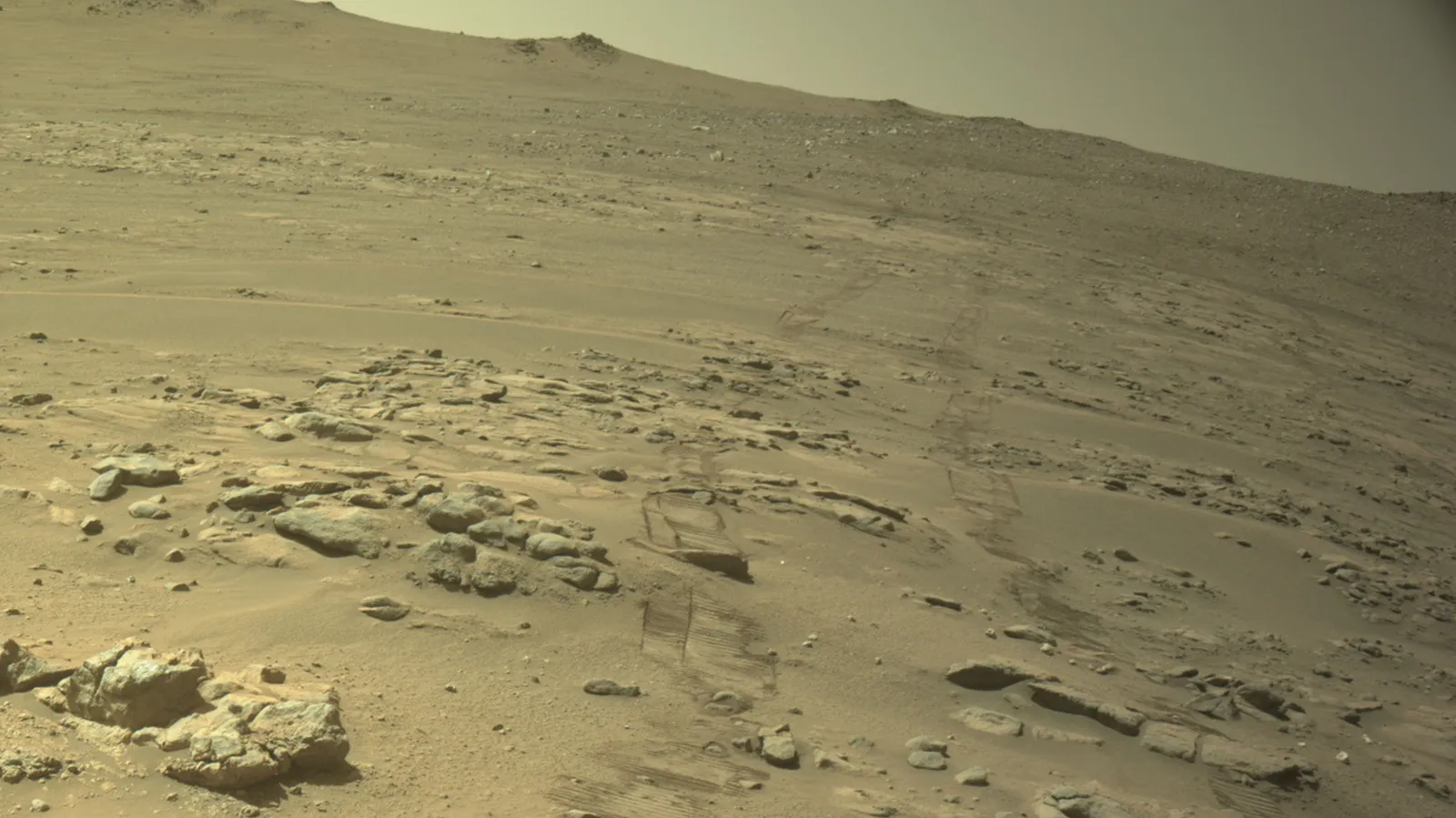
NASA's Perseverance rover has broken the record for the farthest distance traveled by any vehicle on another world, surpassing the previous mark set by the Opportunity rover on Mars. The milestone underscores the rover's durability and the growing maturity of off-world mobility, with direct implications for the Mars Sample Return program and the long-term push toward human exploration.
NASA's Perseverance rover has officially broken the record for the farthest distance traveled by any vehicle on another world, according to the space agency. The milestone, achieved on the surface of Mars, marks the first time a rover has surpassed the cumulative driving distance of NASA's Opportunity rover, which covered more than 45 kilometers (28 miles) over nearly 15 years of exploration. Perseverance, which landed in Jezero Crater in February 2021, has now driven farther than any wheeled vehicle in the history of off-world exploration, a feat that speaks to the engineering resilience of a robot designed to operate in one of the most hostile environments known to humanity.
The record is not just a vanity metric. It is a proof point for the entire Mars exploration strategy. Perseverance's primary mission is to collect rock and soil samples that will eventually be returned to Earth by a future mission, a joint effort between NASA and the European Space Agency. Every kilometer the rover covers brings it closer to a scientifically valuable cache, and every successful drive validates the navigation and terrain-handling systems that will be essential for the sample retrieval lander and the eventual human missions that NASA hopes to launch in the 2030s. The rover's ability to traverse rough, rocky terrain without direct human control - it must autonomously avoid hazards because radio signals take up to 20 minutes to travel between Earth and Mars - is a critical capability that will be reused in every future Mars vehicle.
For context, the previous record was held by Opportunity, a golf-cart-sized rover that landed in 2004 and kept driving for more than a decade, far exceeding its planned 90-day mission. Opportunity's longevity became a legend in planetary science, and its record stood as a benchmark for what a solar-powered robot could achieve. Perseverance, by contrast, is nuclear-powered, which gives it a steady energy supply through dust storms and Martian winters. But it also carries a heavier payload, including a sample-caching system and a suite of scientific instruments, making its driving task more complex. The fact that it has now beaten Opportunity's cumulative distance in less than four years - a fraction of the time - highlights how much faster and more capable modern rovers have become.
The record also carries strategic weight for NASA's budget and political standing. Mars Sample Return has faced cost overruns and schedule delays, with independent reviews calling for a simpler, cheaper architecture. A rover that is demonstrably overperforming on the surface gives NASA a tangible success story to point to when defending the program's value. It also strengthens the case for continued investment in robotic exploration as a precursor to human missions, a priority for the agency's Artemis program and its broader Moon-to-Mars framework. For commercial partners like SpaceX and Blue Origin, which are developing heavy-lift landers and surface systems, the rover's performance is a reminder that the hardest part of Mars is not getting there - it is operating once you arrive.
The engineering behind the record is worth unpacking. Perseverance uses a terrain-relative navigation system that compares images of the ground to pre-loaded maps, allowing it to land with precision and then drive with a level of autonomy that earlier rovers lacked. Its wheels are designed with chevron-shaped treads and a thicker aluminum skin to resist punctures from sharp rocks, a lesson learned from Opportunity, which lost one of its wheels to a buried rock early in its mission. The rover's onboard computer can plan a path around obstacles in real time, and its cameras give it a 3D view of the terrain ahead. These systems have allowed Perseverance to cover ground at a pace that would have been unthinkable for its predecessors, and they are the same systems that will guide the sample retrieval lander when it arrives to collect the cached tubes.
The implications extend beyond Mars. The record is a data point for anyone designing vehicles for the Moon, asteroids, or even the icy moons of the outer solar system. Off-world driving is a discipline that has matured from the slow, cautious hops of the Apollo lunar rovers to the sustained, autonomous traverses of modern Mars rovers. Each new record pushes the envelope of what is possible, and each success reduces the risk for the next generation of explorers. For executives and engineers in the aerospace industry, the takeaway is clear: reliability is the ultimate performance metric. A rover that can drive 45 kilometers on another planet is a rover that can be trusted to deliver the samples that will answer fundamental questions about the history of water and life on Mars.
What comes next? Perseverance is currently exploring the edge of Jezero Crater, where an ancient river delta may hold signs of past microbial life. The rover will continue to collect samples, and its driving record will likely grow. But the record is not an end in itself. It is a means to an end: a cache of Martian rocks that, if all goes well, will be launched back to Earth in the early 2030s. For now, the rover is doing exactly what it was built to do - and doing it better than any machine before it. That is a milestone worth celebrating, not just for NASA, but for anyone who believes that the next great human adventure will be written in the dust of another world.
This story's Key Insights and Take-aways are locked.
Create a free account to unlock Executive Actions for one credit.
Register to UnlockAlways free for Executives Club members. Join the Club
More in Technology
AI researcher's 26,000-word claim: Neural nets aren't tangled after all
Nick Cammarata's Goodfire post has the AI world split - if he's right, monitoring frontier models just got a lot easier.
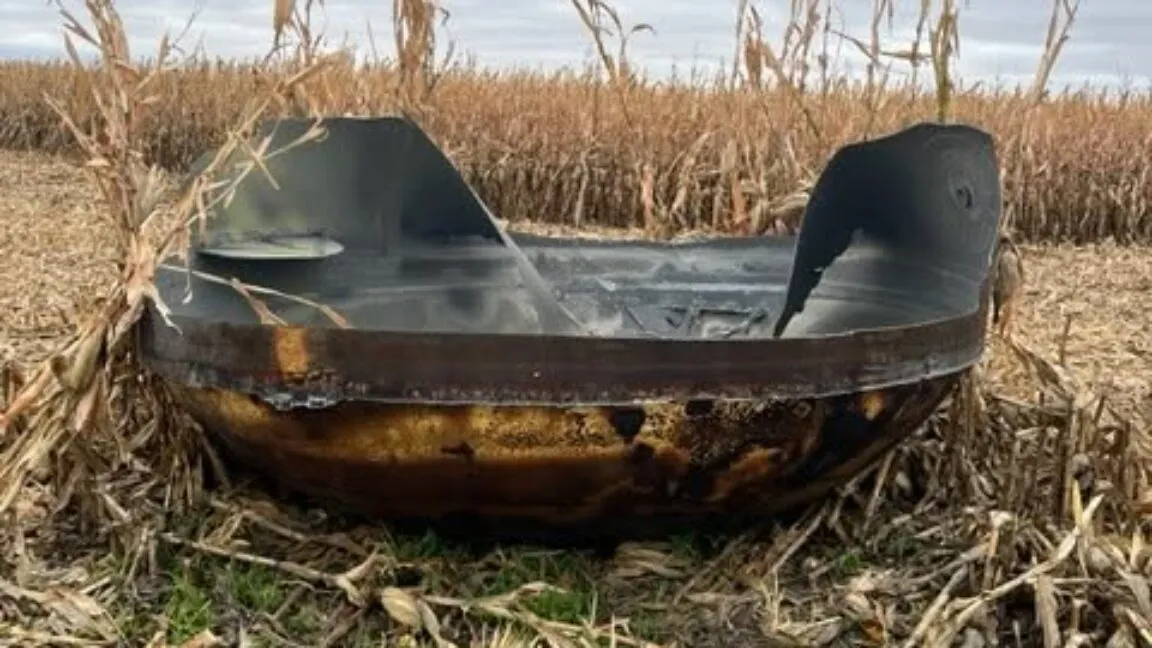
A Chinese rocket deorbited over Minnesota and landed in a farmer's cornfield
Experts tied the fragment to LandSpace's Zhuque-2E, which launched on September 15 and shed debris over the American Midwest after deploying 10 satellites.

JPMorgan Chase deploys first $5B into defense tech and hypersonic missiles
The bank is moving off its balance sheet to back robot factories, hypersonic missiles, and supply chains, signaling a new era of bank-backed military innovation.