

Raspberry Pi lifts 1H 2026 profit guidance to $38m as AI demand accelerates
The maker of tiny computing boards expects at least $38m adjusted earnings for the first half of 2026.
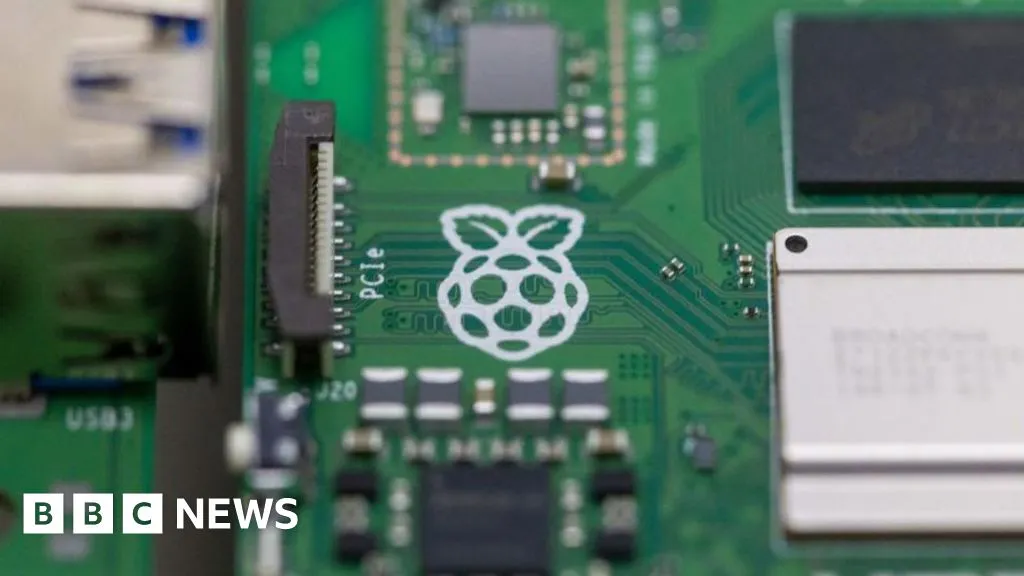
Raspberry Pi says it expects to deliver adjusted earnings of at least $38m (£28.2m) for the first half of 2026. For decision-makers, that guidance signals improving near-term profitability momentum tied to AI-driven demand.
Raspberry Pi has raised the signal it sends to the market: it expects to deliver adjusted earnings of at least $38m (£28.2m) for the first half of 2026, and it ties that forecast to growing AI demand. That is the headline number, plain and specific. The move matters because guidance is not a marketing poster. It is the company quietly telling customers, partners, and capital providers what it believes it can monetize over the next reporting window.
To put the forecast in context, “first half of 2026” is not a vague future. It is a defined time horizon that will land in board materials, budgeting cycles, and procurement planning. Raspberry Pi is essentially aligning expectations now, rather than waiting for later confirmation. And because the firm said it is driven by AI demand, the implication is that its ecosystem, supply chain, and product direction are not just participating in the AI boom, but benefiting in a way that shows up as earnings capacity.
Profit forecasts like this sit at the intersection of hardware reality and software appetite. AI demand does not translate into profit automatically. It usually has a long “plumbing period” where developers experiment, deploy small prototypes, and then scale only when performance per dollar and availability align. For a company built around compute boards, that scaling logic is crucial. Raspberry Pi’s guidance suggests it believes enough of that experimental and scaling work is converting into purchasing behavior and, ultimately, adjusted earnings.
The words “adjusted earnings” also deserve attention. Companies often use adjusted figures to reflect a cleaner view of operating performance by removing certain items. Even without the source providing the exact adjustment methodology, the important point for decision-makers is that the company is still confident enough to anchor a minimum threshold. Setting “at least” rather than a precise target also changes how the market may interpret the forecast. It is a floor. In a world where hardware margins can swing with component pricing, demand volatility, and fulfillment constraints, a floor can read as conservatively optimistic or practically achievable, depending on how investors read the company’s history.
There is also a regulatory and governance layer, even when the story is light on policy details. Raspberry Pi, as a business tied to consumer and developer technology, typically operates under a patchwork of rules that touch product safety, export controls, and supply chain compliance. AI demand can complicate that environment because the same compute infrastructure that supports legitimate development can attract scrutiny if it is used in restricted contexts. Even if the source does not mention any specific regulation, the reason governance matters is that forecasting profit ahead of time creates accountability. Boards and audit committees generally want management to back guidance with operational confidence, not just market hype.
Second-order, this guidance can reshape how partners plan their own stacks. If Raspberry Pi expects at least $38m (£28.2m) of adjusted earnings for 1H 2026, it signals to integrators and software teams that the underlying hardware platform is not only in demand but monetizing that demand. For decision-makers in adjacent roles, that can influence everything from inventory decisions to co-development timing. It can also affect how quickly complementary vendors commit resources to optimize tooling for Raspberry Pi platforms used in AI-adjacent workloads.
There is another board-level implication: when a company ties improved earnings prospects to AI demand, it effectively chooses a narrative. Management has to defend it later when analysts ask whether the AI-driven tailwind is sustainable, whether it is concentrated in certain customer segments, and whether the economics of the platform remain strong as competition reacts. The good news for Raspberry Pi is that a forecast is a concrete commitment. The risk is that any slowdown in demand, supply constraints, or pricing pressure could turn a forecast into a credibility test.
For executives at other hardware and developer-ecosystem firms, Raspberry Pi’s guidance is a reminder that AI is not just a software story. It is showing up in financial plans. The question peers will ask is simple: are we positioned to capture the spend that developers and builders shift when AI experimentation turns into deployment? Raspberry Pi’s expected adjusted earnings of at least $38m (£28.2m) for the first half of 2026 suggests the answer, for them, is trending toward yes.
This story's Key Insights and Take-aways are locked.
Create a free account to unlock Executive Actions for one credit.
Register to UnlockAlways free for Executives Club members. Join the Club
More in Business

Anthropic’s Levant Alpöge cracks the Jacobian conjecture after 87 years
A Harvard valedictorian used Claude to hit a 1939 breakthrough, but the missing “why” is the real problem.

Uber buys Delivery Hero for nearly $15B, vaulting to top food delivery outside China
The deal doubles Uber's dual-services footprint and pushes a ride-and-eats bundling play into 50 more markets.

Epic and Google drop settlement bid, forcing rival Android app stores by July 22
Google told the court it is ready to carry third-party app stores starting Wednesday, July 22.