
Raves are turning into perimenopause therapy for 40-65 women, study suggests
Burnout and health benefits are driving a late-life dance floor boom, with implications for wellness, culture, and policy.
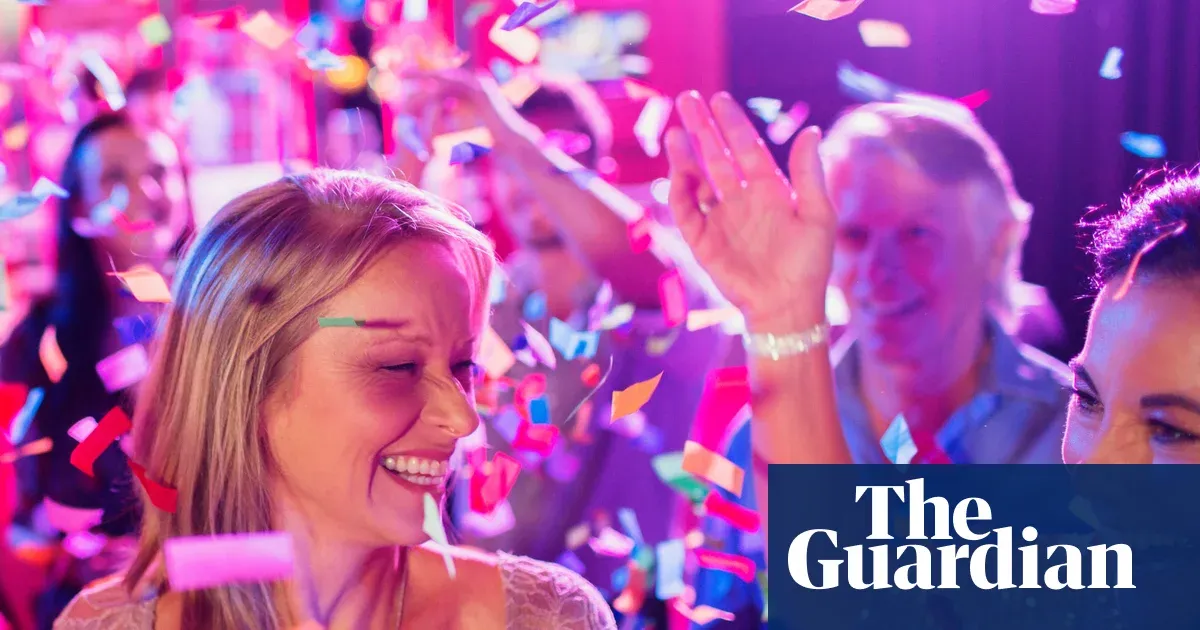
A 2025 University of Leeds study, covered widely on Instagram and in press, says women aged 40-65 are turning to raves for real mental health. For decision-makers, it signals a mainstream shift in how “wellness” gets funded, marketed, and possibly regulated.
It’s 4am and the author is back in a club for the first time in years. At 51, in what she calls her “sandwich era,” she has both teenage and elderly loved ones on her mind, which usually “generally calls for early nights.” Instead, she went to a rave. The reason is not mystery, it’s mechanism: dancing all night can be a panacea, delivering exercise, lowering stress, boosting energy, and providing connection.
That personal setup is exactly why the headline-making claim from a 2025 University of Leeds study landed so hard. The widely repeated framing was blunt: “Women aged 40-65 are turning to raves for real mental health,” as reported in “one of many Instagram posts and press headlines,” plus another angle: “Why many women over 40 still go to raves.” In other words, this is not just a youthful party habit. It is a late-life wellness behavior, with perimenopausal and burnout pressures acting like accelerants.
To understand why this matters beyond the dance floor, you have to look at what’s at stake for the demographic and how routines break. The piece describes being “burned out” and “perimenopausal, or both,” and then asks the uncomfortable question: “why the hell wouldn’t they?” That line is the thesis disguised as a rant. When responsibilities-maxxing turns life into a treadmill, “sometimes you need the opposite.” A “blowout.” A “huge, transcendent, resetting release.” In market terms, the rave is competing with the usual coping playbook: early nights, quiet self-care, and the kind of rest that does not always reach the emotional root of stress.
There is also a social design element here that many wellness products ignore: connection. The author points out that raves offer “connection,” and for executives, that detail is not fluffy. Loneliness and stress are not just personal problems, they are downstream costs for employers, insurers, and public health systems. If a behavior that looks like nightlife is actually functioning as group-based mental regulation, then it becomes part of the mental-health conversation in a way that challenges the strict boundaries people assume between “health” and “leisure.”
The piece doesn’t claim raves are universally healthy or medically equivalent to treatment. It does, however, underline that there is an established pattern: the author says she knows “other gen-Xers who have been regularly getting blissfully - ceremonially, even - lost in house, techno or drum'n'bass,” and frames it as not rare. That matters because adoption curves are different when something is already normalized in a peer group. When you see “why many women over 40 still go to raves,” the subtext is that the behavior is resilient. It is not only a passing trend driven by one viral moment. Viral coverage is the spotlight, but peer repetition is the engine.
Now to the second-order implications. First, wellness marketing usually tries to sound controlled and calibrated. Rave culture is the opposite: it is sensory, late, communal, and a little chaotic. When mainstream media and Instagram treat raves as mental health tools, the audience expectations change. Platforms and brands may feel pressure to incorporate harm-reduction messaging, accessibility considerations, and clearer guidance around pacing, sleep, and recovery, especially for people dealing with perimenopause-related fatigue and mood swings.
Second, regulatory framing is likely to get more attention, even if regulators are not directly “approving” raves as therapy. The source points to “press headlines” and social posts going viral, which tends to invite policy scrutiny through the back door. Any time a behavior gets reframed from “party” to “health benefit,” lawmakers, public health bodies, and workplace health programs get asked whether safety standards are keeping up. That can mean scrutiny of venue policies, nightlife staffing and emergency readiness, and how health information is communicated in event ecosystems.
Third, boards and leadership teams across healthcare-adjacent spaces may need to update their assumptions about where demand is coming from. If women 40-65 are actively seeking mental relief through nightlife, the demand for wellness support could show up in surprising places: employee benefits that recognize burnout realities, partnerships with community spaces, or new models of group experiences that are not “therapy-like” but are clearly therapeutic in practice.
The author also offers a cultural clue: she wonders whether “misplaced parental guilt,” “internalised ageism,” or exhaustion delayed her own participation. That is a reminder that adoption barriers can be psychological, not logistical. For executives, that flips the usual approach. The product is not just the event. The product is permission. The feeling that it is socially acceptable to keep partying, moving, and taking emotional breaks after 40.
Strategically, the stake for peers in similar roles is simple: wellness is not only what clinics deliver, it is what people do to regulate stress when life is heavy. If raves are becoming a widely recognized outlet for women aged 40-65, then leaders across media, health, benefits, and community programming should pay attention. Not to mythologize nightlife. To notice a shift in real behavior, grounded in exercise, stress reduction, energy, and connection, and amplified by a viral 2025 University of Leeds narrative that is now shaping how people talk about mental health.
This story's Key Insights and Take-aways are locked.
Create a free account to unlock Executive Actions for one credit.
Register to UnlockAlways free for Executives Club members. Join the Club
More in Science

NASA-backed engineers shrink high-fidelity energetic particle sensing into CubeSats
A compact, multiview particle-detection instrument could turn CubeSats into near-Earth science platforms without sacrificing data quality.

Stage 4 lung cancer at 44: a never-smoker’s ALK story that beat the odds
Summer Farmen turned an ALK-positive diagnosis into a six-year survival case study on targeted therapy and patient power.
Zoo elephants live longer now: study shows steady life expectancy gains since the 1960s
A multi-institution study in Scientific Reports finds modern zoo care is extending elephant lifespans, decade by decade.