

Record $4.14 gas for Labor Day as Iran war squeezes supply
Energy Secretary Chris Wright admits prices are higher but promises action, while diesel hits $5.85 and supply chains feel the pinch.

Energy Secretary Chris Wright acknowledged record-high gas prices ahead of Labor Day, with the national average at $4.14 a gallon. The spike, driven by the Iran war and refinery constraints, is raising costs across the economy and pressuring the Trump administration to deliver relief.
The national average for regular gas hit $4.14 a gallon heading into Labor Day weekend, a record for the holiday and nearly a dollar higher than last year, according to AAA. That tops the previous Labor Day record of $3.82 set in 2012, and it means the classic end-of-summer road trip now carries a heavier price tag than ever before. For families like Nicole Collins, who planned to drive from Philadelphia to South Carolina to visit friends, the cost has already changed behavior: her family spent most of the summer close to home, skipping their usual weekend trips because driving got so expensive. "Gas is pretty high right now. It doesn't help that we also have a baby, so we also have to pay for that," Collins said outside a station in Claymont, Delaware, where regular gas was $4.199 a gallon.
Energy Secretary Chris Wright offered few specifics on when drivers might see relief, but he did not dispute the record. "Yes, they're higher today, but we're doing everything we can to push them down," Wright said Sunday on ABC's "This Week." The admission comes as the Trump administration faces political heat over inflation, and the numbers are stark: diesel hit a national average of $5.85 a gallon on Friday, itself a record. That matters far beyond the pump because trucks and freight delivery systems run on diesel, and those higher transportation costs are being passed on to consumers, whether at the grocery store or through package delivery services. "It doesn't really seem like there's an end to it," Collins said.
The root cause, according to energy analysts, is the war with Iran. Prices shot up after the U.S. and Israel attacked Iran in February and have not settled since. Crude oil traffic through the key Strait of Hormuz has plunged, and Iran has refused to reopen the waterway. "Everything points to the Iran War and the Strait of Hormuz," said Tom Seng, a professor of energy finance at Texas Christian University. The strait is a chokepoint for about 20% of global oil supply, so its disruption ripples through every barrel that reaches U.S. refineries, and the market has priced in the risk.
Domestic refinery constraints are compounding the geopolitical shock. U.S. refineries are already running at 98% capacity, many of them in unusually harsh Texas heat, which leaves almost no slack in the system. If a hurricane knocks any of them offline, prices will struggle to drop. And the problem is global: Ukrainian drone attacks on Russian refineries are squeezing diesel supplies, while Chinese refiners are seeing declining outputs as well. "There's just less gasoline coming out of those refineries," said Matthew Metzgar, a clinical professor of economics at UNC Charlotte. That tightness explains why the usual seasonal relief - when refineries switch to a cheaper winter blend and demand eases after summer - has not materialized this year.
Wright pointed to futures markets as a reason for optimism. "If you look at the futures prices, if you wanted to buy today in bulk gasoline for two months out in November, it's about $0.35 cheaper than it is today. So the marketplace thinks gasoline prices are going to move meaningfully lower," he said. That suggests traders expect the Iran situation to stabilize or refinery output to recover, but the energy secretary offered no timeline. For now, the national average remains well below the all-time record of $5.02 a gallon set in June 2022, but that is cold comfort to drivers facing $4-plus gas at the start of a holiday weekend.
For executives and operators, the diesel record is the more urgent signal. Freight costs are a leading indicator for consumer prices, and a $5.85 diesel average will ripple through logistics budgets within weeks. Companies that rely on trucking or parcel delivery should expect surcharges and renegotiate contracts where possible. Meanwhile, the geopolitical uncertainty means no one should bank on the futures curve alone; a single escalation in the Strait of Hormuz or a hurricane in the Gulf could reverse the expected decline overnight.
There is one practical lever for consumers and fleet managers alike: price apps and local station selection. Gas by the interstate can be 10 to 15 cents per gallon more expensive than at stations a short drive down the road, according to Metzgar. On a long trip, that differential adds up, and for small businesses with delivery routes, routing around highway stations can shave meaningful costs. But as Collins noted, the structural drivers - war, refinery capacity, global supply - are beyond any individual's control. The record Labor Day gas price is a reminder that energy costs are now a strategic risk, not just a line item.
This story's Key Insights and Take-aways are locked.
Create a free account to unlock Executive Actions for one credit.
Register to UnlockAlways free for Executives Club members. Join the Club
More in Business
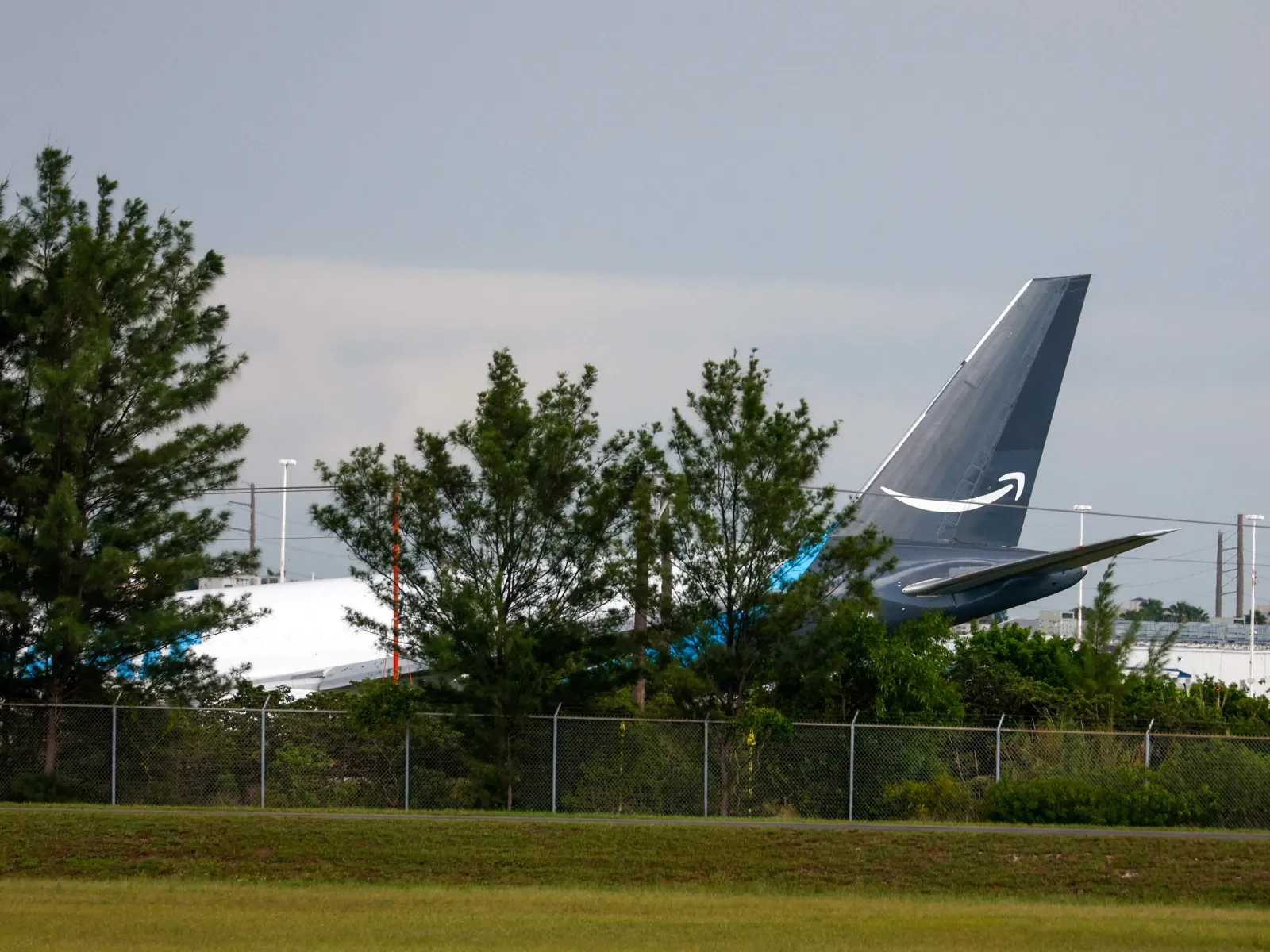
Amazon Prime Air 767 overshoots Miami runway, killing at least 5
The Boeing 767 freighter from San Juan struck vehicles and erupted in flames, prompting a ground stop and a fresh NTSB investigation into Amazon's air cargo network.

Death sentence for TV presenter Sarah Khalifa: Egypt's drug case hits media
The sentencing of Sarah Khalifa and 11 others underscores the severity of Egypt's anti-drug laws and the exposure of public figures to capital punishment.

Tim Cook steps down as Apple CEO, stays on as chair with $45M equity
The 'Trump whisperer' keeps his White House and Beijing access as Apple navigates tariffs and a $4.6 trillion market cap.